

Quick answer
The global demand for fish and seafood is rapidly increasing, projected to double by 2050. However, this poses a challenge in managing fish stocks sustainably. In the UK alone, annual consumption amounts to £5.7 billion from over 85 countries. Alarming statistics from the WWF indicate that almost one-third of monitored global fish stocks are overfished, and over 60% are fished to their maximum sustainable yield. With fish consumption estimated to reach 180 million tonnes by 2030, innovative solutions are crucial. Discover how revolutionary technologies and practices in aquaculture are shaping a sustainable future in our latest blog.
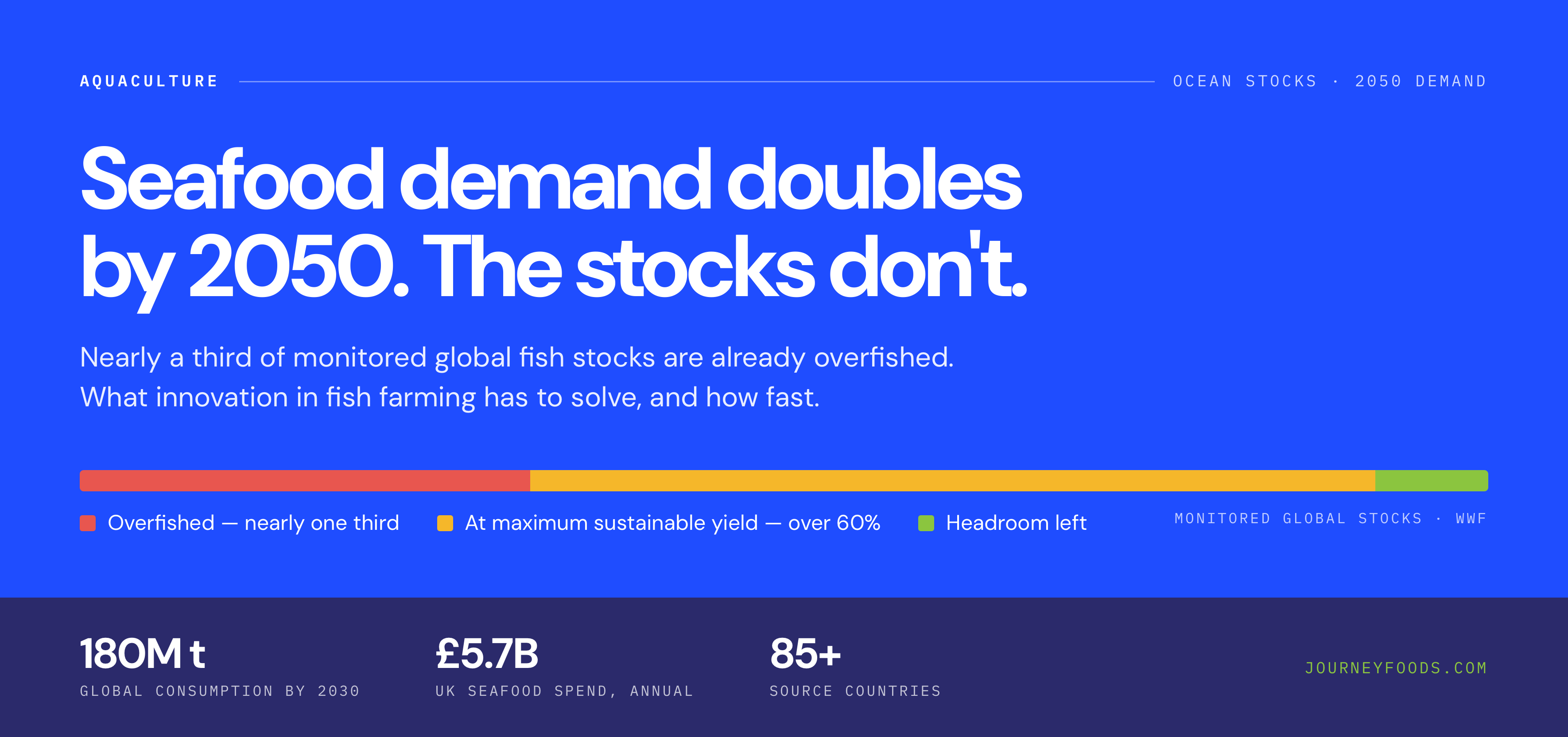
In the UK alone, we consume £5.7 billion worth of fish and seafood annually, sourced from over 85 countries. Shockingly, nearly one-third of monitored global fish stocks are overfished, and more than 60% are fished to the maximum sustainable yield, according to the WWF.
With the global consumption of fish estimated to reach 180 million tonnes by 2030, we must find solutions to preserve our ocean's finite resources. Discover how innovation is shaping the future of aquaculture in our latest blog and learn about the groundbreaking technologies and practices that are revolutionizing fish farming and enabling us to produce seafood sustainably.
As published
60%
Data from this story
Shareable Journey Intelligence
How Global Demand For Fish and Seafood is Changing Retail
News & Events
60%
Shockingly, nearly one-third of monitored global fish stocks are overfished, and more than 60% are fished to the maximum sustainable yield, according to the WWF.