Homemade Upgrade: Cacio e Pepe from Trader Joe's
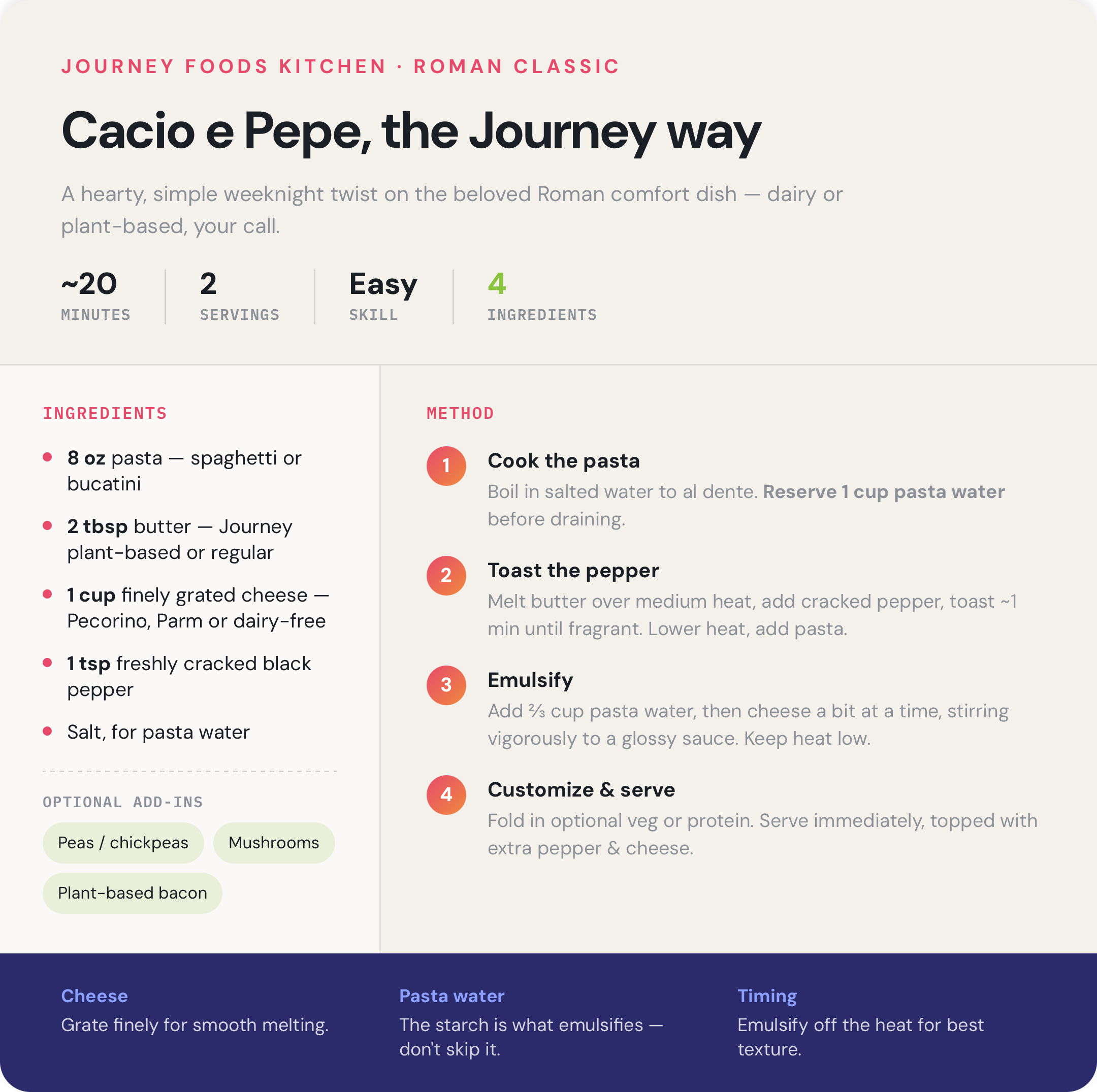
Bring the comfort of Roman cuisine to your table with this Journey Foods twist on the beloved Trader Joe’s Cacio e Pepe. This version highlights classic flavors while letting you adapt with Journey’s signature ingredients—making it hearty, simple, and delicious for any weeknight dinner.
Bring the comfort of Roman cuisine to your table with this Journey Foods twist on the beloved Trader Joe’s Cacio e Pepe. This version highlights classic flavors while letting you adapt with Journey’s recipe—making it hearty, simple, and delicious for any weeknight dinner.
Ingredients
- 8 oz pasta (spaghetti, bucatini, or your choice)
- 2 tbsp butter (Journey’s plant-based butter or regular)
- 1 cup finely grated cheese (Pecorino Romano, Parmesan, or a dairy-free cheese from Journey Foods)
- 1 tsp freshly cracked black pepper
- Salt for pasta water
Optional Add-ins for Extra Flavor:
- Sautéed peas or chickpeas
- Sliced mushrooms
- Crispy plant-based bacon or prosciutto alternative
Instructions
1. Prepare the Pasta
- Bring a large pot of salted water to a boil.
- Cook the pasta until al dente. Reserve at least 1 cup of the pasta cooking water before draining.
2. Make the Sauce
- While the pasta cooks, melt butter in a large skillet over medium heat. Add cracked black pepper and toast for about 1 minute, until fragrant.
- Lower the heat. Using tongs, transfer cooked pasta to the skillet (don’t worry if some water comes with it).
3. Create the Cacio e Pepe Emulsion
- Add in 2/3 cup reserved pasta water to the skillet.
- Sprinkle in the grated cheese a bit at a time, stirring vigorously until a smooth and glossy sauce forms. Add more pasta water if needed for a creamy texture.
- Toss until pasta is coated. Avoid high heat to prevent the cheese from clumping.
4. Customize with Journey Additions (Optional)
- Add veggies or protein for extra nutrition and flavor.
- Gently fold ingredients into the pasta before serving.
5. Serve and Enjoy
- Serve immediately topped with extra black pepper and a sprinkle of cheese.
Tips for Success
- Cheese Choice: Use finely grated cheese to ensure smooth melting.
- Pasta Water: This is crucial for thickening and emulsifying the sauce.
- Timing: Emulsify cheese off the heat for best texture.
- Journey Foods twist: Add in your favorite plant-based proteins or vegetables for a modern, nourishing spin on the Roman classic.
Enjoy!