Quick answer
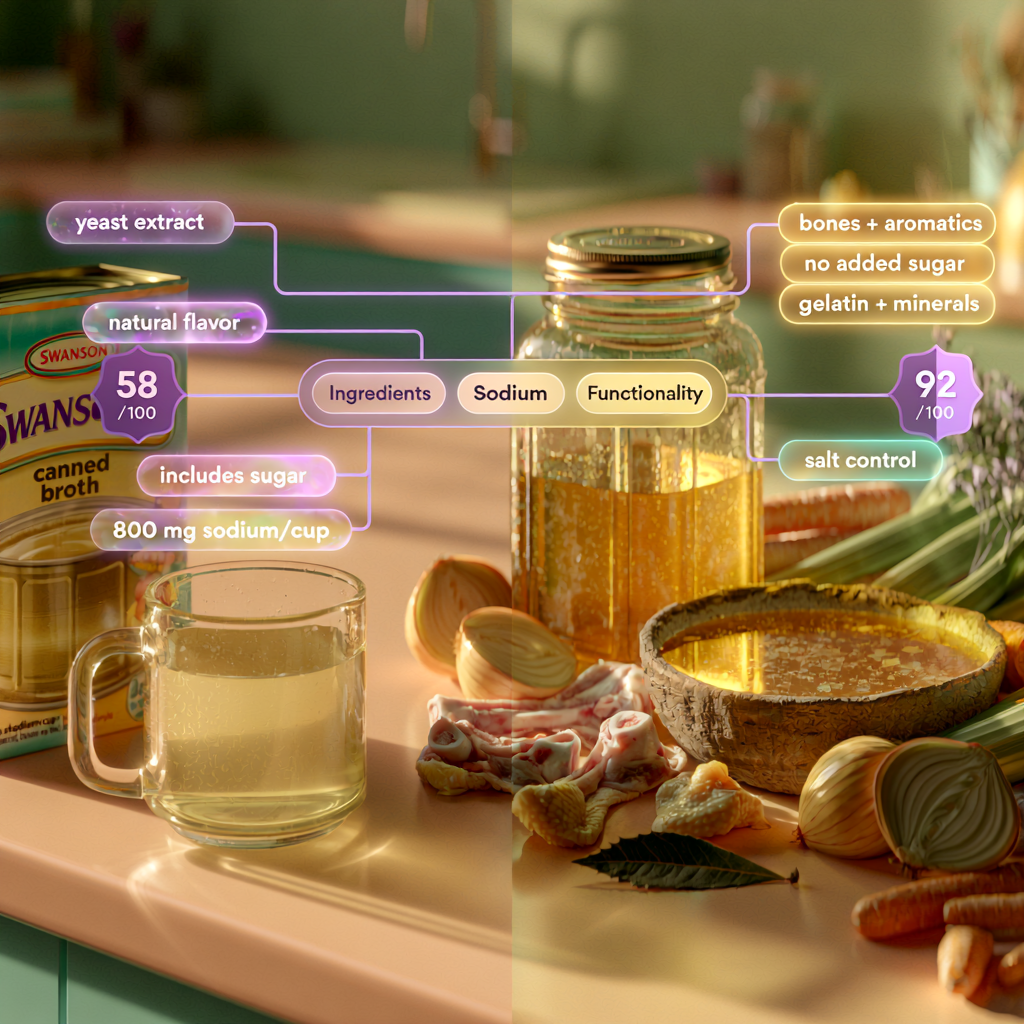
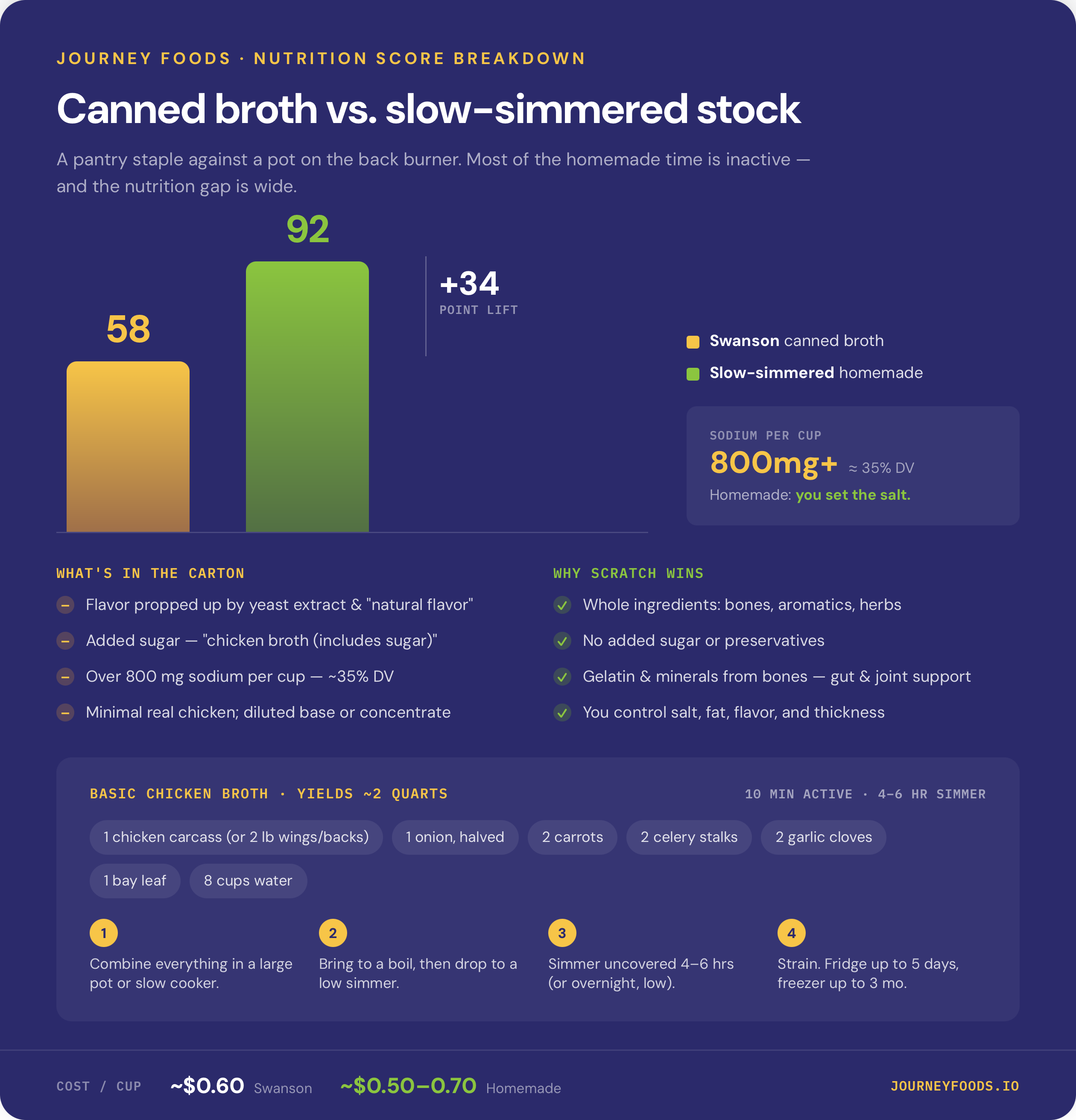
Swanson’s 58/100 reflects its high sodium and reliance on additives. Homemade broth earns 92/100 thanks to clean ingredients, nutrient density, and its foundational role in whole-food cooking.
Journey Foods Nutrition Score Breakdown
- Swanson Chicken Broth (Canned): 58/100
- Homemade Slow-Simmered Chicken Broth: 92/100
What’s in the Carton?
Swanson Chicken Broth is a pantry staple — shelf-stable, ready-to-use, and a go-to for soups, sauces, and grains. But even trusted labels like Swanson come with trade-offs:
- Chicken flavor is often boosted with yeast extract (a source of glutamates) and “natural flavor”
- Contains added sugar — listed as “chicken broth (includes sugar)”
- Sodium-heavy — over 800 mg per cup (that’s about 35% of the daily value)
- Minimal actual chicken content — made with a diluted base or concentrate
This drops Swanson’s Journey Score to 58/100 — functional, yes, but far from the gold standard in terms of nutrition and ingredient transparency.
The Homemade Swap: Slow-Simmered Chicken Broth
Journey Ingredient Intelligence
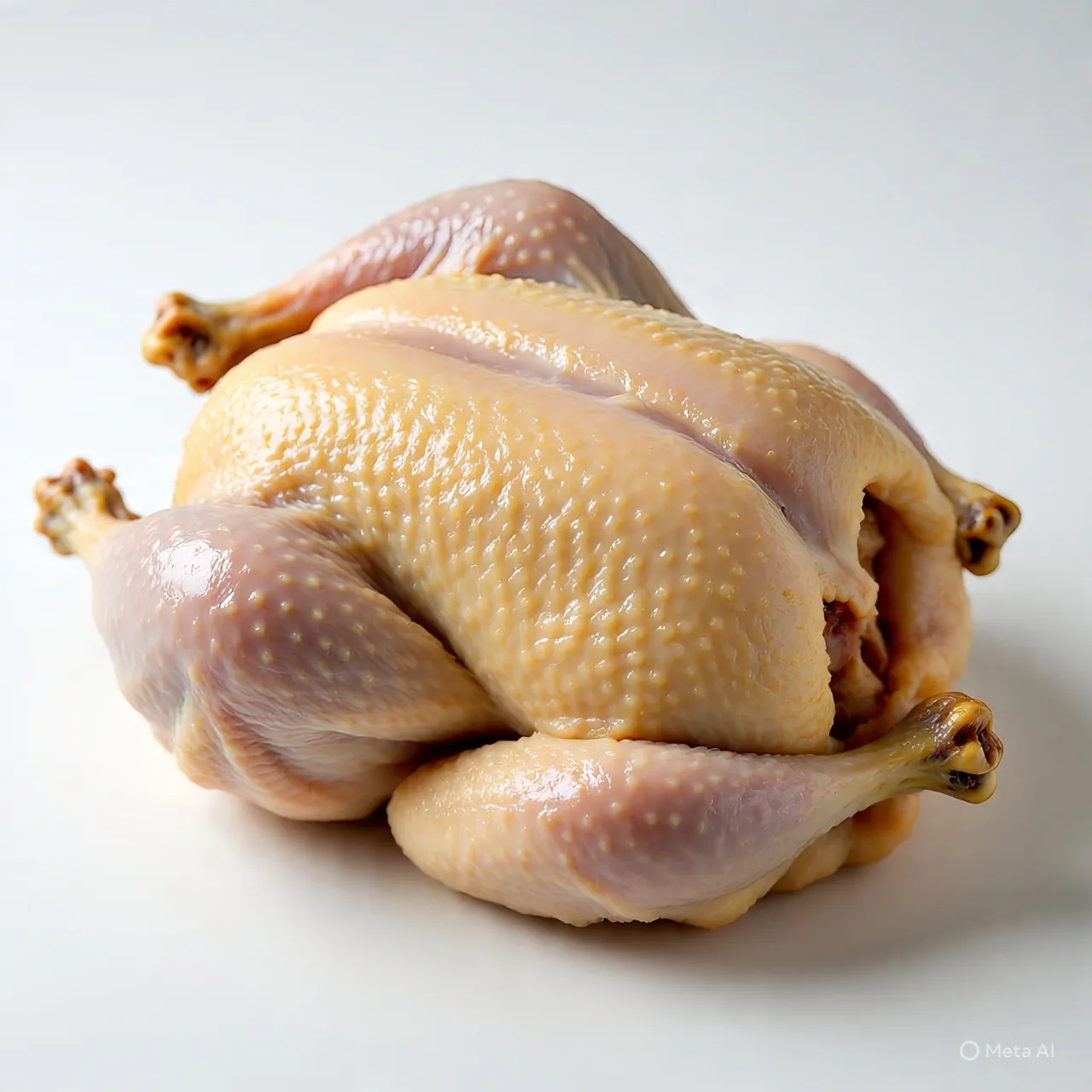
Chicken (Whole)
Journey Foods Nutrition Score Breakdown Swanson Chicken Broth (Canned): 58/100 Homemade Slow-Simmered Chicken Broth: 92/100 What’s in the Carton?
A South American tree in the family Lecythidaceae.
Nutrition. Chicken (Whole) has a nutrition profile based on the current Journey Foods nutrition table: Calories: 975 kcal/lb, Protein: 84.37 g/lb, Fiber: 0.00 g/lb, Total Sugars:…
Cost. Chicken (Whole) is currently priced at $4.54/kg.
Sustainability. Chicken (Whole): Journey AI evaluates ingredient sustainability using environmental indicators such as water usage, greenhouse gas emissions, and upcycled status.
Homemade chicken broth may take time, but most of it is inactive. You get not just richer flavor, but more nutrients and culinary versatility in every spoonful.
Why it scores higher:
- Whole ingredients: Chicken bones, aromatic vegetables, herbs
- No added sugar or preservatives
- Gelatin + minerals from bones: Supports joint and gut health
- Customizable: Control salt, flavor, fat content, and thickness
Journey Foods Nutrition Score: 92/100
Broth made from scratch earns top marks for nutrient density, clean ingredients, and functional food benefits.
Homemade Recipe: Basic Chicken Broth
Ingredients (yields ~2 quarts):
- 1 rotisserie chicken carcass or 2 lbs raw chicken wings/backs
- 1 onion, halved
- 2 carrots, chopped
- 2 celery stalks, chopped
- 2 garlic cloves, smashed
- 1 tsp salt (adjust later)
- 1 bay leaf, optional
- 8 cups water
Journey Ingredient Intelligence
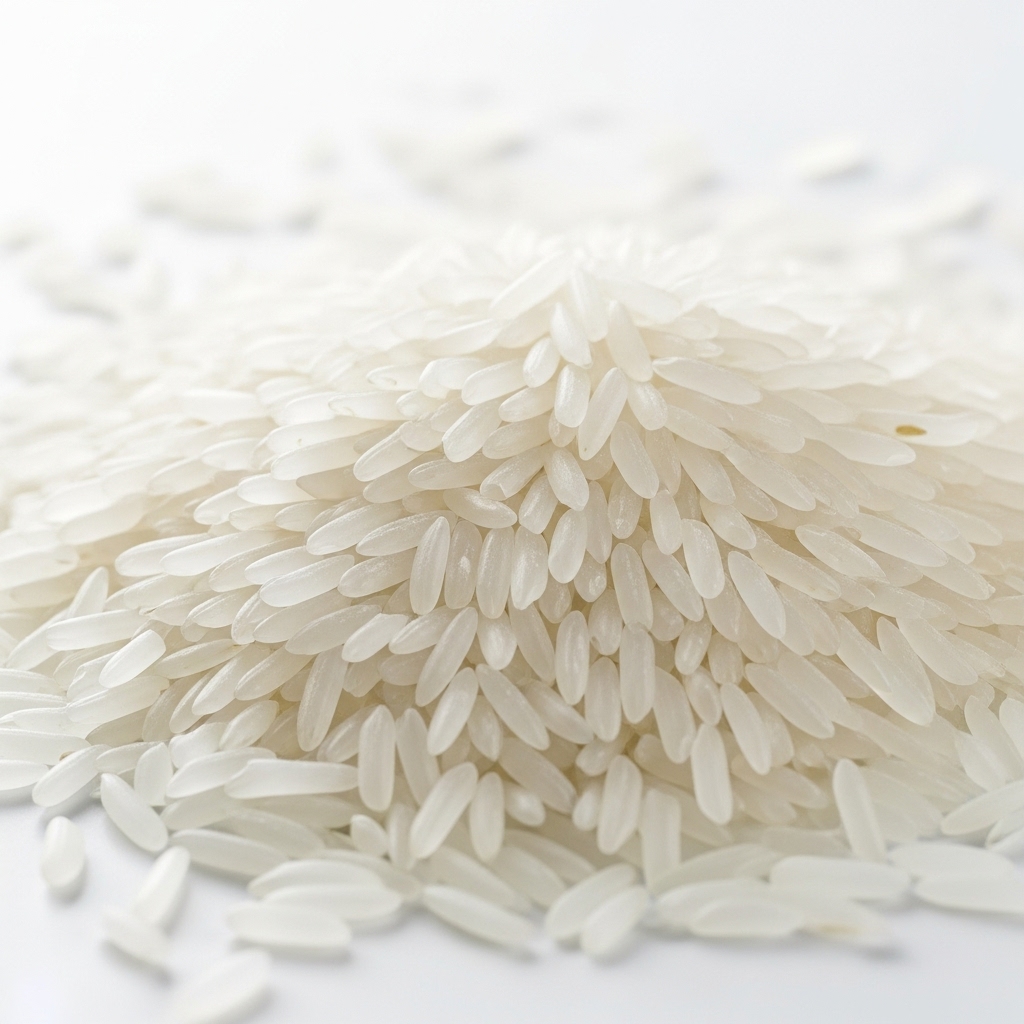
Rice (White, Long Grain)
Swanson Chicken Broth is a pantry staple — shelf-stable, ready-to-use, and a go-to for soups, sauces, and grains.
Milled rice (Orzya sativa) that is a staple ingredient in Asia.
Instructions:
- Combine all ingredients in a large pot or slow cooker.
- Bring to a boil, then reduce to a low simmer.
- Simmer uncovered for 4–6 hours (or overnight on low in a slow cooker).
- Strain and store in the fridge (up to 5 days) or freezer (up to 3 months).
Time Breakdown:
- Active Time: 10 minutes
- Inactive Time: 4–6 hours (simmering)
Cost Comparison (per cup)
Option
Cost per Cup
Journey Ingredient Intelligence
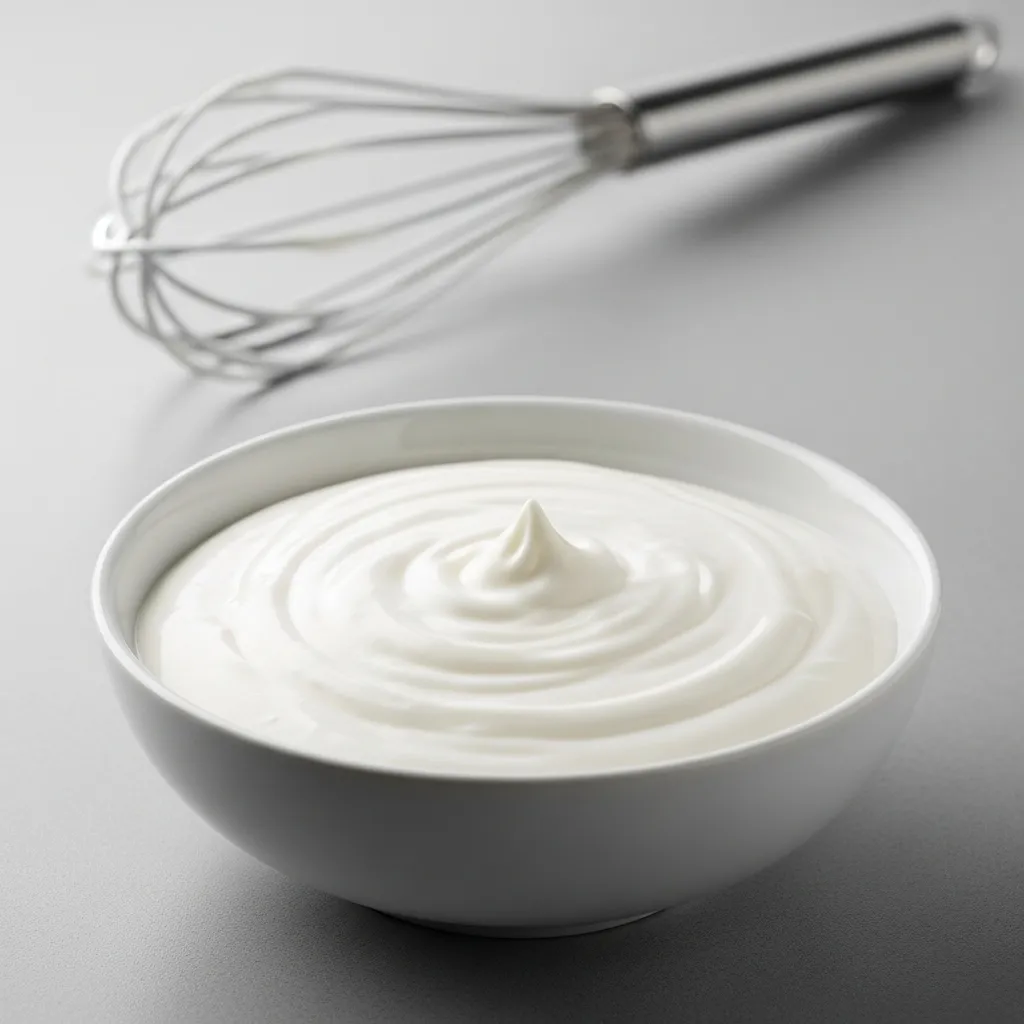
Heavy Cream
But even trusted labels like Swanson come with trade-offs: Chicken flavor is often boosted with yeast extract (a source of glutamates) and “natural flavor” Contains ad…
A South American tree in the family Lecythidaceae.
Nutrition. Heavy Cream has a nutrition profile of 1,527 kcal/lb, 12.70 g protein/lb, and 13.15 g total sugars/lb.
Cost. Heavy Cream is currently priced at $8.75/kg.
Sustainability. Journey AI evaluates ingredient sustainability using environmental indicators such as water usage, greenhouse gas emissions, and upcycled status.
Swanson Chicken Broth
~$0.60
Homemade Chicken Broth
~$0.50–$0.70 (depends on ingredients used)
Homemade costs about the same — but gives richer flavor, more collagen, and less sodium.
Final Take
Swanson is a solid convenience pick, but it's often watered down and padded with flavor additives. Homemade broth, while slower to make, is deeply nourishing and far more flavorful — and it turns kitchen scraps into liquid gold.
Journey Ingredient Intelligence
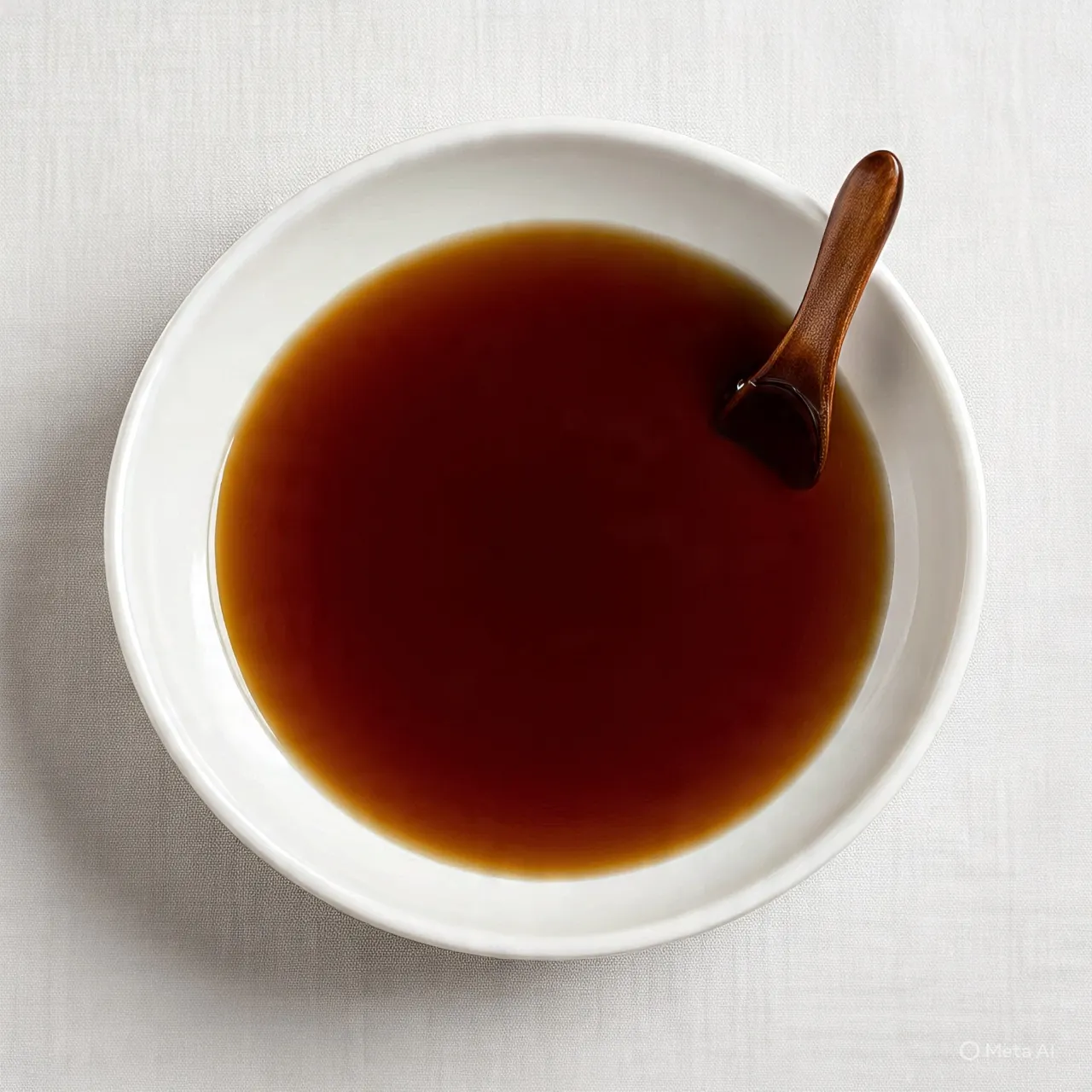
Soy Sauce
Swanson Chicken Broth is a pantry staple — shelf-stable, ready-to-use, and a go-to for soups, sauces, and grains.
A liquid sauce made from fermented soybeans (Glycine max), wheat, and yeast.
Nutrition. Soy Sauce has a nutrition profile of 240 kcal/lb, 36.92 g protein/lb, 3.63 g fiber/lb, and 1.81 g total sugars/lb.
Cost. Soy Sauce is currently priced at $6.45/kg.
Sustainability. Journey AI evaluates ingredient sustainability using environmental indicators such as water usage, greenhouse gas emissions, and upcycled status.
Journey Ingredient Intelligence · Comparison
Chicken (Whole)
Rice (White, Long Grain)
Data from this story