Investing in Food Companies with Generative AI: A Winning Strategy for Tech Entrepreneurs


Quick answer
Investing in food companies that leverage generative AI presents a significant opportunity for tech entrepreneurs, as the food tech market is projected to reach $342 billion by 2027. Journey Foods is leading this transformation by streamlining product development and ingredient discovery, enabling brands to innovate rapidly while meeting consumer demands for sustainability and nutrition. With over 32 billion ingredient insights, we empower companies to make data-driven decisions that enhance their market success.
Investing in Food Companies with Generative AI: A Winning Strategy for Tech Entrepreneurs
As tech entrepreneurs, we’re always on the lookout for the next big opportunity. One area ripe for disruption is the food industry, where generative AI is transforming operations, product development, and consumer engagement. Here’s why investing in food companies leveraging AI could be a game-changer for industry leaders.
1. Rapid Market Growth
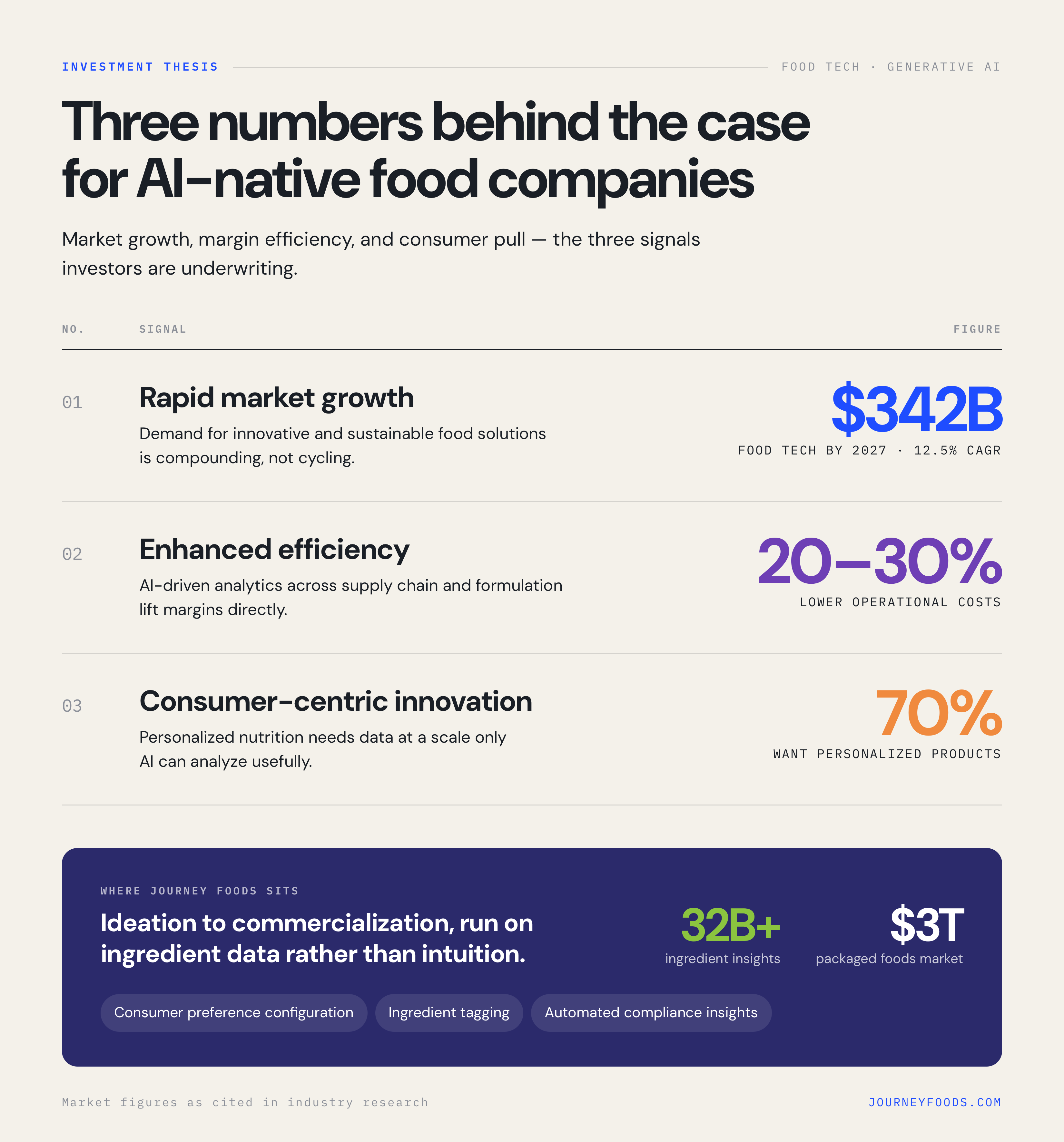
The global food tech market is projected to reach $342 billion by 2027, growing at a CAGR of 12.5%. This surge is fueled by increasing consumer demand for innovative food solutions and sustainable practices. Investing in companies that harness AI can position you at the forefront of this growth.
2. Enhanced Efficiency
Generative AI streamlines everything from supply chain management to product formulation. For instance, companies using AI-driven analytics report a 20-30% reduction in operational costs. By automating processes and optimizing resources, food companies can improve margins, making them more attractive to investors.
3. Consumer-Centric Innovations
The shift towards personalized nutrition is gaining momentum. About 70% of consumers express interest in personalized food products tailored to their health needs. Companies employing AI can analyze vast amounts of data to create targeted offerings, thus capturing a more significant market share.
Conclusion
At Journey Foods, we are at the forefront of this innovative space, revolutionizing the way food companies approach product development. Our cutting-edge AI software streamlines the journey from ideation to commercialization, enhancing ingredient discovery and meeting the needs of the $3 trillion packaged foods market.
With our unique capabilities—like consumer preference configuration, ingredient tagging, and automated compliance insights—we empower food brands to innovate rapidly while ensuring sustainability and nutrition. Our extensive database, housing over 32 billion ingredient insights, enables dynamic analysis and actionable recommendations, helping management teams make informed decisions quickly.
As the market continues to evolve, investing in food companies that utilize AI, like Journey Foods, is not just strategic—it's essential for thriving in a competitive landscape. Let’s redefine the future of food together!
As published
$342
Data from this story
Shareable Journey Intelligence
Investing in Food Companies with Generative AI: A Winning Strategy for Tech Entrepreneurs
News & Events
$342
Rapid Market Growth The global food tech market is projected to reach $342 billion by 2027 , growing at a CAGR of 12.5% .
30%
For instance, companies using AI-driven analytics report a 20-30% reduction in operational costs .