Quick answer
Swicy isn't going anywhere. It's growing. And it's pulling sensory maximalism along with it.Consumers want food that feels alive—that surprises them, that builds in intensity, that makes them reach for another bite. Sweet-heat delivers that in a way few other flavor profiles can.
If you haven't heard the word "swicy" yet, you're about to hear it everywhere.
Swicy—the portmanteau of sweet and spicy—isn't just a cute TikTok trend. It's a full-blown flavor revolution that's reshaping product development, menu planning, and home cooking from the snack aisle to the condiment shelf. And it's not slowing down.
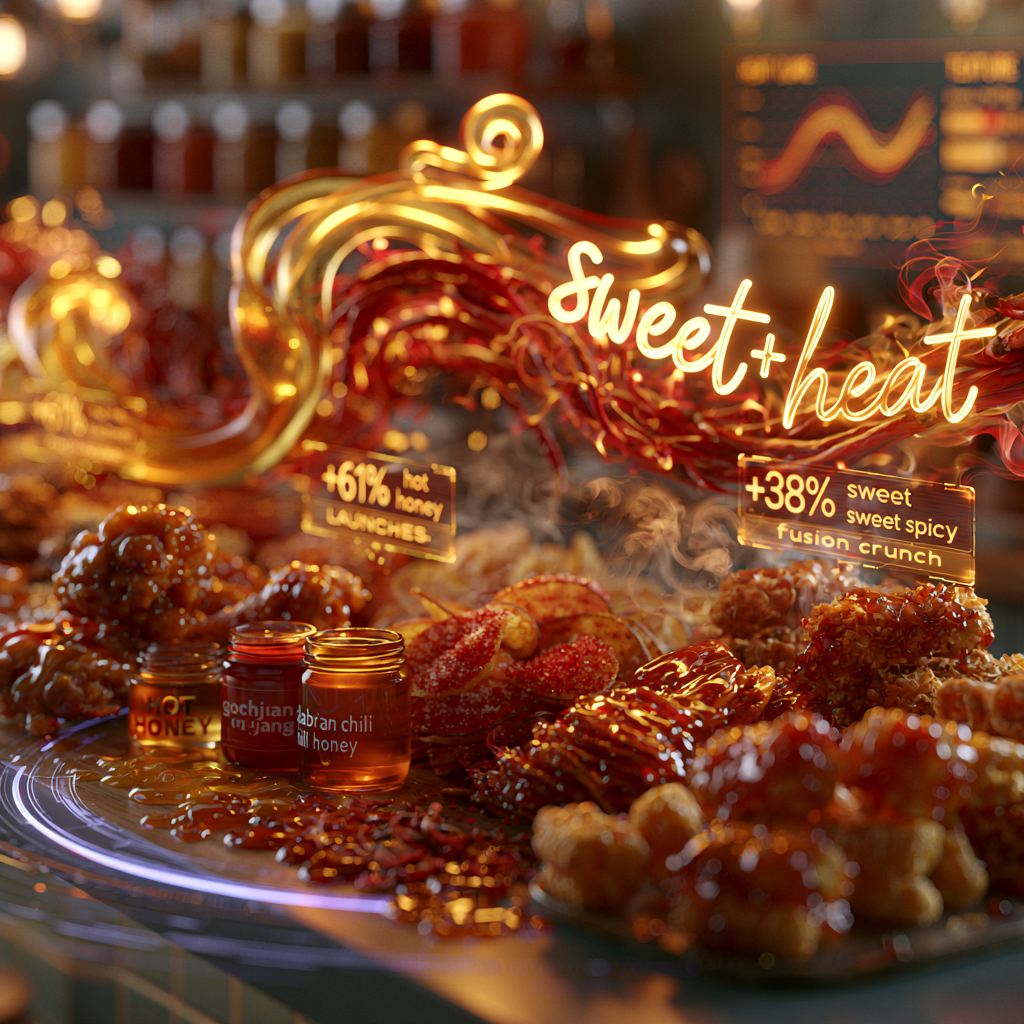
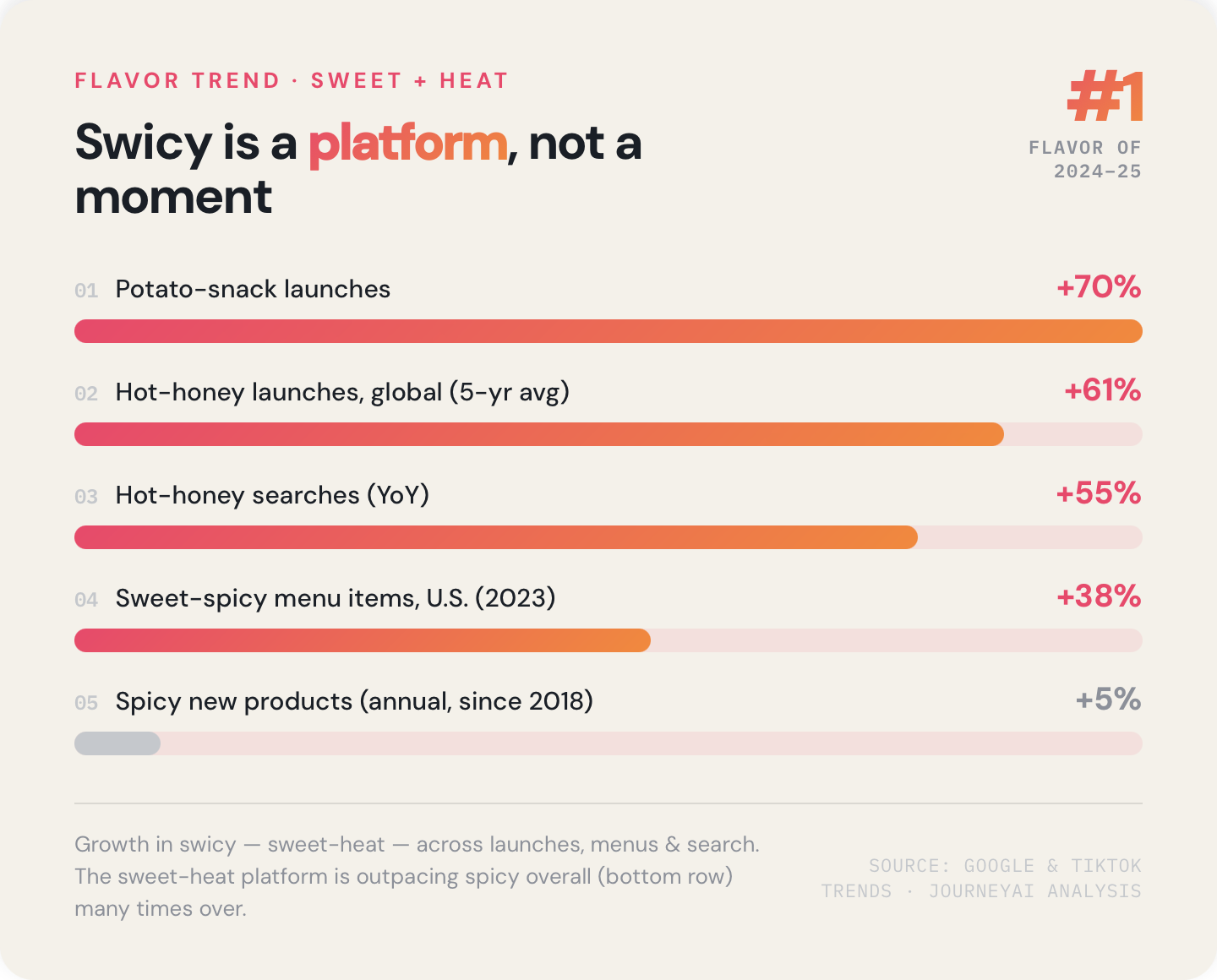
Hot honey has been crowned the number-one flavor trend of 2024 and is accelerating into 2025. TikTok and Google searches for hot honey are up about 55% year over year, with projections showing another 25% growth ahead. Globally, hot honey-flavored product launches have grown at an average of 61% annually over the past five years. In U.S. restaurants, menu items with sweet-spicy profiles climbed 38% in 2023, and forecasters expect hot honey to outperform nearly all other flavor platforms by 2027.
This isn't a flash-in-the-pan moment. This is a fundamental shift in how consumers want to experience food—and it's forcing CPG brands to rethink everything from flavor architecture to texture engineering.
Let me break down what's driving swicy, why it's paired with what I'm calling sensory maximalism, and what it means for product innovation.
What Is Swicy, Really?
At its core, swicy is the marriage of sweetness and heat—but it's more nuanced than that. It's not just sugar plus chili. It's about creating a dynamic, multi-layered flavor experience that hits multiple parts of your palate at once.
Hot honey is the poster child: smooth sweetness up front, building heat on the back end, with complexity from the honey itself. It's interesting. It keeps you coming back for another bite (or drizzle). And it works across an astonishing range of applications—from fried chicken and pizza to cheese boards, cocktails, and even ice cream.
That versatility is why swicy has moved from niche to default. New products featuring spicy flavors overall are up roughly 5% annually since 2018, but within that broader growth, sweet-heat profiles are exploding. Brands have figured out that swicy isn't a gimmick—it's a platform.
From Restaurants to Retail: Swicy Goes Mainstream
Swicy started gaining serious traction in restaurants, where chefs had the flexibility to experiment. By 2023, sweet-spicy menu items had climbed 38% in the U.S., with hot honey appearing on everything from Nashville hot chicken to glazed Brussels sprouts.
But the real unlock came when CPG brands cracked the code on shelf-stable swicy formulations. Suddenly, consumers didn't need to go out to get that experience—they could find it in their grocery store, or better yet, make it at home.
Simple condiments like hot honey, gochujang, and Calabrian chili honey are now cited as the easiest at-home entry points for consumers to play with swicy without artificial additives or complex recipes. You drizzle it. You dip it. You glaze with it. It's accessible, Instagram-worthy, and it makes people feel like they're cooking with creativity and intention.
That's powerful.
Snack and Bakery: Where Swicy Meets Texture
Here's where things get really interesting: the snack aisle.
Potato-based snack launches jumped about 70% in 2024, with a significant portion tied to sweet-heat profiles. But brands aren't just layering flavors—they're layering textures to match the boldness of swicy.
Think extra-crispy coatings. Puffs over creams. Crunchy inclusions. Double-texture snacks. What the industry is calling "fusion crunch"—crispy toppings, creamy-crunch pairings, textural contrast as a defining feature.
Why? Because swicy demands it. When you're hitting the palate with sweet and heat, you need textural complexity to keep the experience from flattening out. The crunch amplifies the surprise. The creaminess balances the intensity. It's sensory maximalism—more flavor, more texture, more experience per bite.
Trend reports are flagging this as a defining theme in 2025–2026 home cooking and snacking. Consumers don't just want bold flavors anymore. They want bold flavors plus textural intrigue. They want food that does something in their mouth.
Sensory Maximalism: More Is More
Let's zoom out for a second, because swicy is part of a bigger cultural shift.
For years, the clean-label movement emphasized simplicity: fewer ingredients, less processing, more "natural." That ethos is still important—consumers absolutely care about transparency and quality. But when it comes to flavor and texture, the pendulum has swung the other way.
Sensory maximalism is the idea that consumers want more—more layers, more contrast, more intensity, more surprise. It's why hot honey works. It's why everything-bagel seasoning exploded. It's why Tajín is suddenly on fruit, popcorn, candy, and cocktail rims.
People are bored with bland. They're bored with predictable. They want food that sparks joy, that feels like an event, even if it's just a Tuesday afternoon snack.
And swicy—with its inherent tension between sweet and heat, its ability to build and evolve in your mouth—is the perfect flavor vehicle for that maximalist mindset.
What This Means for CPG Brands
If you're a product developer, R&D lead, or brand strategist, here's what you need to know:
1. Swicy is a platform, not a trend.
Don't just slap hot honey on one SKU and call it innovation. Think about how sweet-heat can work across your portfolio—seasonings, sauces, snacks, bakery, even beverages.
2. Texture matters as much as flavor.
If you're launching a swicy product, you need to think about mouthfeel. Crispy, creamy, crunchy, chewy—how does texture amplify or balance the flavor?
3. Accessibility is key.
The reason hot honey is winning is because it's easy. Consumers don't need a culinary degree to use it. Make your swicy innovations approachable.
4. Clean label still matters.
Consumers want bold flavors, but they don't want artificial additives or a paragraph-long ingredient list. The brands that nail swicy with real ingredients and transparent sourcing will win.
At JourneyAI, we're tracking swicy formulations across our 60+ billion data points, watching how brands are engineering heat levels, sweetness curves, and textural elements to hit that perfect balance. The companies that win are the ones using data to understand exactly what consumers mean when they say they want "hot honey flavor"—because it's not one thing. It's a spectrum.
The Bottom Line
Swicy isn't going anywhere. It's growing. And it's pulling sensory maximalism along with it.
Consumers want food that feels alive—that surprises them, that builds in intensity, that makes them reach for another bite. Sweet-heat delivers that in a way few other flavor profiles can.
So whether you're a brand launching your first hot honey product or a retailer rethinking your condiment set, pay attention. The swicy wave is just getting started.
Are you team swicy? What's the best hot honey product you've tried? Drop a comment—I'm always looking for new recommendations.