Quick answer
Ultra-processed foods are displacing traditional diets. What the evidence and new policy mean for brands, and how to fix the recipe without breaking cost.
Food culture used to be something brands borrowed for a label. Now it is a policy issue. A new evidence sheet from the Global Health Advocacy Incubator (GHAI), Ultra-Processed Products Are Displacing Traditional Diets, argues that fresh, local, minimally processed foods are being pushed out by ultra-processed products (UPPs), and that governments should curb UPPs while supporting traditional diets. For food brands, that is a recipe, sourcing and labeling story.
Key Takeaways
The shift is measurable. UPPs supply more than half of energy intake in the US and UK, and 20% to 40% in countries like Brazil and Mexico, per GHAI.
The health signal is consistent. A 2024 BMJ umbrella review covering nearly 9.9 million people linked higher UPF intake to 32 adverse health outcomes.
Policy is moving from nutrients to processing. Latin American warning labels, Colombia's UPF tax, UK ad limits and a proposed US definition point the same way.
Fix the recipe, not just the number. Products tuned to sit just under a cutoff may not survive rules that look at ingredients.
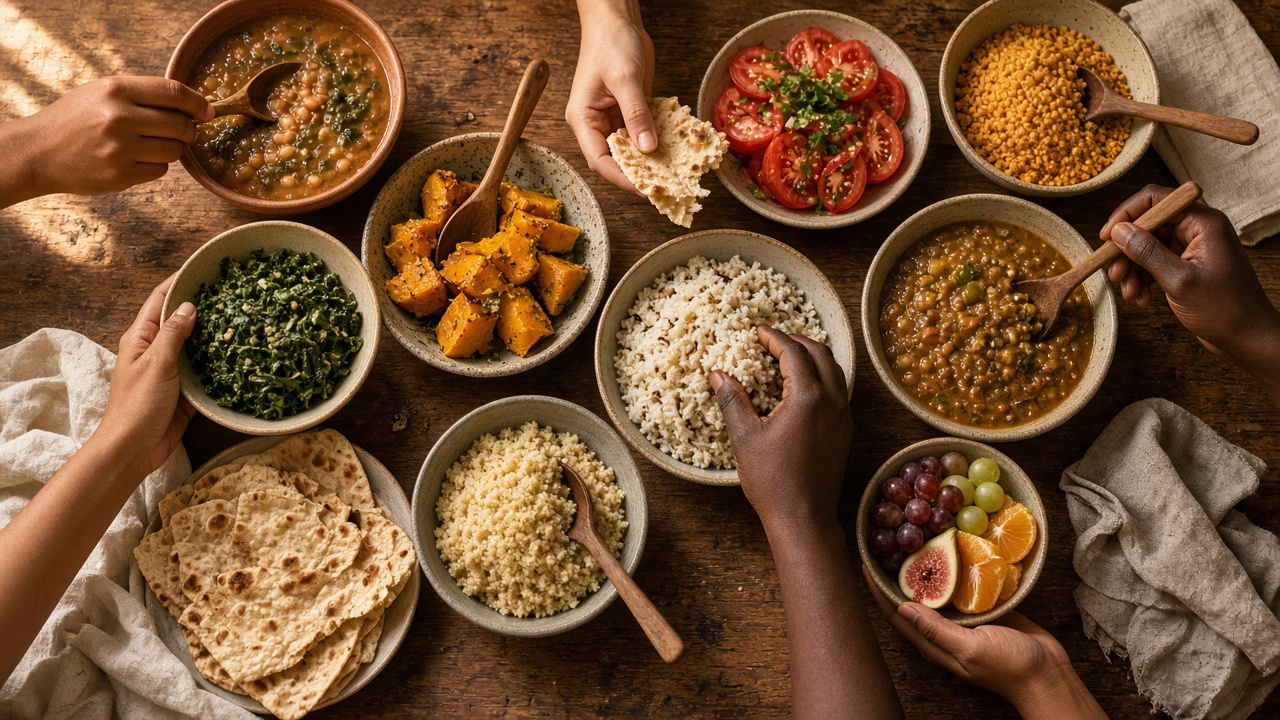
Traditional ingredients are a design asset. Whole grains, pulses and heritage crops carry flavor, texture and story.
What the GHAI Evidence Sheet Says
GHAI, an initiative of the Campaign for Tobacco-Free Kids, credits traditional diets with nutritional, cultural and environmental benefits, and says they are being displaced by UPPs through aggressive marketing, globalized food systems and weak regulation.
The shift moves fast. In South Korea, UPPs' share of dietary energy rose from about 17% in 1998 to 2005 to over 25% in 2020 to 2022. Among low-income adults in South Africa, UPPs already supply about 37% to 39% of daily energy. And today's food system uses only about 200 of 7,000 edible plants, with 90% of consumption from just 15 crops.
GHAI flags UPPs partly by ingredients rarely used in home cooking: high-fructose corn syrup, hydrogenated or interesterified oils, hydrolyzed proteins, and cosmetic additives like flavors, colors, sweeteners and emulsifiers. For brands, that reads like a spec sheet.
Why the Evidence Is Hard to Ignore
This is not one advocacy group's view. The 2024 BMJ umbrella review by Lane and colleagues found direct associations with 32 of 45 health parameters, with convincing evidence for a roughly 50% higher risk of cardiovascular disease related death and a 12% higher risk of type 2 diabetes per 10% increase in intake. Most studies were observational, but the direction is consistent.
Journey Ingredient Intelligence
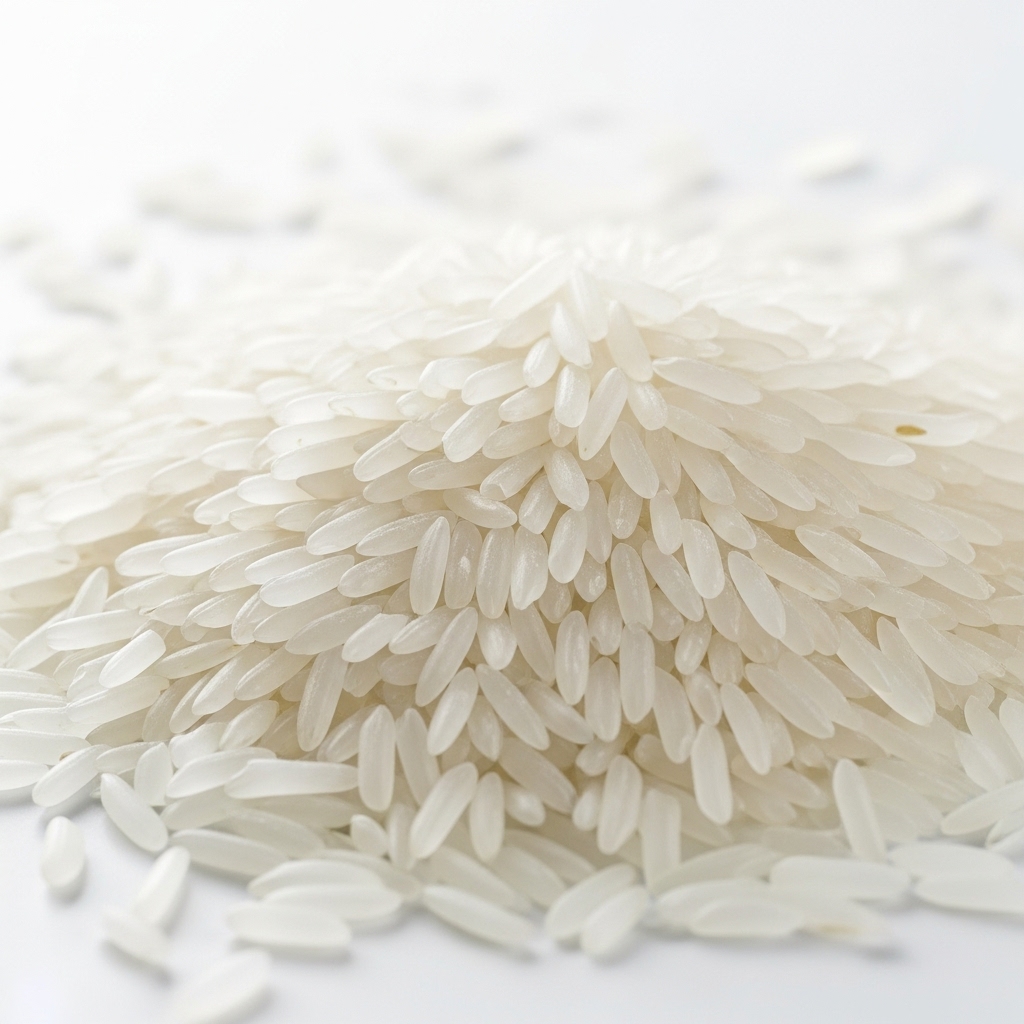
Rice (White, Long Grain)
Whole grains, pulses and heritage crops carry flavor, texture and story.
Milled rice (Orzya sativa) that is a staple ingredient in Asia.
In November 2025, The Lancet published a three-paper series on ultra-processed foods. The first paper concluded that displacing long-established diets with ultra-processed foods is a key driver of rising chronic disease. The second paper proposed policies across products, food environments, companies and supply chains, plus support for diets built on fresh and minimally processed foods.
The Policy Map Brands Need to Watch
NOVA classification. The common language, with four groups from unprocessed to ultra-processed (group 4). The FDA and USDA cite it in their 2025 request for information on defining ultra-processed foods.
Chile. "High in" warning labels and child marketing limits under Law 20.606 started in 2016. Purchases of "high in" beverages fell 23.7% against pre-policy trends (Taillie et al., PLOS Medicine 2020), and products carrying any "high in" label fell from 51% to 44%, often landing just under the cutoffs (Reyes et al., PLOS Medicine 2020).
Mexico. NOM-051 octagon warnings took effect October 1, 2020, with later phases tightening requirements and full application from October 1, 2025.
Colombia. Octagon warnings under Law 2120 of 2021 and Resolution 810, amended in 2022. A tax on ultra-processed edible products rose from 10% in 2023 to 20% from 2025. A 2026 draft resolution would add an "ULTRAPROCESADO" warning; it is still a contested proposal.
United Kingdom. In England, HFSS location restrictions began in 2022 and volume promotion limits in 2025. Since January 5, 2026, less healthy food ads are banned on TV before 9pm and in paid online media.
United States. The FDA's updated "healthy" claim took effect April 28, 2025, with compliance by February 25, 2028. Its front-of-pack "Nutrition Info" box, proposed in January 2025, is not final. In August 2026, HHS said it submitted the first proposed federal UPF definition for final review, and California's AB 1264 phases "UPFs of concern" out of school meals by 2035.
GHAI's recommendations. Front-of-package warning labels, marketing restrictions, healthier school food, public procurement and fiscal policies, plus stronger local food systems, affordable traditional foods and culturally grounded nutrition education.
How Brands Can Fix the Recipe
1. Map your portfolio twice. Score every SKU against nutrient thresholds in each market and against processing markers like those above. A product can pass one test and fail the other.
2. Design for the strictest rule, not the nearest cutoff. Moving just below a threshold clears today's label, but rules like Colombia's proposed warning or California's definition look at ingredients too.
3. Swap markers for kitchen ingredients. Where an emulsifier or flavor system is doing a job, test whether a whole food can: pulse flours and whole grains for structure, fruit purees or fibers for moisture and sweetness, fermentation and spices for flavor.
4. Use culturally relevant ingredients with care. Staples like millet, sorghum, teff, fonio and beans widen a narrow crop base. Source them with traceability and fair terms, and tell their story accurately.
5. Check cost, nutrition and claims in the same pass. Every swap changes the panel, unit cost, shelf life and claims. Run them together so one fix does not break another.
6. Keep a policy watchlist. The FDA's front-of-pack rule, the US UPF definition and Colombia's draft are all in motion. Treat them as roadmap inputs.
Where Journey Fits
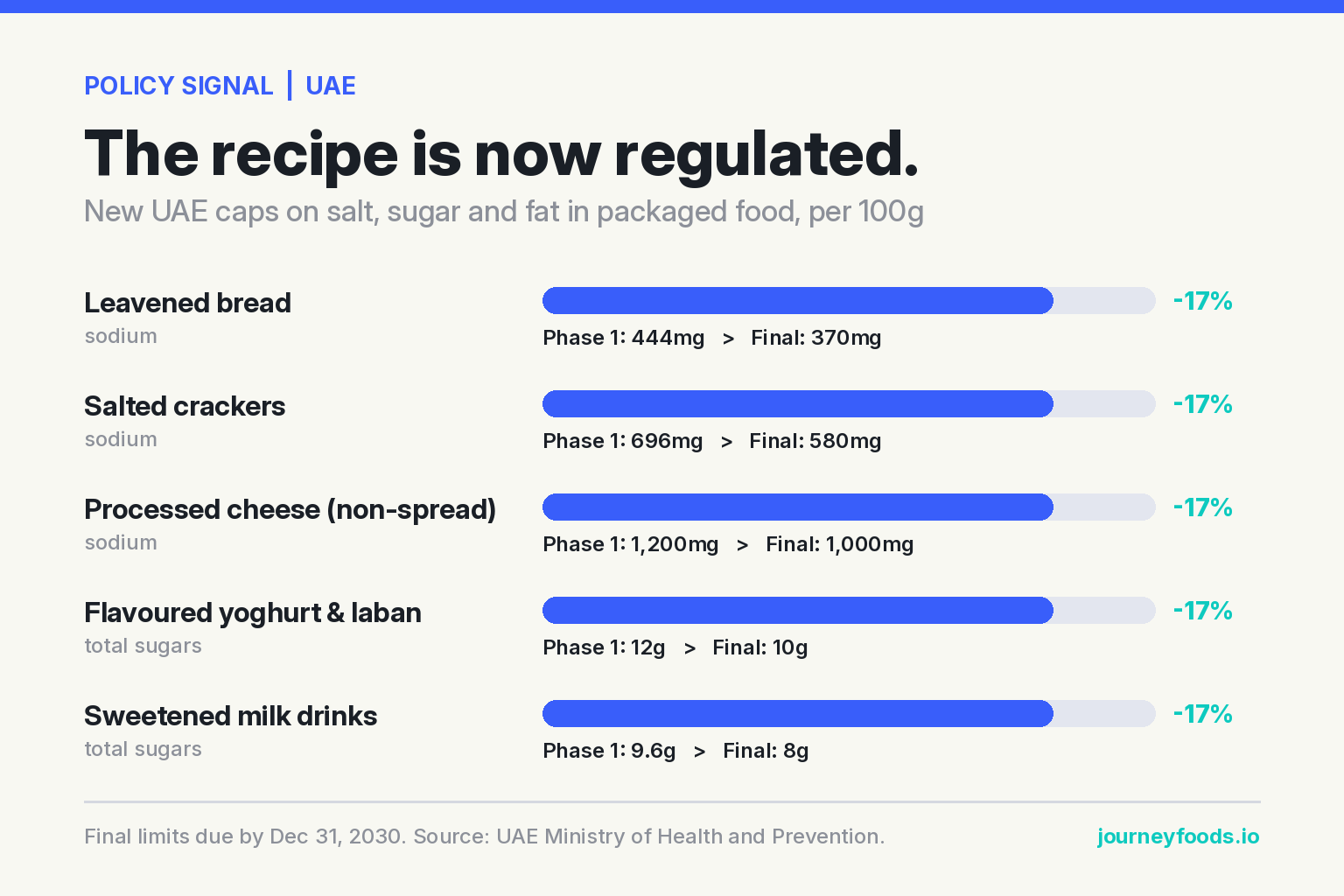
This is the problem we built Journey Foods to solve. Journey AI is intelligence infrastructure for ingredient sourcing and recipe fixes, with nutrition, cost, supplier and compliance data in one place, so teams can find minimally processed, culturally rooted swaps that stay on spec, on budget and on claim. We covered a related shift in our look at the UAE's new salt, sugar and fat limits. If traditional diets and UPF policy are reshaping your portfolio, talk to us.
FAQs
What are ultra-processed products?
Under NOVA, ultra-processed foods (group 4) are industrial formulations made mostly from food-derived substances and additives rarely used in home cooking. GHAI calls them ultra-processed products, or UPPs.
Is there a legal definition of ultra-processed food in the US?
Not a binding federal one. HHS submitted a first proposed definition for final review in August 2026. California's AB 1264 already defines UPFs for school meals.
Journey Ingredient Intelligence
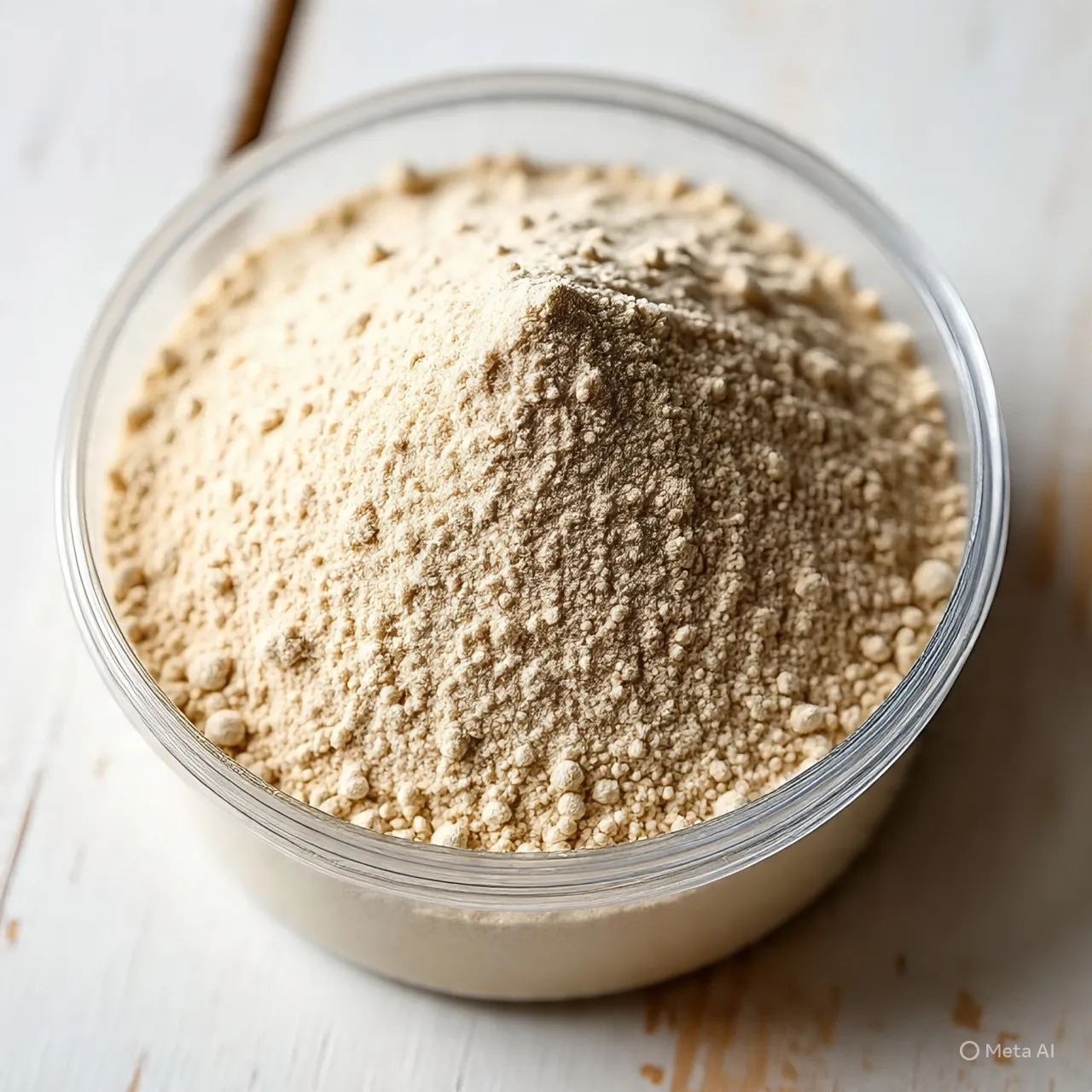
Sorghum Flour
Staples like millet, sorghum, teff, fonio and beans widen a narrow crop base.
A South American tree in the family Lecythidaceae.
Nutrition. Sorghum Flour has a nutrition profile including 1701 kcal/lb calories, 37.51 g/lb protein, 27.22 g/lb fiber, and 8.62 g/lb total sugars.
Cost. Sorghum Flour is currently priced at $7.03/kg.
Sustainability. Journey AI evaluates ingredient sustainability using environmental indicators such as water usage, greenhouse gas emissions, and upcycled status.
Will front-of-pack nutrition labels become mandatory in the US?
Not yet. The FDA proposed a "Nutrition Info" box rating saturated fat, sodium and added sugars as Low, Med or High in January 2025. If finalized, larger companies would get three years to comply.
Does fixing the recipe mean removing every additive?
No. Start with ingredients that trigger warnings or act as UPF markers, then test whole-food alternatives that keep safety, cost and taste on target.
Sources
USDA FAS GAIN: Phase Two Mexico Front of Pack Labeling NOM 051 (2023)
ConsultorSalud: Colombia draft resolution proposing an ultra-processed warning (2026)
GOV.UK: Landmark junk food ad ban to protect kids' health (January 5, 2026)
Federal Register: Ultra-Processed Foods; Request for Information (July 25, 2025)
Office of the Governor of California: AB 1264 signed (October 8, 2025)
Journey Ingredient Intelligence
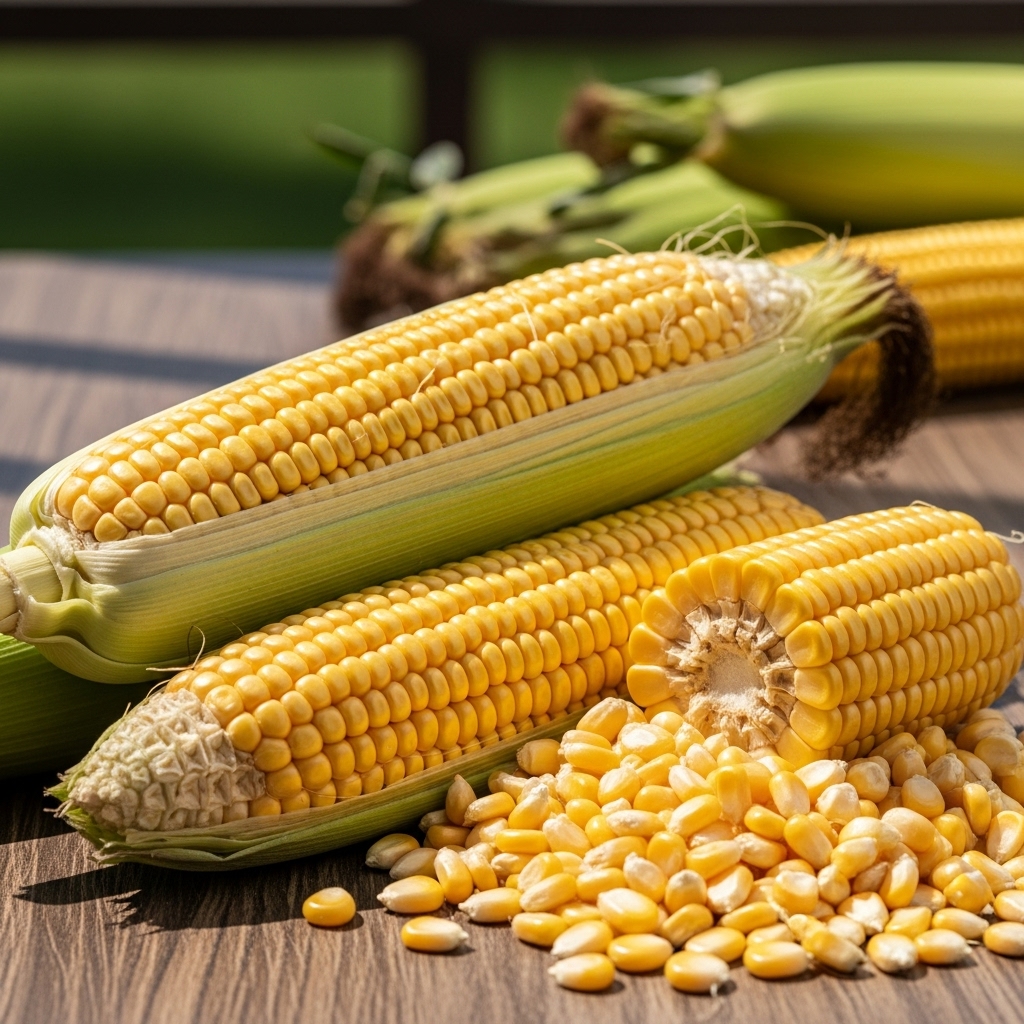
Corn
GHAI flags UPPs partly by ingredients rarely used in home cooking: high-fructose corn syrup, hydrogenated or interesterified oils, hydrolyzed proteins, and cosmetic ad…
A South American tree in the family Lecythidaceae.
As published
20%
Journey Ingredient Intelligence · Comparison
Rice (White, Long Grain)
Sorghum Flour
Data from this story
Shareable Journey Intelligence
Ultra-Processed Foods vs Traditional Diets: A Brand Playbook
Labeling & Nutrition
20%
UPPs supply more than half of energy intake in the US and UK, and 20% to 40% in countries like Brazil and Mexico, per GHAI.
17%
In South Korea, UPPs' share of dietary energy rose from about 17% in 1998 to 2005 to over 25% in 2020 to 2022.