Noise Nutrition: How Sensory-Maximalist CPG Products Are Changing Ingredient Specification

Quick answer
The loudest products on shelf right now — 14 flavor descriptors on the front panel, visible inclusions, a heat-plus-sweet-plus-sour trifecta — are not accidents. They are the result of deliberate, specification-level decisions that most formulation workflows were never designed to handle.
- What "Noise Nutrition" Actually Means
- Why Sensory-Maximalist Formulation Is Harder Than It Looks
- How Ingredient Specification Has to Change
- The Formulation Workflow That Actually Works
- What This Means for Ingredient Specification Documents
- The Clean Label Tension
- Where AI Sensory Validation Fits
- The Portfolio Implication
- Cost Optimization Without Killing the Sensory Profile
- What Doritos Actually Teaches Formulation Teams
- What R&D Teams Should Do Now
- FAQs
R&D leads are feeling this directly. What used to be a two-variable problem (does it taste good, does it meet cost?) has become five or six variables, simultaneously. And the ingredient spec sheet is where that complexity lands first.
Quick Answer: Sensory-maximalist CPG products demand ingredient specifications that balance intensity, interaction effects, layered flavor delivery, cost, and regulatory compliance — all at once. Most formulation teams are managing this in spreadsheets or disconnected tools, which creates version-control failures and slows launch timelines. Platforms that score ingredients across multiple criteria simultaneously are becoming a functional requirement, not a nice-to-have.
Key Takeaways:
- Spec complexity has multiplied. A single sensory-maximalist SKU can require 8 to 12 active flavor-contributing ingredients, each with its own cost curve, supply risk, and interaction profile.
- The order of operations matters. Teams that spec for sensory intensity first and then cost-optimize tend to get better outcomes than teams running those steps sequentially in separate tools.
- Version control is a real casualty. When sensory iteration moves fast, formulation versioning breaks down without a centralized system — and that costs launch time.
What "Noise Nutrition" Actually Means
The term is blunt on purpose. A growing category of CPG products is engineered to overwhelm the senses — not in a negative way, but in the way a great song is loud. These products are designed to be noticed, remembered, and craved.
Look at what's driving the shelf right now: hot honey on everything, chamoy-rimmed snacks, tajin-dusted candy, products that describe themselves as "fiery mango habanero with a cooling finish." The flavor architecture on these SKUs is not simple. It is layered, intentional, and technically demanding to replicate at scale.
This is sensory maximalism. And it is reshaping what ingredient specification actually requires.
Why Sensory-Maximalist Formulation Is Harder Than It Looks
A clean-label protein bar has maybe four or five ingredients doing meaningful sensory work. A sensory-maximalist snack might have twelve. Each one is pulling a different lever — heat, sweetness, acidity, texture, aroma, visual contrast. The challenge is not just finding ingredients that work. It is finding ingredients that work together, at a price point that holds, from a supply base that is reliable.
That is three problems at once. Most formulation tools solve one of them.
The Interaction Problem
Capsaicin from chili extract behaves differently in a fat-based matrix than in a water-based one. Citric acid at 0.8% can brighten a flavor profile or make it taste harsh depending on what it sits next to. Tamarind concentrate and malic acid can either complement or fight each other depending on processing temperature.
Sensory-maximalist formulation requires understanding these interaction effects before you commit to a spec. That means your ingredient intelligence needs to be specific, not just directional.
The Cost Volatility Problem
Many of the ingredients driving sensory maximalism right now — ghost pepper extract, yuzu, freeze-dried fruit inclusions, high-potency capsicum oleoresin — have volatile cost curves. Yuzu supply is heavily concentrated in Japan. Freeze-dried inclusions are energy-intensive to produce and sensitive to commodity grain prices. When you are building a product with eight or more of these ingredients, cost volatility compounds fast.
R&D teams that spec for sensory performance first and then hand the formulation to procurement for cost review are setting themselves up for a painful cycle. The spec gets value-engineered, sensory performance drops, and the product ends up being neither the bold thing it was supposed to be nor the cost-efficient thing finance wanted.
The Supply Risk Problem
Sensory-maximalist ingredients tend to come from narrower supply bases. Specialty chili varieties, specific regional citrus derivatives, proprietary flavor compounds — these are not commodity ingredients with ten qualified suppliers. A single disruption can stall a launch or force a mid-cycle reformulation.
If your formulation workflow does not include real-time supply chain monitoring, you find out about disruptions when your supplier emails you. That is too late.
How Ingredient Specification Has to Change
The traditional spec sheet was built for a different era. It captured what an ingredient was, what it cost, and whether it met regulatory requirements. That was sufficient when products were simpler and supply chains were more predictable.
Sensory-maximalist formulation demands a spec process that runs nutrition, cost, and supply risk analysis in parallel — not sequentially. Here is what that looks like in practice.
Scoring Ingredients Across Multiple Dimensions at Once
When you are evaluating a capsicum oleoresin versus a ghost pepper extract versus a synthetic capsaicin analog, you are not just asking which one delivers the right heat level. You are asking which one delivers the right heat level at a price that holds at scale, from a supplier that can reliably deliver, with a regulatory profile that does not create labeling problems.
That is a four-dimensional scoring problem. Running it in a spreadsheet means making tradeoffs you cannot fully see.
Journey Foods' Operations Scientist AI engine scores ingredients across nutrition, cost, and sustainability simultaneously — so your team evaluates tradeoffs in one view rather than assembling them from three separate tools. When you are managing 8 to 12 active flavor-contributing ingredients per SKU, that compression of the evaluation process matters.
Version Control Is Not Optional When Sensory Iteration Is Fast
Sensory-maximalist products go through more formulation iterations than simpler ones. That is just the nature of the work — you are tuning a complex system, and small changes in one ingredient can cascade through the entire sensory profile.
Each iteration needs to be tracked. Not in a shared folder with filenames like "formula_v7_FINAL_REVISED." In a system with actual version control, where you can see what changed, who changed it, and what the cost and supply implications of that change were.
This is where formulation teams lose time. A version-control failure on a complex sensory formulation can cost weeks of rework. At launch, that is real money.
Substitution Intelligence Has to Be Sensory-Aware
When a supply disruption hits a specialty ingredient, the substitution decision is not just "find something with a similar nutritional profile." For a sensory-maximalist product, the substitute has to deliver comparable intensity, comparable interaction effects, and comparable processing behavior.
That requires ingredient intelligence that understands sensory function, not just nutritional composition. AI-generated substitution recommendations that account for flavor function, cost, and supply availability compress what used to be a multi-week research process into something a food scientist can act on the same day.
The Formulation Workflow That Actually Works
R&D leads managing sensory-maximalist portfolios are converging on a workflow that looks roughly like this:
1. Define the sensory architecture first. Map the intended flavor profile — primary notes, secondary notes, mouthfeel targets, heat or cooling progression, finish. This is the creative brief for the formulation.
2. Score candidate ingredients against all criteria simultaneously. Nutrition, cost, supply risk, sustainability — in parallel, not sequentially. This is where multi-criteria scoring tools earn their place.
3. Run interaction modeling before committing to a spec. Understand how your candidate ingredients behave together in your specific matrix. This step gets skipped under time pressure and paid for in reformulation cycles.
4. Lock the spec with version control. Every change from this point forward is tracked. No shared spreadsheets, no email chains.
5. Monitor supply in real time. Set alerts on your key specialty ingredients so you know about supply constraints before they become launch-blocking problems.
6. Build substitution options into the spec. For each high-risk ingredient, have a qualified alternative already scored and documented. This is reactive sourcing prevention.
This workflow is not theoretical. It is what the teams launching the most complex sensory products are actually doing — and the gap between teams with the tooling to support it and teams without it is widening.
What This Means for Ingredient Specification Documents
Journey Ingredient Intelligence
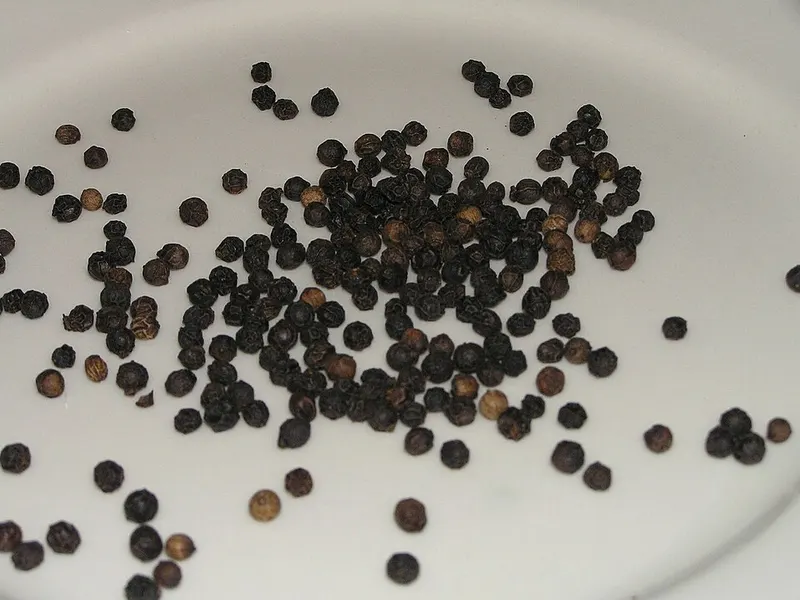
Black pepper
The Cost Volatility Problem Many of the ingredients driving sensory maximalism right now — ghost pepper extract, yuzu, freeze-dried fruit inclusions, high-potency caps…
Black pepper: 251 kcal and 10.4 g protein per 100 g; top producer Vietnam (28.1%, 2024); 9.4 kg CO2e per kg.
Explore Black pepper dataThe spec sheet itself is changing. A sensory-maximalist formulation spec needs to capture more than it used to.
Beyond the standard fields — ingredient identity, supplier, grade, cost per unit — a complete spec for a complex sensory product should document:
- Sensory function (what role this ingredient plays in the overall profile — primary heat, brightness, aromatic top note, textural contrast)
- Interaction flags (known interactions with other ingredients in the formulation that affect sensory performance)
- Supply risk rating (single-source vs. multi-source, lead time, known seasonal constraints)
- Qualified substitutes (at least one alternative already scored for cost and sensory parity)
- Sustainability data (cradle-to-gate CO2e where available, especially for ingredients with high environmental variability like tropical fruits or specialty peppers)
Most teams are not documenting all of this. The ones that are tend to launch faster and reformulate less.
The Clean Label Tension
Sensory maximalism and clean label are not automatically in conflict — but they create real specification tension. Consumers want bold flavor and a short, readable ingredient list. Delivering both requires ingredients that are doing more work per line item.
Natural capsicum extracts instead of synthetic capsaicin. Real tamarind paste instead of tamarind flavor. Freeze-dried fruit powders instead of artificial fruit flavors. These substitutions are possible, but they carry cost premiums and supply complexity that synthetic alternatives do not.
Food scientists navigating this tension need to understand the cost and supply implications of clean-label sensory ingredients before committing to them in a spec. If you are already tracking how to replace synthetic additives without killing your margin, the sensory-maximalist context adds another layer: the replacement also has to deliver comparable intensity and interaction behavior.
That is a harder problem than a straight ingredient swap.
Where AI Sensory Validation Fits
Scoring ingredients for cost, nutrition, and supply is necessary but not sufficient for sensory-maximalist formulation. You also need to know whether the sensory architecture you have built actually works for your target consumer.
AI-powered sensory analysis platforms — tools that apply machine learning to consumer preference data and sensory panel results — are increasingly being used to validate formulation decisions before physical prototypes go into consumer testing. Predictive sensory modeling, as applied by platforms like Aigora, can reduce the number of prototype rounds needed to hit a target flavor profile. That matters a lot when each round involves specialty ingredients with long lead times.
The practical workflow: score and select ingredients with multi-criteria intelligence, then validate the sensory architecture with predictive modeling before committing to a full prototype run.
The Portfolio Implication
Sensory-maximalist products rarely travel alone. They tend to move in lines — a base flavor plus heat variants, regional extensions, limited-edition seasonal drops. Each extension is a new formulation, but it shares most of its ingredient architecture with the base.
Managing a sensory-maximalist line as a portfolio — rather than as a series of independent formulations — requires portfolio-level visibility. Which ingredients are shared across SKUs? Where are the supply risks concentrated? If your ghost pepper extract supplier has a disruption, how many SKUs are affected?
These are the questions that ingredient trends CPG R&D teams are tracking in 2026 are forcing teams to answer at the portfolio level, not the SKU level. That requires tooling that can see across formulations simultaneously.
Journey Foods' portfolio management layer — with goal setting, analytics, and cross-formulation visibility — is built for exactly this. When you are managing eight SKUs that share four specialty ingredients, you need to see supply risk at the portfolio level, not just per formulation.
Cost Optimization Without Killing the Sensory Profile
The pressure to reduce cost-per-formulation is real. CFO mandates on ingredient spend are not going away. But sensory-maximalist products are particularly vulnerable to value-engineering that destroys what made the product work in the first place.
The teams that navigate this well define a sensory floor before cost optimization begins. They know which ingredients are doing irreplaceable sensory work and which have substitution options that maintain spec parity. They do not optimize blindly — they optimize with constraints.
Food ingredient cost optimization in a sensory-maximalist context means knowing your substitution options before the CFO asks the question. If you can show finance a qualified alternative to your most expensive specialty ingredient — one already scored for sensory function, cost, and supply — you control the conversation instead of reacting to it.
What Doritos Actually Teaches Formulation Teams
Doritos is the canonical sensory-maximalist product. The flavor system on a bag of Nacho Cheese Doritos involves dozens of ingredients working together to create something that is more than the sum of its parts. The analysis of what is actually in Doritos and what it means for CPG formulators is worth reading if you have not already.
The lesson is not "add more ingredients." The lesson is that sensory complexity requires ingredient discipline. Every ingredient in that system has a job. Nothing is there by accident. That level of specification rigor is what sensory-maximalist formulation actually demands — and it does not happen without the right process and tooling behind it.
What R&D Teams Should Do Now
If you are managing sensory-maximalist formulations — or preparing to launch products in this category — three things are worth doing immediately.
Audit your current spec process for the gaps described above. Are you scoring ingredients across cost, supply risk, and sensory function simultaneously, or sequentially? Sequential evaluation is where the rework cycles come from.
Build substitution options into your specs before you need them. For every specialty ingredient with a narrow supply base, document a qualified alternative. This is not extra work — it is insurance against a supply disruption that would otherwise cost you weeks.
Get your formulation versioning out of shared folders. The iteration speed of sensory-maximalist development will expose every weakness in a manual versioning system. You need actual version control, with a clear record of what changed, when, and why.
If your current tooling cannot support these three things simultaneously, it is worth looking at what Journey Foods can do. The Operations Scientist AI engine, real-time supply chain alerts, and centralized formulation dashboard are built for exactly the kind of multi-variable, high-iteration work that sensory-maximalist formulation requires. Explore the platform at journeyfoods.io or book a demo at journeyfoods.io/book-a-demo.
FAQs
What is sensory maximalism in CPG product development?
Sensory maximalism is a product design philosophy where multiple sensory dimensions — flavor intensity, heat, acidity, texture, aroma, visual contrast — are deliberately layered and amplified. Products in this category are engineered to deliver complex, memorable sensory experiences rather than a single dominant flavor note.
How does sensory maximalism change ingredient specification?
It multiplies the number of ingredients doing active sensory work in a formulation, raises the importance of understanding ingredient interaction effects, and increases the cost and supply complexity of the spec. A sensory-maximalist product may require 8 to 12 active flavor-contributing ingredients, each of which needs to be evaluated for sensory function, cost, supply risk, and regulatory compliance — simultaneously, not sequentially.
Why is version control a bigger problem for sensory-maximalist formulations?
Because these products go through more iteration cycles. Tuning a complex flavor architecture requires frequent small adjustments, and each adjustment changes the spec. Without a system that tracks versions automatically, teams lose track of what changed, when, and why — which leads to rework and delayed launches.
How can R&D teams manage cost pressure without degrading sensory performance?
By defining a sensory floor before cost optimization begins. Identify which ingredients are doing irreplaceable sensory work and which have qualified substitutes that maintain spec parity. Running this analysis before finance asks the question gives R&D teams control over the conversation.
What role does supply chain monitoring play in sensory-maximalist formulation?
A significant one. Many of the ingredients driving sensory maximalism — specialty peppers, regional citrus derivatives, freeze-dried fruit inclusions — come from narrow supply bases with real disruption risk. Real-time monitoring lets teams identify problems before they become launch-blocking, and pre-scored substitution options allow faster response when disruptions do occur.
Can sensory-maximalist products also be clean label?
Yes, but it requires more specification work. Natural alternatives to synthetic flavor compounds often carry cost premiums and supply complexity. The formulation challenge is finding clean-label ingredients that deliver comparable sensory intensity and interaction behavior — which requires ingredient intelligence that goes beyond nutritional composition.
What tools do food scientists use to validate sensory-maximalist formulations?
Multi-criteria ingredient scoring platforms help evaluate candidates across cost, nutrition, and supply risk simultaneously. AI-powered sensory analysis tools can predict consumer preference and validate flavor architecture before physical prototypes go into consumer testing. Used together, these tools reduce the number of prototype rounds needed to hit a target sensory profile.
The products winning on shelf right now are not winning because they are louder. They are winning because someone made very specific, very deliberate ingredient decisions — and had the process to back them up. The noise is the product. The specification is the work.

Journey Ingredient Intelligence
Honey
Look at what's driving the shelf right now: hot honey on everything, chamoy-rimmed snacks, tajin-dusted candy, products that describe themselves as "fiery man…
Honey: 304 kcal and 0.3 g protein per 100 g; top producer China (22.4%, 2024); 1.57 kg CO2e per kg.
Explore Honey dataAs published
0.8%
Data from this story
Shareable Journey Intelligence
Noise Nutrition: How Sensory-Maximalist CPG Products Are Changing Ingredient Specification
Labeling & Nutrition
0.8%
Citric acid at 0.8% can brighten a flavor profile or make it taste harsh depending on what it sits next to.