Homemade Upgrade: Lunchables vs Bento Style Lunch with Recipe
Jaynelle St. Jean
June 14, 2025
Share Article
Tags
Food Formulation
Journey Foods Nutrition Score Breakdown
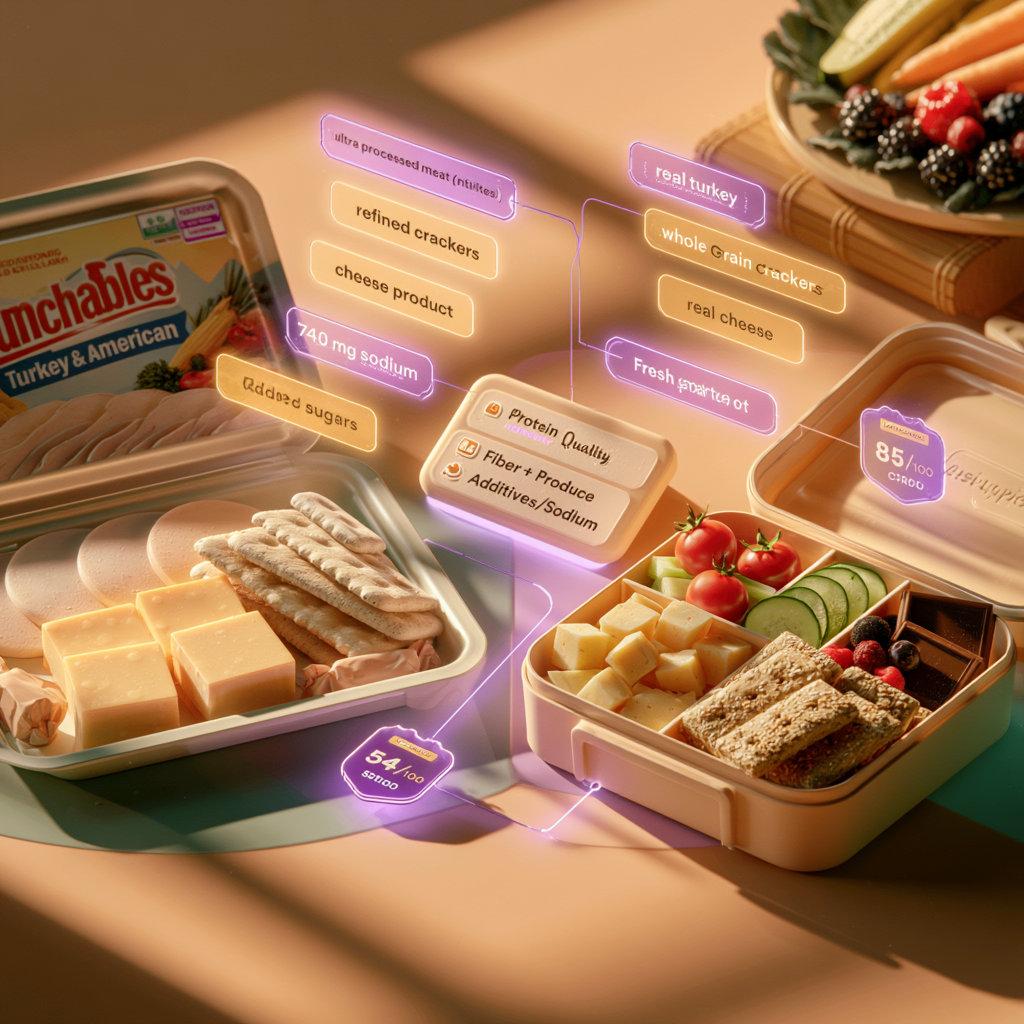
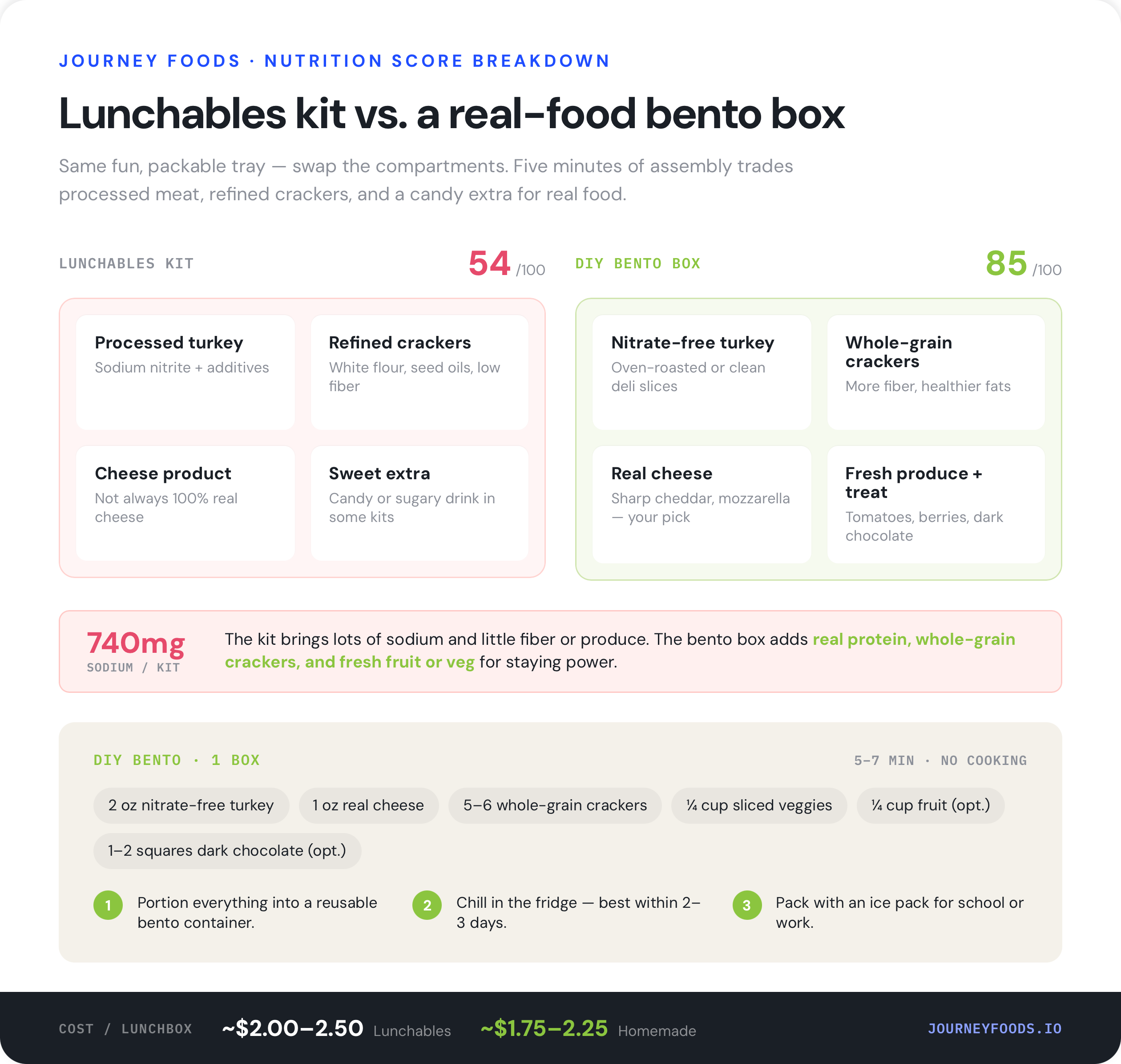
Lunchables Turkey & American Cheese with Crackers: 54/100
DIY Turkey + Cheese Bento Box with Whole-Grain Crackers: 85/100
Inside the Lunchbox: Why the Classic Kit Falls Short
Lunchables are designed for convenience and kid appeal — not nutrition. The concept is clever: ready-to-eat lunch in a colorful tray. But the actual ingredients tell a less exciting story:
Ultra-processed meats: Preserved with sodium nitrite and packed with additives
Refined crackers: Mostly white flour, seed oils, and little fiber
Cheese product: Not always 100% real cheese
Sweet extras: Some versions include candy or sugary drinks
With 740mg of sodium and very little fiber or produce, the Lunchables Journey Score drops to 54. It satisfies salty cravings but lacks nutrient density.
The Homemade Swap: A Real Food Bento Box
The DIY version keeps the fun and flexibility but replaces processed fillers with fresh, balanced components. Think of it as a smarter snack tray — simple to assemble and better in every way.
Why it scores higher:
Real turkey: Oven-roasted or deli-sliced without added nitrates
Whole-grain or seed-based crackers: More fiber and healthier fats
Real cheese: Choose sharp cheddar, mozzarella, or any favorite
Fresh produce: Add cherry tomatoes, berries, or cucumber slices
Healthy treat: A couple of dark chocolate chips or a dried fig instead of candy
Journey Foods Nutrition Score: 85/100 This higher score reflects the improved protein quality, fiber content, and ingredient transparency — plus fewer preservatives and additives.
Homemade Recipe: DIY Lunchable-Style Bento Box
Ingredients (1 box):
2 oz nitrate-free turkey breast (sliced or cubed)
1 oz real cheese, sliced or cubed
5–6 whole-grain crackers or seed crackers
¼ cup sliced veggies (carrots, cucumber, cherry tomatoes)
Optional: ¼ cup fruit (berries, grapes, or apple slices)
Optional treat: 1–2 squares dark chocolate or dried fruit
Instructions:
Portion everything into a reusable lunch container or bento box.
Store in the fridge until ready to eat (best eaten within 2–3 days).
Keep chilled with an ice pack if packing for school or work.
Time Breakdown:
Active Time: 5–7 minutes
Inactive Time: None
Cost Comparison (per lunchbox)
Option
Cost per Serving
Lunchables Kit
~$2.00–$2.50
Homemade Bento Box
~$1.75–$2.25
The homemade version is price-comparable, but with real food and better nutrition.
Bottom Line
Lunchables may be fun and fast, but they come with a load of additives, low-quality ingredients, and not much staying power. The homemade version keeps all the convenience and satisfaction — but swaps in real protein, better grains, and a few fruits or veggies for balance. Kids and adults alike can benefit from this easy, packable upgrade.