Stovetop stuffing is a holiday staple turned weeknight shortcut — just add water and butter, and you're done. But take a closer look at what’s really in there:
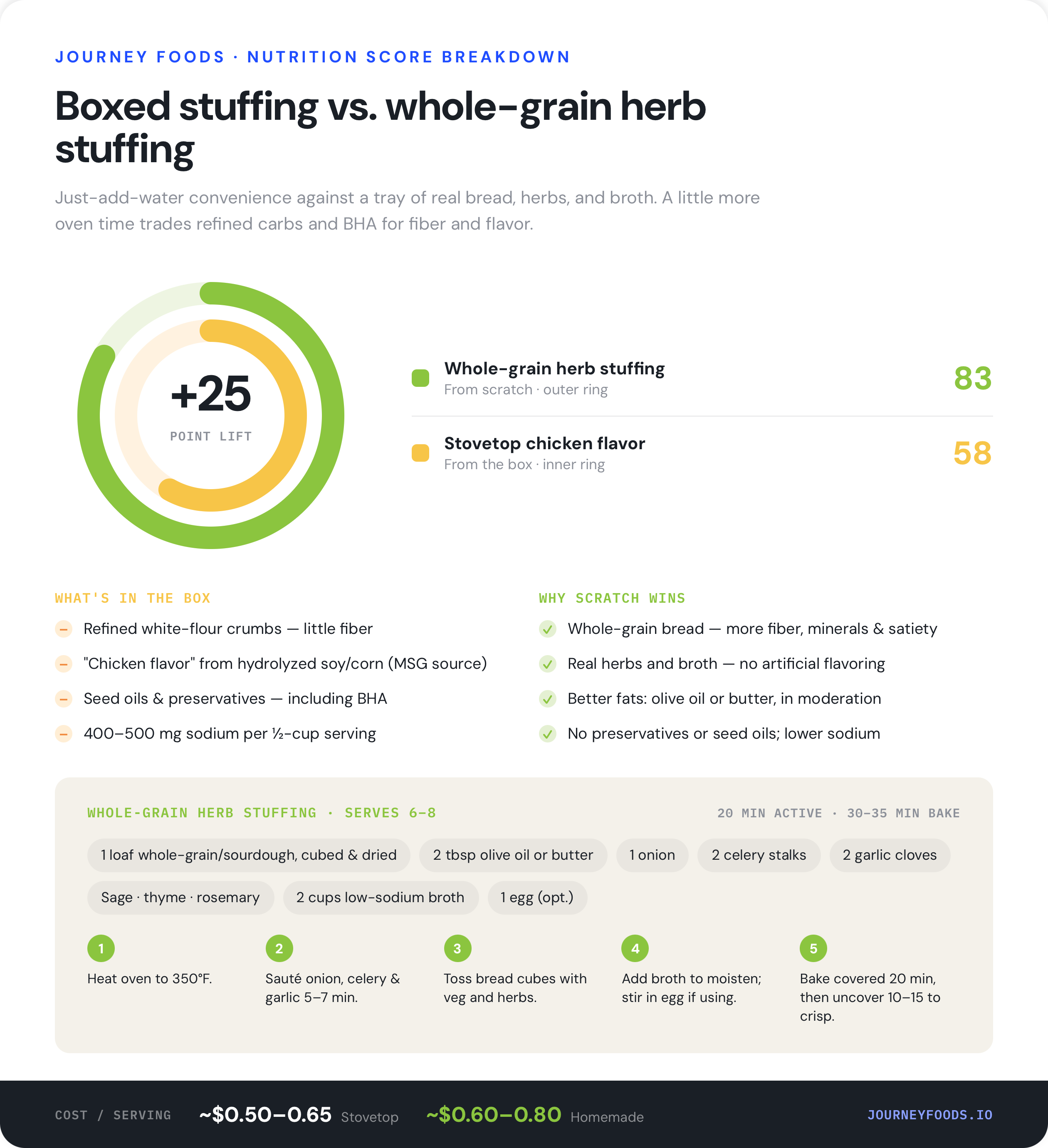
Refined bread crumbs: Made from white flour with little fiber
Artificial flavoring: Including “chicken flavor” that often includes hydrolyzed soy/corn protein (a source of MSG)
Seed oils and preservatives: Butylated hydroxyanisole (BHA) and other additives
High sodium: Around 400–500mg per ½ cup serving
The Journey Score lands at 58 — convenient and flavorful, but not the most nourishing or gut-friendly side dish.
The Homemade Swap: Herb-Stuffed Goodness
You can recreate the flavor of stuffing with a few pantry ingredients — and wind up with something more satisfying, more wholesome, and far more versatile. Homemade stuffing isn’t just for Thanksgiving anymore.
Why it scores higher:
Whole grain bread: Better fiber, minerals, and satiety
Real herbs and broth: No artificial flavoring needed
Better fats: Use olive oil or butter in moderation
No preservatives or seed oils: Just food, the way it used to be
Journey Foods Nutrition Score: 83/100 The boost comes from fiber, fewer inflammatory ingredients, and lower sodium (especially if you use a homemade broth).
Homemade Recipe: Whole Grain Herb Stuffing
Ingredients (serves 6–8):
1 loaf whole grain or sourdough bread, cubed and dried
2 tbsp olive oil or butter
1 small onion, finely chopped
2 celery stalks, finely chopped
2 garlic cloves, minced
1 tsp dried sage
1 tsp dried thyme
1 tsp rosemary
Salt and pepper to taste
2 cups low-sodium broth (vegetable or chicken)
1 egg (optional, for binding)
Instructions:
Preheat oven to 350°F.
In a skillet, sauté onion, celery, and garlic in oil until softened (about 5–7 minutes).
In a large bowl, toss bread cubes with sautéed vegetables and herbs.
Add broth gradually until the mixture is moist but not soggy. Stir in egg if using.
Transfer to a greased baking dish. Cover with foil and bake for 20 minutes, then uncover and bake 10–15 more until top is crisp.
Time Breakdown:
Active Time: 15–20 minutes
Inactive Time: 30–35 minutes (baking + cooling)
Cost Comparison (per serving)
Option
Cost per Serving
Stovetop Stuffing
~$0.50–$0.65
Homemade Stuffing
~$0.60–$0.80
Homemade costs slightly more, but offers improved ingredients and nutrient value.
Final Take
Stovetop stuffing is quick and tasty, but built on refined carbs, additives, and high sodium. A homemade version takes a bit more time but pays off in flavor and health benefits. Make it in bulk, freeze portions, and you’ll have a ready-to-heat side dish that does your body (and your taste buds) more good.