

Journey Foods Nutrition Score Breakdown
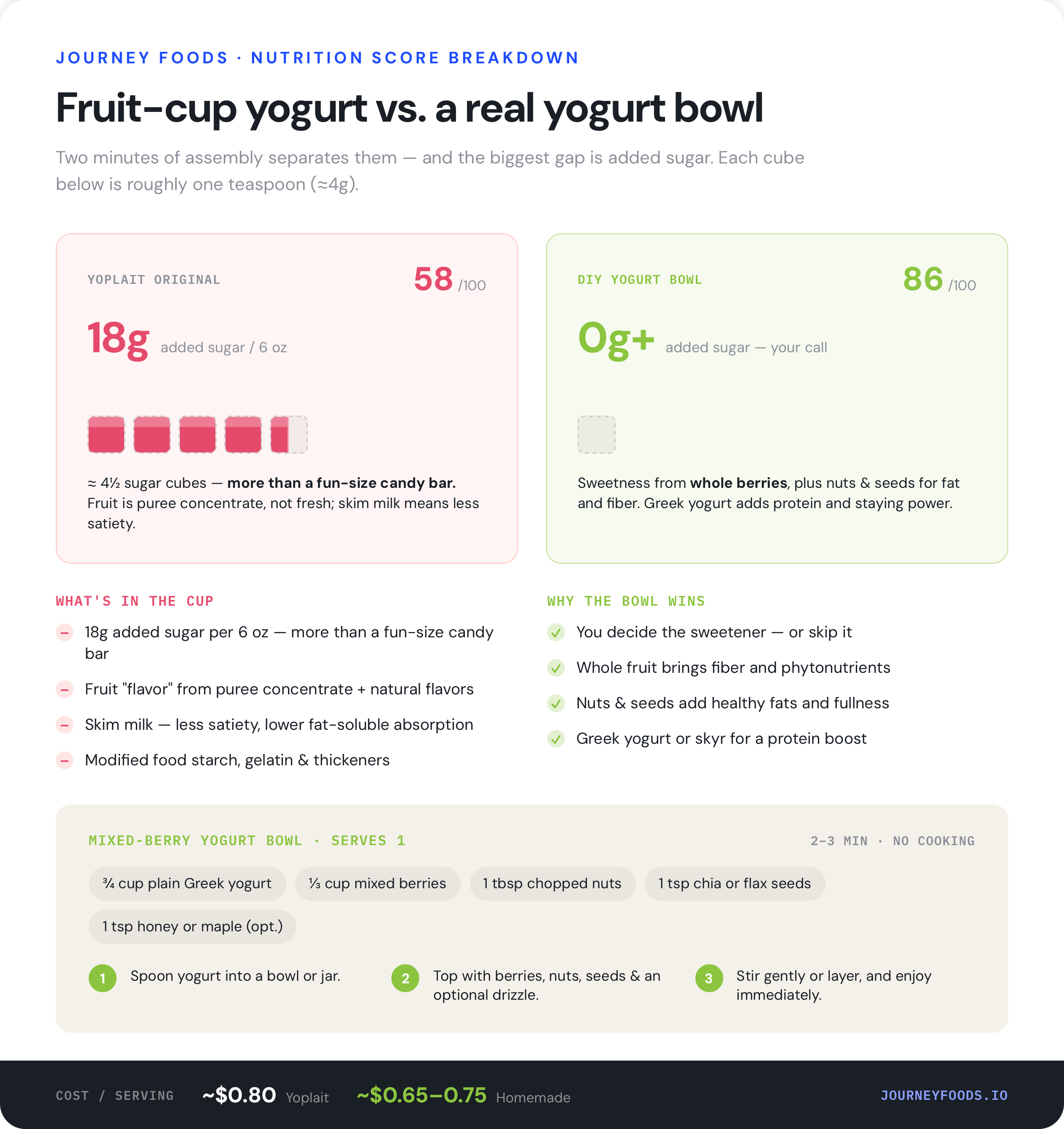
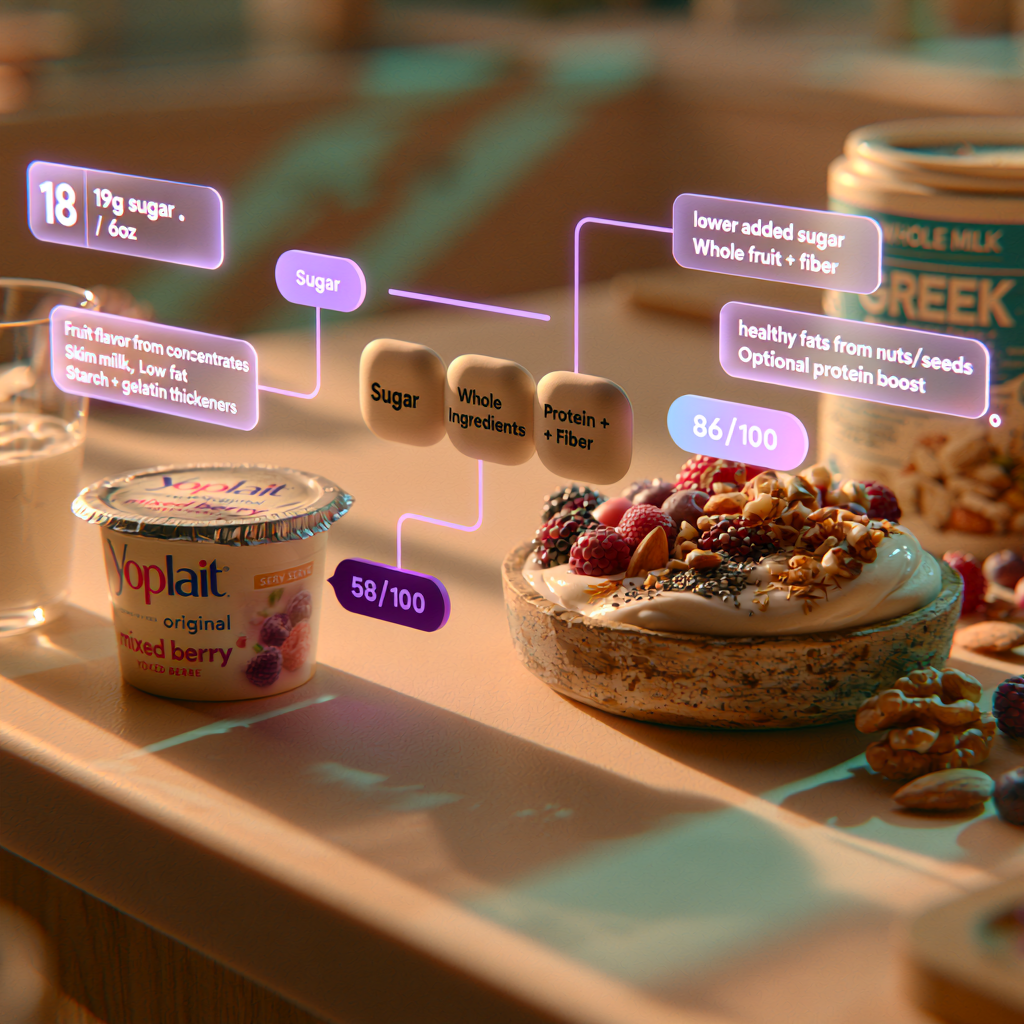
Yoplait Original Yogurt feels like a healthy grab-and-go snack. But behind the colorful foil lid, you’ll find a product that’s more dessert than breakfast:
Its Journey Score of 58 reflects these issues — especially the high sugar content, ultra-processed fruit components, and lack of healthy fats or fiber.
Making your own yogurt bowl takes less than two minutes and offers far more flexibility — from taste to nutrition.
Why it scores higher:
Journey Foods Nutrition Score: 86/100
Higher marks come from fewer processed ingredients, better fats, higher protein, and more fiber — all wrapped up in a fresh, customizable bowl.
Ingredients (makes 1 serving):
Instructions:
Time Breakdown:
Option
Cost per Serving
Yoplait Single Serve Yogurt
~$0.80
Homemade Yogurt Bowl
~$0.65–$0.75
DIY version may cost slightly more if using organic dairy or berries, but you get fuller nutrition and a larger portion.
Yoplait’s original berry yogurt is sweet, convenient, and easy to grab — but it’s not doing your blood sugar or microbiome any favors. Making your own version takes just minutes and gives you better control over ingredients, flavor, and satiety. You’ll walk away with more energy and fewer crashes, plus a score that reflects your real nutritional upgrade.