Sugar Alternatives for Baking: A Formulator's Guide to Clean-Label Sweeteners


Quick answer
Replacing sucrose in a baked good sounds straightforward until you're three iterations deep and your cookies are spreading flat, your muffins are gummy, and your shelf-life projections are off by two weeks. Sugar does a lot of structural work that most sweetener swap guides quietly ignore.
This is a technical reference for formulators who already know the basics — developers, food scientists, and R&D leads who need a grounded breakdown of clean-label sweeteners for baked applications: what each ingredient actually does, where it falls short, and how to build blends that hold up at scale.
Why Sugar Is Hard to Replace in Baking
Sucrose contributes far more than sweetness. In a standard baked formulation, it:
Any replacement ingredient needs to address at least some of these functions — not just match a sweetness number. That's the core challenge with sugar alternatives in baking, and it's why single-ingredient swaps so rarely work cleanly.
The Clean-Label Constraint
Clean label means different things to different brands, but in most CPG and food service contexts, the working definition is: no artificial sweeteners, no synthetic additives, and nothing that requires a consumer to reach for their phone to decode.
That rules out acesulfame-K, aspartame, saccharin, and sucralose for most clean-label projects. Depending on brand positioning, some polyols face pressure too.
What remains is a workable but nuanced set of options — each with real tradeoffs.
If you're also navigating how to handle synthetic additives more broadly, the clean-label formulation guide on replacing synthetic additives covers the wider decision framework.
Clean-Label Sugar Alternatives for Baking: A Technical Breakdown
Allulose
Allulose is a rare sugar found naturally in small amounts in figs, raisins, and wheat. It delivers roughly 70% of sucrose's sweetness at approximately 0.4 kcal/g — compared to sucrose at 4 kcal/g.
Baking performance: Allulose browns faster than sucrose in Maillard reactions, so expect to reduce oven temperature by 10–15°F or shorten bake time. It retains moisture well, which supports softness and shelf life. It does not crystallize the way sucrose does, so applications that depend on crystallization — certain icings, shortbread snap — need adjustment.
Clean-label status: Generally well-regarded. It's GRAS in the US and, per current FDA guidance, does not count toward total sugars on the Nutrition Facts panel.
Formulation note: At high inclusion rates (above 50% sucrose replacement), some consumers report mild laxative effects — though this threshold is significantly higher than with most polyols.
Monk Fruit Extract (Luo Han Guo)
Monk fruit extract is 150–250x sweeter than sucrose depending on mogroside concentration. It contributes no calories and has strong clean-label consumer recognition.
Baking performance: Because it's used in such small amounts, it does nothing for bulk, moisture retention, or browning. It almost always needs a bulking agent alongside it — erythritol, inulin, and allulose are the most common pairings.
Clean-label status: High. It reads well on ingredient lists and resonates with health-conscious consumers.
Formulation note: Some monk fruit extracts carry off-notes at higher concentrations. In delicate applications — vanilla shortbread, white cake — evaluate your supplier's extract carefully. Flavor profile varies meaningfully between sources.
Erythritol
Erythritol is a sugar alcohol (polyol) that provides about 60–70% of sucrose's sweetness at roughly 0.2 kcal/g. It occurs naturally in fermented foods and some fruits.
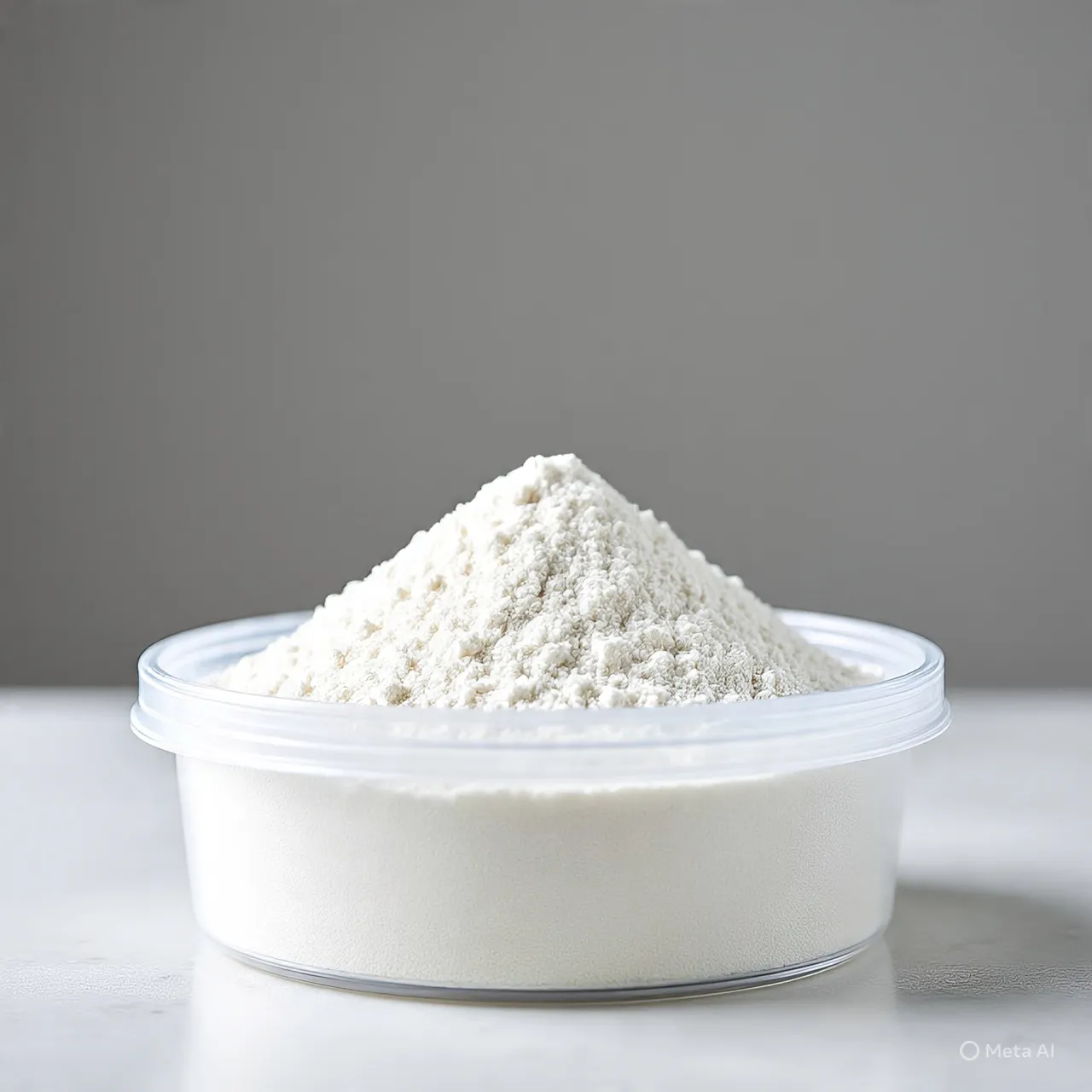
Journey Ingredient Intelligence
Baking Soda
Why Sugar Is Hard to Replace in Baking Sucrose contributes far more than sweetness.
A South American tree in the family Lecythidaceae.
Nutrition. Baking Soda has a nutrition profile based on the current Journey Foods nutrition table: Calories: 0 kcal/lb, Protein: 0.00 g/lb, Fiber: 0.00 g/lb, Total Sugars: 0.00 g…
Cost. Baking Soda is currently priced at $4.47/kg.
Sustainability. Baking Soda: Journey AI evaluates ingredient sustainability using environmental indicators such as water usage, greenhouse gas emissions, and upcycled status.
Baking performance: It performs reasonably well in baked goods but tends to recrystallize on cooling, which can produce a gritty or cooling mouthfeel. It doesn't participate meaningfully in Maillard browning, so expect paler products unless you pair it with a reducing sugar or add a browning agent.
Clean-label status: Generally accepted. "Erythritol" is familiar enough to most consumers and reads cleanly on a label.
Formulation note: Erythritol is commonly blended with monk fruit to balance sweetness intensity and bulk. That combination is one of the more stable clean-label pairings for baking.
Coconut Sugar
Coconut sugar is derived from the sap of coconut palm flowers. Its glycemic index is often cited around 35 (vs. sucrose at ~65), but that figure is based on limited research and shouldn't be treated as a reliable health claim in labeling.
Baking performance: It behaves very similarly to brown sugar. It contributes caramel and toffee notes, retains moisture, and participates in browning. In most recipes, it works as a near 1:1 replacement for brown sugar.
Clean-label status: Strong. It reads as a single, recognizable ingredient.
Formulation note: The flavor contribution is significant. It works well in chocolate chip cookies, banana bread, and spiced applications — and can overpower delicate flavors in white cakes or vanilla-forward products.
Date Sugar and Date Paste
Date sugar is ground dried dates. Date paste is a puree of whole dates with water. Both retain fiber, minerals, and the naturally occurring sugars from the fruit.
Baking performance: Date paste adds moisture and can function as a partial fat replacer in some applications. Date sugar doesn't melt or dissolve fully, so it creates a different texture than granulated sugar. Both contribute a distinct caramel-fruit flavor.
Clean-label status: Excellent. Single whole-food ingredient, no ambiguity.
Formulation note: Date paste is most useful in dense, moist applications — energy bars, brownies, whole-grain muffins. It's less suited to applications requiring a light, airy crumb.
Inulin and Chicory Root Fiber
Inulin is a prebiotic fiber derived primarily from chicory root. It contributes roughly 1.5 kcal/g and has mild sweetness — about 10% of sucrose.
Baking performance: Inulin functions primarily as a bulking agent and fat replacer rather than a sweetener. In baking, it helps retain moisture, adds slight creaminess to texture, and can improve shelf life. It does not brown or caramelize.
Clean-label status: Strong, especially for brands targeting gut health positioning. "Chicory root fiber" or "inulin" reads clearly on a label.
Formulation note: At high inclusion rates, inulin can cause digestive discomfort. Most formulators keep it under 10–12g per serving in finished products.
Honey and Maple Syrup
Both are liquid sweeteners with strong consumer recognition and clean-label appeal. Honey is roughly 1.3x sweeter than sucrose; maple syrup is slightly less sweet.
Baking performance: Both are hygroscopic — they attract and retain moisture, which extends shelf life but can cause spreading in cookies and stickiness in certain applications. They also accelerate browning. When substituting for granulated sugar, standard practice is to reduce other liquids by about 3 tablespoons per cup of honey and add a small amount of baking soda to neutralize acidity.
Clean-label status: Excellent for both. These are among the most trusted sweetener ingredients with consumers.
Formulation note: Flavor contribution is significant and application-dependent. Both work well where warm, complex sweetness is an asset. They're harder to use in neutral-flavored applications.
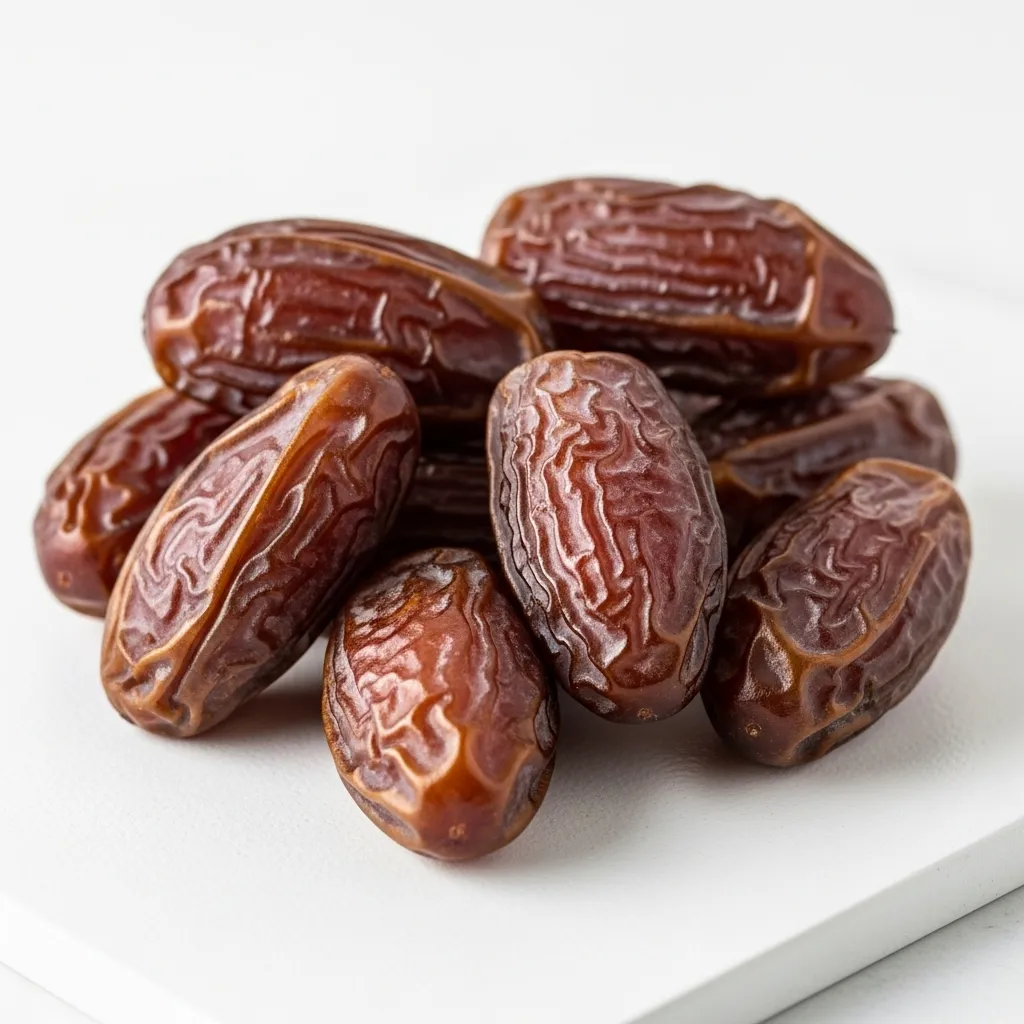
Journey Ingredient Intelligence
Date
Date Sugar and Date Paste Date sugar is ground dried dates.
A South American tree in the family Lecythidaceae.
Nutrition. Date has a nutrition profile including 1279 kcal/lb calories, 11.11 g/lb protein, 36.29 g/lb fiber, and 287.35 g/lb total sugars.
Cost. Date is currently priced at $16.64/kg.
Sustainability. Journey AI evaluates ingredient sustainability using environmental indicators such as water usage, greenhouse gas emissions, and upcycled status.
Comparing Key Functional Properties
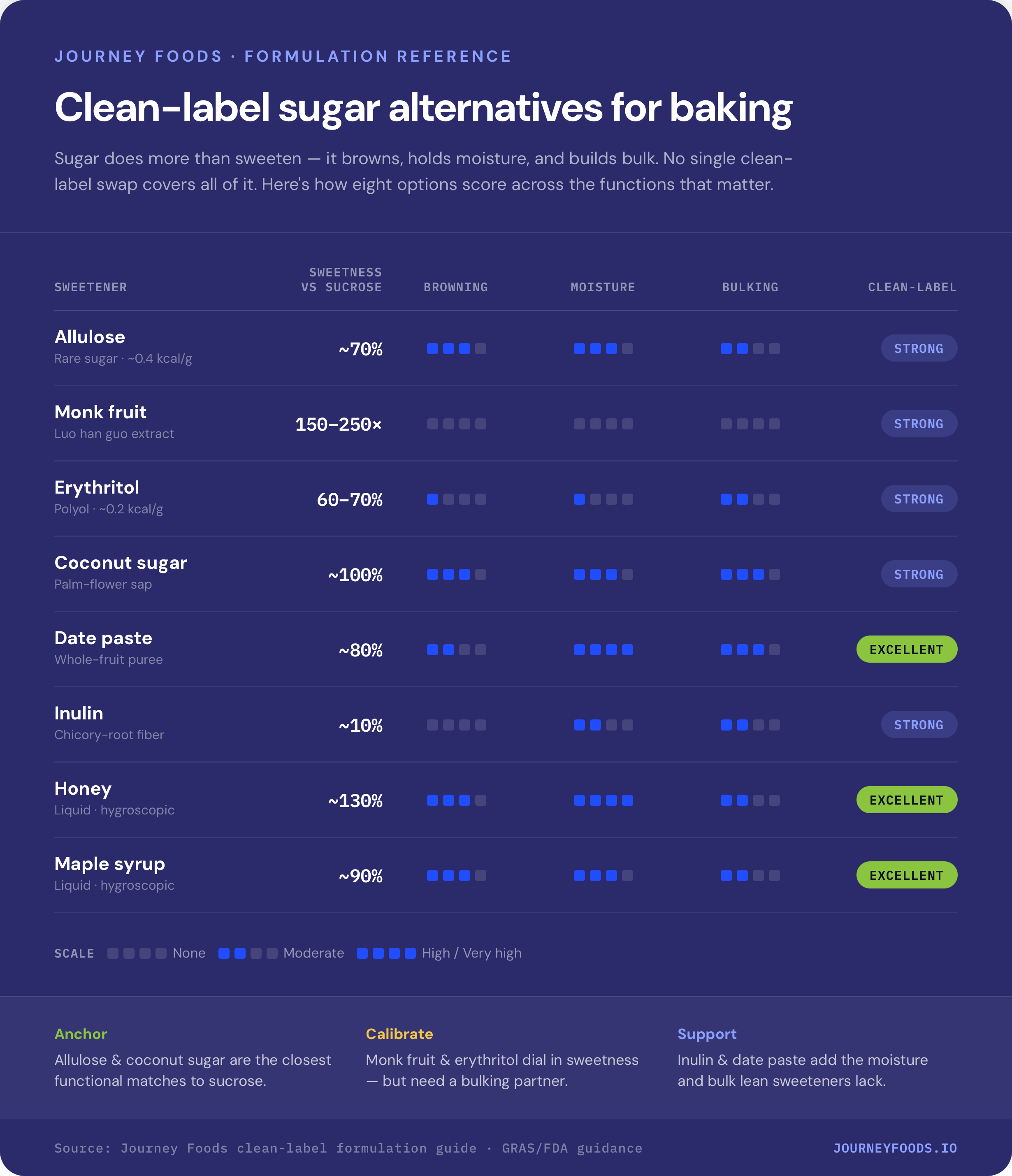
Blending Strategies
Single-ingredient replacements rarely perform as well as blends. A few combinations that show up repeatedly in clean-label baking:
Allulose + Monk Fruit: Allulose handles bulk, moisture, and browning; monk fruit handles sweetness intensity. One of the most functional clean-label pairings available.
Erythritol + Monk Fruit + Inulin: Inulin adds the bulk and moisture retention that erythritol lacks, while monk fruit handles sweetness. Useful for low-calorie, fiber-forward positioning.
Coconut Sugar + Date Paste: Works well in dense, whole-food-positioned products. Flavor profiles complement each other. Not suitable for light or neutral applications.
Honey + Inulin: Honey provides sweetness and browning; inulin adds fiber and moderates glycemic contribution. Works well in bars and dense baked goods.
Supply Chain and Cost Considerations
Monk fruit extract and allulose are both supply-constrained relative to conventional sweeteners. Allulose is produced primarily through enzymatic conversion of fructose — capacity has grown, but pricing remains elevated compared to sucrose. Monk fruit is grown almost exclusively in southern China, making it subject to agricultural and trade variability.
Coconut sugar and date-based ingredients have more distributed supply chains but face quality consistency challenges, particularly around moisture content and particle size in date sugar.
When you're managing ingredient sourcing decisions at scale, real-time supply chain visibility matters. Journey Foods lets you track ingredient availability, score alternatives across cost and nutrition criteria, and receive alerts when supply conditions shift — which is particularly useful when you're managing multiple sweetener options across a product line.
Regulatory and Labeling Considerations
A few things worth confirming before you finalize your formula:
For broader clean-label positioning decisions, it's worth understanding how your sweetener choices interact with the rest of your additive profile. The BHT alternatives guide for CPG formulators is a useful reference for how the clean-label conversation is playing out across preservatives and antioxidants in parallel.
Practical Starting Points by Application
Soft cookies: Allulose or a coconut sugar blend. Allulose gives spread control and moisture retention; coconut sugar adds flavor depth.
Muffins and quick breads: Date paste or honey with inulin. Moisture-forward applications benefit from hygroscopic sweeteners.
Cakes (neutral flavor): Allulose + monk fruit blend. Avoid strongly flavored sweeteners.
Brownies and chocolate applications: Coconut sugar, date paste, or erythritol + monk fruit. Chocolate masks off-notes and complements caramel flavors.
Journey Ingredient Intelligence
Erythritol
It almost always needs a bulking agent alongside it — erythritol, inulin, and allulose are the most common pairings.
A South American tree in the family Lecythidaceae.
Granola and bars: Honey or maple syrup with inulin. Binding properties are an asset here.
Icings and frostings: Erythritol-based powdered alternatives. Watch for recrystallization.
Managing Sweetener Decisions at Scale
When you're developing multiple SKUs or working across a product portfolio, sweetener selection stops being a one-off formulation decision and becomes a data management problem. You need to track nutritional impact across formulations, monitor cost and availability for each ingredient, and keep R&D, procurement, and regulatory working from the same version of the formula — not separate spreadsheets.
That's where a centralized formulation platform makes a real difference. Journey Foods' Operations Scientist AI engine lets you score sweetener candidates across nutrition, cost, and sustainability criteria, then track how those decisions flow through your formulations in a single dashboard. If you're evaluating platforms, the 10 questions to ask before choosing a food formulation software platform is worth reading before you commit to a system.
Learn more at Journeyfoods.io.
FAQs
What is the best sugar alternative for baking without changing the texture?
Allulose is the closest functional match to sucrose in baking. It provides similar moisture retention, participates in browning, and contributes bulk. The main adjustment needed is a slight reduction in baking temperature or time due to faster browning.
Can monk fruit be used as a 1:1 sugar replacement in baking?
No. Monk fruit extract is 150–250x sweeter than sucrose, so it's used in very small amounts. It doesn't replace sugar's bulk, moisture retention, or browning. It almost always needs to be blended with a bulking agent like erythritol, allulose, or inulin.
Does erythritol bake well?
Erythritol works in baking but has real limitations. It doesn't brown, tends to recrystallize on cooling (which causes grittiness), and has a cooling mouthfeel at high concentrations. It performs better when blended with monk fruit and a moisture-retaining agent.
Is coconut sugar actually healthier than regular sugar?
The glycemic index of coconut sugar is often cited as lower than sucrose, but the evidence base is limited and the caloric content is essentially the same. It does contain trace minerals not found in refined sucrose. From a clean-label standpoint, it reads well and performs similarly to brown sugar in baking.
What clean-label sweeteners work best for low-calorie baked goods?
Allulose (0.4 kcal/g) and erythritol (0.2 kcal/g) are the most practical options for low-calorie positioning. Monk fruit adds sweetness intensity without calories but needs bulk support. Inulin adds fiber and modest bulk at 1.5 kcal/g.
How do liquid sweeteners like honey and maple syrup affect baked good formulas?
Both are hygroscopic and contribute more moisture than granulated sugar. Standard practice is to reduce other liquids in the formula and add a small amount of baking soda to balance acidity. They also cause faster browning, so oven temperature adjustments are often needed.
What should formulators consider when sourcing alternative sweeteners at scale?
Supply concentration is a real risk. Monk fruit is grown almost exclusively in China; allulose capacity is still growing. Both carry higher price volatility than conventional sweeteners. Building in approved alternative suppliers and tracking availability in real time reduces the risk of a supply disruption derailing a product launch.
Conclusion
There is no universal drop-in for sucrose in baking. The right choice depends on your application, your brand's clean-label positioning, your cost targets, and your supply chain constraints. Most successful clean-label baking formulations use blends rather than single-ingredient replacements — and the best results come from understanding what each ingredient actually does, not from chasing a sweetness equivalence number.
Start with allulose or coconut sugar as your functional anchor. Bring in monk fruit or erythritol for sweetness calibration. Add inulin or date paste where moisture and bulk need support. Test browning behavior early. And build your sourcing strategy before you finalize your formula — not after.
Journey Ingredient Intelligence
Coconut Milk
Coconut Sugar Coconut sugar is derived from the sap of coconut palm flowers.
A South American tree in the family Lecythidaceae.
Nutrition. Coconut Milk has a nutrition profile including 141 kcal/lb calories, 0.95 g/lb protein, 0.00 g/lb fiber, and 11.34 g/lb total sugars.
Cost. Coconut Milk is currently priced at $4.69/kg.
Sustainability. Journey AI evaluates ingredient sustainability using environmental indicators such as water usage, greenhouse gas emissions, and upcycled status.
As published
70%
Journey Ingredient Intelligence · Comparison
Baking Soda
Date
Data from this story
Shareable Journey Intelligence
Sugar Alternatives for Baking: A Formulator's Guide to Clean-Label Sweeteners
Labeling & Nutrition
70%
It delivers roughly 70% of sucrose's sweetness at approximately 0.4 kcal/g — compared to sucrose at 4 kcal/g.
50%
Formulation note: At high inclusion rates (above 50% sucrose replacement), some consumers report mild laxative effects — though this threshold is significantly higher than with most polyols.