
Julia Froese
Julia Froese

The Hidden Costs of Ultra-Processed Foods: Unveiling Their Negative Effects in the US

Ultra-processed foods, prevalent in American diets, are linked to a range of negative health effects including nutritional deficiencies, increased risk of chronic diseases like obesity and diabetes, and mental health issues. These foods, characterized by high levels of added sugars, unhealthy fats, and artificial additives, also contribute to environmental concerns through excessive packaging and resource use. Efforts to combat these issues include promoting whole foods and supporting innovations in healthier, minimally processed food options.
Julia Froese
5 mins
August 12, 2024
Share Article
linkfacebooktiwtter
Tags
Ingredient insights
Quick Answer

Plant based reformulation is growing because it now wins on economics, not just values across Journey Al data it moves the nutrition score +26.9%, cuts cradle to  gate CO2e -42% per serving, and lowers raw material cost  -6.5% versus an animal protein control while cutting supplier lead times from 14 weeks to 6.

Key takeways
check-icon
It's an economics story. Plant-based now hits four reported metrics at once margin, scope-3, nutrition, and traceability.
check-icon
The supply base caught up. Tier-1 pea, faba, and chickpea isolates reached spec parity with whey this year.
check-icon
Speed is the unlock. A three-week supplier email chain becomes a four-minute query with ingredient intelligence.

The Hidden Costs of Ultra-Processed Foods: Unveiling Their Negative Effects in the US

In the bustling aisles of American supermarkets and convenience stores, ultra-processed foods have become a staple of modern diets. These convenient, packaged items—ranging from sugary snacks to ready-to-eat meals—offer ease and accessibility but come with a hidden cost. The consumption of ultra-processed foods is linked to a range of negative health effects, contributing to growing public health concerns across the United States. In this article, we explore the hidden dangers of ultra-processed foods and their impact on American health.

What Are Ultra-Processed Foods?

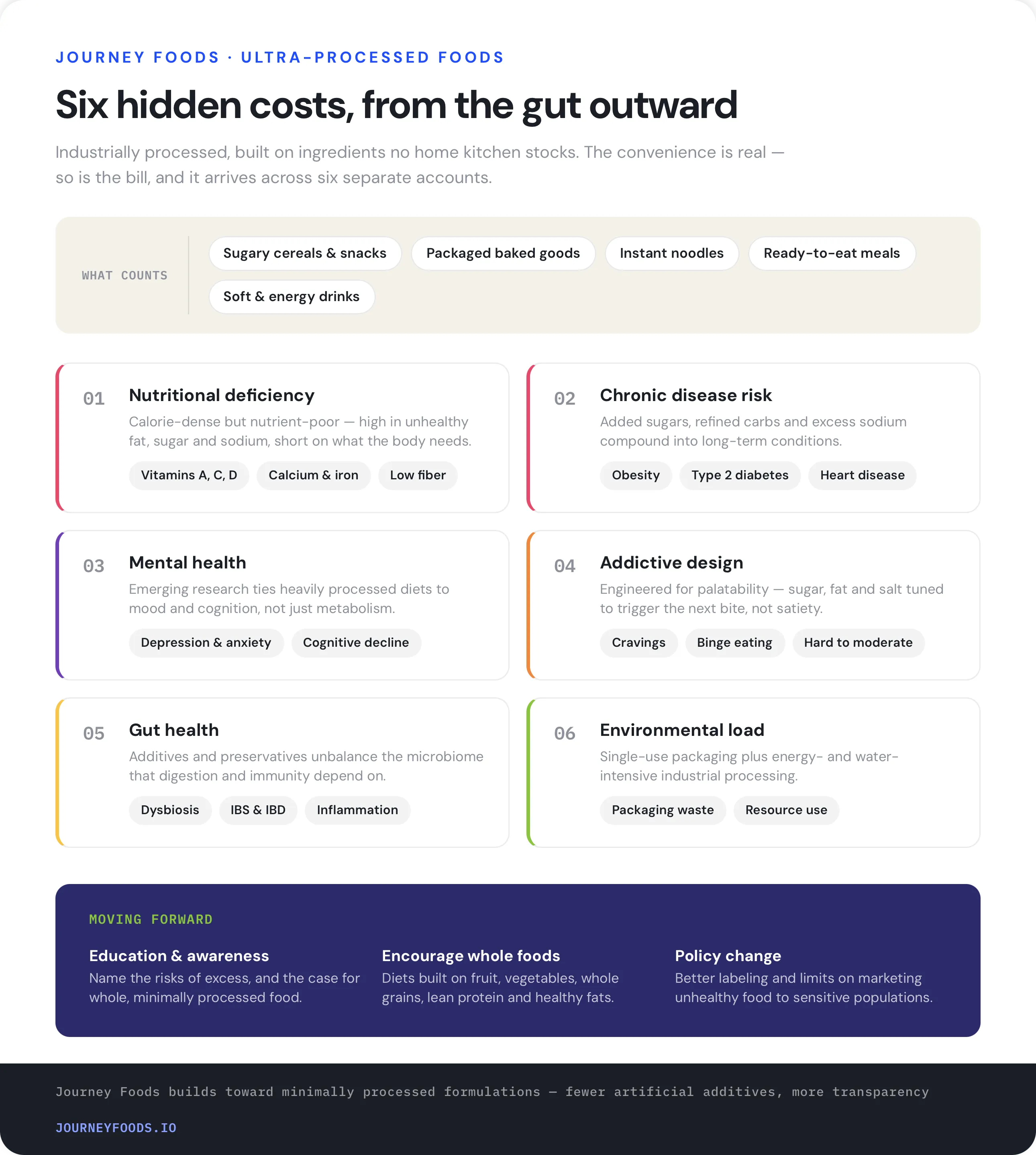
Ultra-processed foods are defined as products that undergo significant industrial processing and contain ingredients that are not typically found in a home kitchen. These ingredients often include artificial additives, preservatives, flavorings, and colorings. Examples of ultra-processed foods include:

  • Sugary cereals and snacks
  • Packaged baked goods
  • Instant noodles and ready-to-eat meals
  • Soft drinks and energy drinks

While these foods are convenient and appealing, they can have serious implications for health.
1. Nutritional Deficiencies

Ultra-processed foods are often low in essential nutrients and high in unhealthy fats, sugars, and sodium. They typically offer limited vitamins, minerals, and fiber, which are crucial for overall health. A diet high in these foods can lead to nutritional deficiencies, impacting bodily functions and overall well-being.

Consequences:

  • Vitamin and Mineral Deficiencies: Essential nutrients like vitamins A, C, D, and minerals such as calcium and iron may be lacking.
  • Reduced Fiber Intake: Low fiber content can affect digestive health and increase the risk of constipation and other gastrointestinal issues.

2. Increased Risk of Chronic Diseases

The regular consumption of ultra-processed foods is associated with a higher risk of several chronic diseases. The high levels of added sugars, unhealthy fats, and sodium in these foods can contribute to various health problems.

Health Risks:

  • Obesity: Ultra-processed foods are calorie-dense and can lead to weight gain and obesity. High sugar content and unhealthy fats contribute to excess calorie consumption and poor satiety.
  • Type 2 Diabetes: High sugar and refined carbohydrate intake can impair insulin sensitivity and increase the risk of developing type 2 diabetes.
  • Heart Disease: The consumption of unhealthy fats and excessive sodium is linked to increased risks of hypertension, heart disease, and stroke.

3. Mental Health Implications

Emerging research suggests that the consumption of ultra-processed foods may have adverse effects on mental health. The link between diet and mental well-being is increasingly recognized, and ultra-processed foods appear to play a role in this connection.

Mental Health Effects:

  • Mood Disorders: Diets high in ultra-processed foods have been associated with an increased risk of mood disorders such as depression and anxiety.
  • Cognitive Decline: Some studies suggest that excessive intake of processed foods may contribute to cognitive decline and impaired memory.

4. Addictive Qualities and Overconsumption

Ultra-processed foods are designed to be highly palatable, often with added sugars, fats, and salt that can trigger addictive eating behaviors. This can lead to overconsumption and make it challenging for individuals to moderate their intake.

Behavioral Effects:

  • Cravings and Binge Eating: The addictive nature of ultra-processed foods can lead to cravings and binge eating, disrupting healthy eating patterns.
  • Difficulty Moderating Intake: The pleasure derived from these foods can make it difficult for individuals to limit their consumption, contributing to weight gain and poor health outcomes.

5. Impact on Gut Health

The additives and preservatives found in ultra-processed foods can disrupt the natural balance of gut bacteria. A healthy gut microbiome is essential for digestion, immune function, and overall health.

Gut Health Issues:

  • Dysbiosis: The imbalance in gut bacteria due to ultra-processed foods can lead to dysbiosis, which is linked to various digestive issues and systemic inflammation.
  • Digestive Disorders: Disruption of the gut microbiome may contribute to digestive disorders such as irritable bowel syndrome (IBS) and inflammatory bowel disease (IBD).

6. Environmental Consequences

The production and consumption of ultra-processed foods have environmental implications. The extensive use of packaging and industrial processing contributes to waste and environmental degradation.

Environmental Impact:

  • Packaging Waste: The single-use packaging associated with ultra-processed foods contributes to significant amounts of waste.
  • Resource Use: The industrial production of these foods requires substantial resources, including energy and water, adding to the environmental burden.

Moving Forward: Promoting Healthier Choices

Addressing the negative effects of ultra-processed foods involves promoting healthier dietary choices and raising awareness about the risks associated with these products. Here are some steps to consider:

  • Education and Awareness: Educate individuals about the benefits of whole, minimally processed foods and the risks of excessive consumption of ultra-processed items.
  • Encouraging Whole Foods: Advocate for diets rich in fruits, vegetables, whole grains, lean proteins, and healthy fats.
  • Policy Changes: Support policies that encourage healthier food environments, such as improved food labeling and regulations on marketing unhealthy foods.

Journey Foods: Leading the Charge Against Ultra-Processed Foods

Journey Foods is actively working to counter the prevalence of ultra-processed foods by focusing on innovation and sustainability in food production. Their cutting-edge technology helps food companies streamline the creation of healthier, minimally processed products. By using advanced AI and data analytics, Journey Foods aids in the formulation of products that prioritize nutrition and reduce reliance on artificial additives. Their commitment to improving ingredient transparency and supporting more sustainable food practices is crucial in shifting the industry away from ultra-processed options and towards healthier, more natural alternatives. Through these efforts, Journey Foods is playing a significant role in fostering a food environment that supports better health and well-being for consumers.

About the Author
Julia Froese

Research and Content Fellow. Biology and Farming Researcher

Frequently asked questions

Structured Q&A  marked up with FAQ Page schema so it can be surfaced and cited by Al engines and search.

Is plant based reformulation actually cheaper than 
animal protein?

In Journey Al's 12 month dataset, the median plant protein reformulation came in -6.5% on raw material cost versus an animal protein control the first year that line went negative, driven by Tier 1 isolate suppliers reaching spec parity.

How much does plant based reformulation improve 
nutrition scores?

In Journey Al's 12 month dataset, the median plant protein reformulation came in -6.5% on raw material cost versus an animal protein control the first year that line went negative, driven by Tier 1 isolate suppliers
reaching spec parity.

What's the supply chain risk of switching?

In Journey Al's 12 month dataset, the median plant protein reformulation came in -6.5% on raw material cost versus an animal protein control the first year that line went negative, driven by Tier 1 isolate suppliers
reaching spec parity.

back-to-top