The Pie: Food wants to be Real Again.


Quick answer
POV: Not just Nostalgic…Minimal Ick, Personality, and Viable.

Hey Pies,
Confession: I almost skipped writing about AI generated menu photos this week. Felt a little petty for a newsletter that's usually about tariffs and funding bills. But I couldn't stop thinking about it, because it's actually the exact same story as everything else sitting in my inbox right now.
Remember back in July, when we told you tallow won because it gave shoppers a shorter story? One villain, one hero, one reason to trust the brand next to it? That instinct never left. It just keeps finding new places to show up.
This week alone: a menu photo nobody believed. A nutrition rule that almost 250 convenience stores are begging the USDA to delay. A beef and dairy tariff wall going up between two G7 economies. And a food safety survey where 94% of us admitted we're already bracing for the next recall before it's even happened.
Different aisles. Same appetite, honestly. We just want proof that something real happened between the field and the plate. Here’s what we’re tracking, and what we think it means for you.
🌱
(If you’re ever curious how we track this kind of thing on the Journey AI side, journeyfoods.io has the details.)
in this issue
● Hot Plate: Proof of Human Touch?
● Serving Size: Harvest to Hallways
● Exotic Fills: Treats add Up
● The Mix: Tariffed by Trade
● Flavor Profile: The Recall Trust Gap
● Fresh Crust: Patterned by Food
Hot Plate
Proof of Human Touch?
A menu photo really only has one job. Answer whether you want to eat the thing. This week, AI generated menu images failed that job so badly that the internet basically staged an intervention.
Guardian readers compared AI barbecue to leather belts crawling with beetles, and AI bread to reptile skin and loofahs. Nobody had to explain why those comparisons are gross. Your stomach got there first.
“A menu photo is supposed to answer one simple question: do I want to eat this? AI is proving unusually bad at the assignment.”
We get why restaurants are tempted. Margins are thin, labor is expensive. Twenty six percent of restaurant operators say they’re already using AI for marketing, inventory, scheduling, menu optimization, or ordering, according to The Guardian.
But real food is lopsided. It’s drippy in the wrong spot, toasted a little too dark on one side. AI food is wrong in a way your appetite notices before your brain can even name it. Cheese with no physics. Noodles with no gravity. The countertrend is what we’re calling proof of human: real dish photography, handwritten specials boards, visible steam. A Wyoming soda fountain posted a hand lettered promise not to use AI, and it pulled more than 200,000 Instagram likes.
A little mess isn’t a branding problem. Honestly, it’s usually proof dinner happened in a real kitchen.

Serving Size
Harvest to Hallways
The most interesting food policy story this week isn’t happening in a restaurant. It’s happening in the cafeteria line. HHS just launched DEPEND (that’s Developing Evidence for Programs to Ensure Nutrition for Development), putting $32.5 million behind school and district pilots that swap out highly processed foods for nutrient dense ones. Awards run from $75,000 to $2.5 million each, and the first ones land in October.
Alongside it, USDA and HHS’s Harvest to Hallways initiative adds up to $70 million for cafeteria infrastructure and local food procurement, plus up to $25 million in FY2026 Farm to School Grants.
Here’s why this matters for operators: a school district is one of the biggest recurring buyers in all of food. If it can source produce, grains, and proteins regionally, it hands local farmers something rarer than a farmers market weekend, a market they can actually plan a whole season around. IFPRI found Brazilian smallholders selling into that country’s national school feeding program saw household income jump 23% to 106%, with the biggest gains going to the poorest farmers.
$32.5M
DEPEND school food pilots (HHS)
$95M+
Harvest to Hallways + Farm to School
94%
directors say they need more staff (SNA)
The caveat matters just as much as the funding, though. The School Nutrition Association surveyed 1,240 school meal directors, and 94% say they need more staff, 95% need more culinary training, and 94% need more equipment or infrastructure to actually cook from scratch and cut processed food. Money helps. Money alone doesn’t run a kitchen.
And globally, Rockefeller Foundation and World Food Programme figures put school meal reach at 466 million kids, with up to $30 in social and economic return for every dollar invested. Worth citing, though those are advocacy numbers, not an independently audited guarantee.
A kitchen is infrastructure long before it's ever a lifestyle.
Exotic Fills
Treats add Up
The little treat economy gets written off as frivolous right up until lunch costs $24, and the answer to a bad afternoon is something cold, bright, and specific. USDA is now forecasting foodservice prices will rise 3.6% in 2026, outpacing the 2.5% increase expected for food you buy at home.
That’s exactly the gap Pola Pops is stepping into. A paleta was never just a frozen treat format. It’s fruit, brightness, ritual, and a flavor that knows exactly what it is.
Journey Ingredient Intelligence
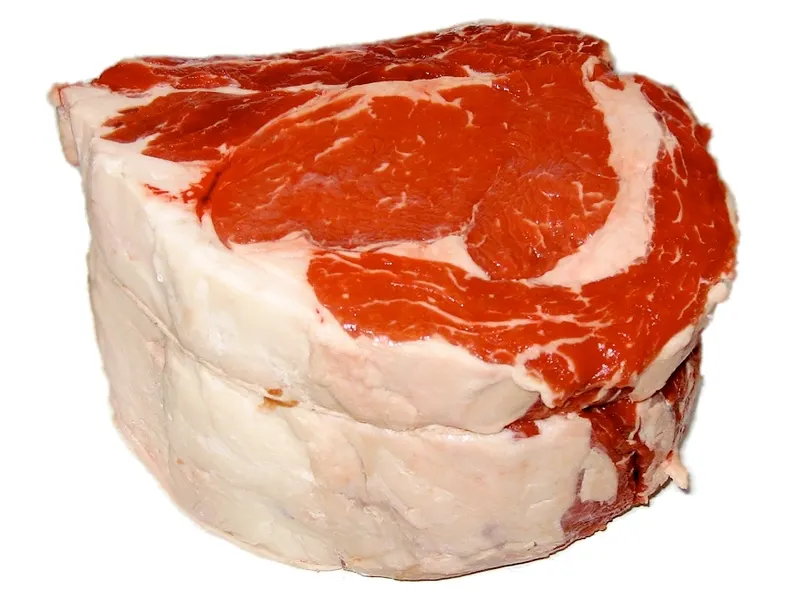
Beef
A beef and dairy tariff wall going up between two G7 economies.
Beef: 254 kcal and 17.2 g protein per 100 g; top producer United States (17.6%, 2024); 99.48 kg CO2e per kg.
As foodservice inflation keeps outrunning grocery inflation, the treats that earn a repeat purchase are the ones that feel intentional instead of optimized.

The brands that can show their work, on the plate, in the cafeteria, and across the border, are the ones winning the shorter, truer story right now.
If you want to show yours, journeyfoods.io is a good place to start, or book a demo and we'll walk you through it.
The Mix
Tarrifed by Trade
Global input costs and cross border politics both turned against food brands this week. Same week, no less.
First, the input costs. The UN FAO Food Price Index averaged 133.3 points in August, up 1.9% from July and 2.5% from a year earlier. Every major commodity group rose. Sugar was the standout, up 11.9% month on month. FAO points to weather risk, conflict, and continued disruption on Black Sea trade routes.
133.3
FAO Food Price Index, Aug 2026 (+1.9% MoM)
+11.9%
Sugar, month on month (FAO)
50%
Top Canadian retaliatory tariff tier
Then the politics. Canada’s retaliatory tariffs kicked in September 8, with duties of 15%, 25%, or 50% on billions of dollars of U.S. imports. The U.S. answered with import bans, effective September 29, on Canadian alcohol, motorcycles, and dairy products, and added some cheeses to a 50% tariff list.
If you source dairy, alcohol, or packaging inputs across that border, September 29 is now a real date on your calendar, not just a policy headline. Tyson Foods already lowered its fiscal 2026 outlook and flagged wider losses in its beef segment, proof that even the big guys are feeling squeezed between tight cattle supply and volatile pricing.

Flavor Profile
The Recall Trust Gap
A new GS1 US survey found 94% of American adults are concerned about how often food gets recalled. Sixty seven percent say a recall has made them avoid an entire category, not just the one product. Sixty six percent say they’d hesitate to buy from that brand again. That’s not really a supply chain metric anymore. That’s brand equity, leaking out.
Some backdrop: Axios counts 5,504 U.S. product recalls so far in 2026, slightly above the same point in 2025, though still below 2024’s pace. A Michigan linked cyclosporiasis outbreak investigation interviewed 3,114 patients. Seventy percent had eaten at one restaurant chain, and 90% of those reported eating iceberg lettuce.
September happens to be National Food Safety Month, and the National Restaurant Association and ServSafe just launched a five week campaign on routine food safety practices. Good timing, given the survey above.
For shoppers, the smart move is checking recall notices against the exact product, lot, and location details instead of swearing off a whole category. For brands, the smart move is faster, clearer recall communication, because the reputational bill for a slow, vague one just got a lot bigger.

Fresh Crust
Patterned by Food
Jollibee and DreamWorks are turning fried chicken into a scavenger hunt.
Jollibee × DreamWorks’ “Forgotten Island” launches in North America on September 14. Think film themed box meals, collectible bracelet charms, a Philippines trip sweepstakes, and a streetwear line (T shirt, hoodie, windbreaker) sold through Jollibee’s merch shop and Complex Shop.
Ladurée put My Melody on the macarons.
Ladurée × Sanrio’s My Melody collection packages macarons in character branded boxes, running through the end of September in Ladurée boutiques, online, and at Selfridges London. It’s the latest proof that character licensing has moved well past cereal boxes and into premium pastry cases.
One quick thing before we let you go. If you’ve read this far, you’re clearly the kind of person who wants the ingredient story to actually check out, and honestly, that’s the itch Journey AI exists to scratch. We got tired of asking suppliers the same five questions and getting five different answers, so we built a way to just know. If that’s useful to you, journeyfoods.io is a good place to poke around, or book a demo and we’ll walk you through it ourselves.
Prep Time
Three moves to make this September
1. Audit your product and menu photography before the internet does it for you. If it’s AI generated, make sure it still looks like something a human would actually eat: texture, gravity, a plausible amount of mess. This backlash isn’t really about AI. It’s about food that doesn’t look edible.
2. Get your paperwork ready for the school food procurement wave. DEPEND’s first awards land in October, and Harvest to Hallways money is chasing regional producers who can supply reliably. If you sell produce, grains, or proteins at scale, this is a buyer worth courting now.
3. Map every ingredient, package, or bottle that crosses the Canadian border. September 29 is when the U.S. import ban on Canadian alcohol, dairy, and select cheeses kicks in. If tallow taught us anything, it’s that a supply story moves faster than a compliance meeting. Know your exposure before it becomes a headline.
USDA Economic Research Service: Food Price Outlook
U.S. Department of Health and Human Services: DEPEND initiative
HHS: DEPEND Initiative
U.S. Department of Agriculture: Harvest to Hallways announcement
USDA: Harvest to Hallways
FoodNavigator: school-meals funding analysis
FoodNavigator: Healthier School Meals
The Guardian: AI-generated food-menu backlash
The Guardian: AI Food Menus
CNN: fake restaurant-food images
CNN: AI Food Images
Journey Ingredient Intelligence
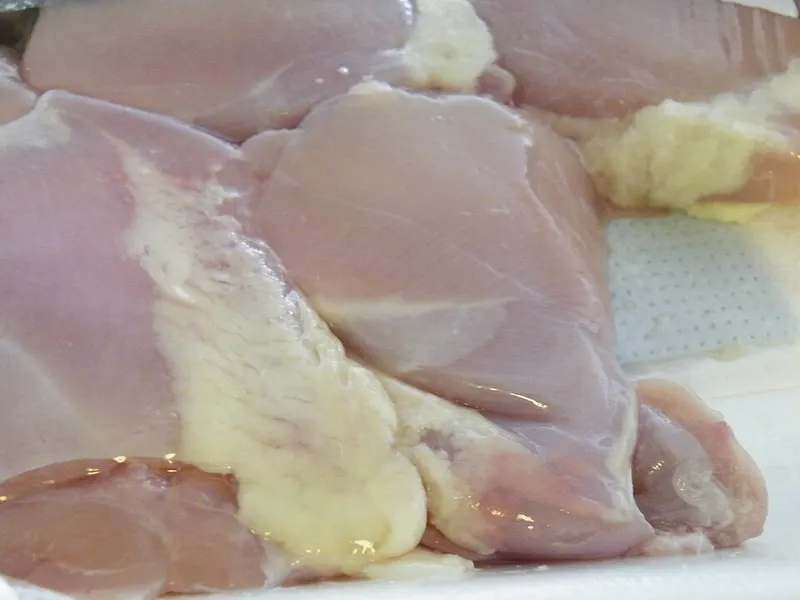
Chicken
Fresh Crust Patterned by Food Jollibee and DreamWorks are turning fried chicken into a scavenger hunt.
Chicken: 119 kcal and 21.4 g protein per 100 g; top producer United States (15.7%, 2024); 9.87 kg CO2e per kg.
As published
94%
Journey Ingredient Intelligence · Comparison
Beef
Chicken
Data from this story
Shareable Journey Intelligence
The Pie: Food wants to be Real Again.
Industry Insights
94%
And a food safety survey where 94% of us admitted we're already bracing for the next recall before it's even happened.
$75,000
Awards run from $75,000 to $2.5 million each, and the first ones land in October.