Quick answer
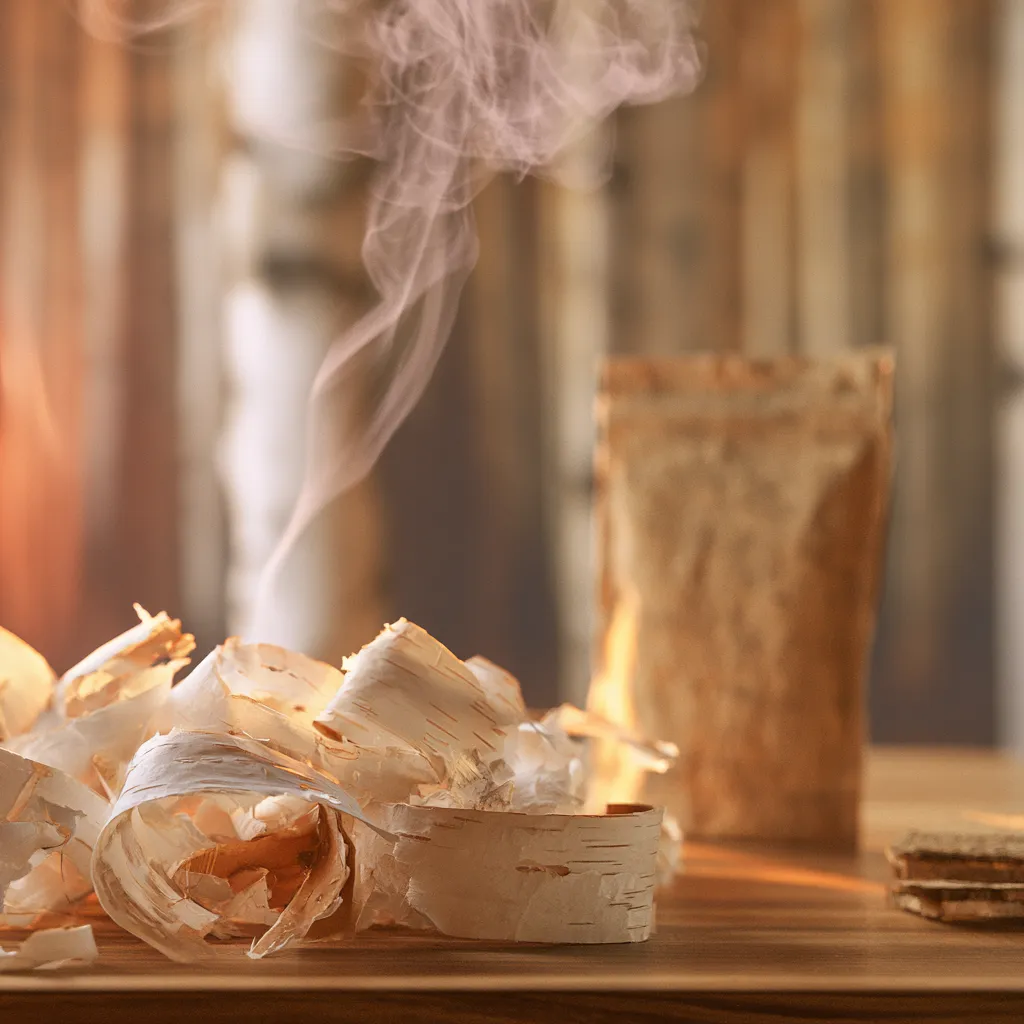
Birch bark is exceptionally versatile - and a bit different from some of the other ingredients we’ve featured on the blog. Sourced from the Betula papyrifera tree (also the Betula
Birch bark is exceptionally versatile - and a bit different from some of the other ingredients we’ve featured on the blog.
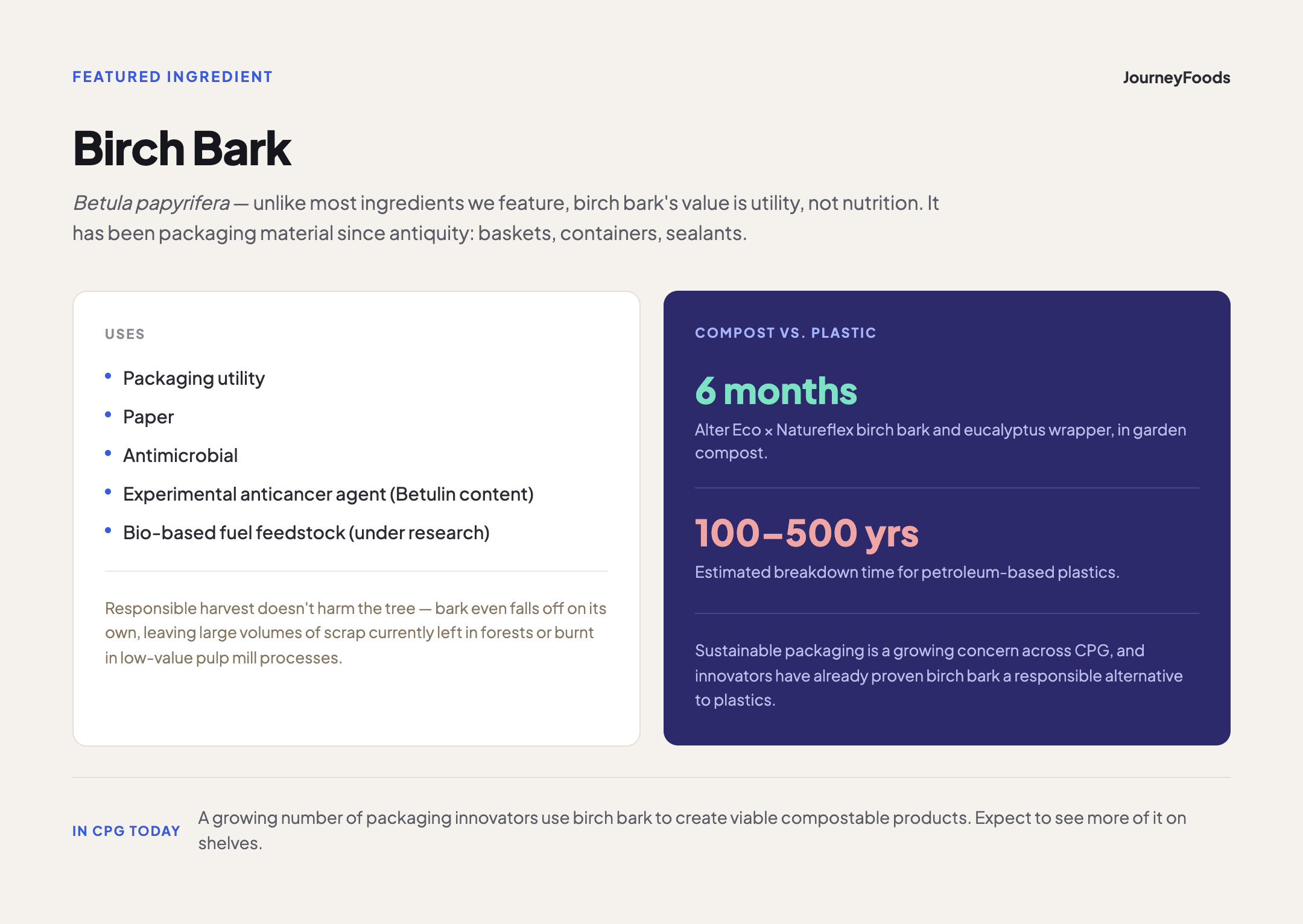
Sourced from the Betula papyrifera tree (also the Betula pendula and others), this bark is used more or less as a utility.
However, the other parts of the birch tree were traditionally used in a medicinal fashion.
What is Birch bark for?
While components like Catechol in Birch bark yield medicinal utility, we will mostly take a non-medicinal approach to the information below. Sustainable packaging is a growing concern in the CPG industry at large, and some innovators in the industry have already proven birch bark to be a responsible alternative to plastics.
Birch Bark Popularity
Birch bark has been used as a packaging technology for a long, long time. Looking back to antiquity, Birch bark was used in the form of baskets, containers, and sealants.
And while we don’t see the use of birch baskets today, there are a growing number of packaging innovators who incorporate birch bark in unique ways to create viable compostable products.
Alter Eco partnered with Natureflex to create a compostable wrapper made with Birch bark and Eucalyptus that disintegrates in one’s garden. This article in Bioplastics News describes the product… and it’s pretty awesome. They claim that “compared to an estimated 100 to 500 years for petroleum-based plastics, the envelopes will take 6 months to break-down in garden compost.”
Since responsible harvest of Birch Bark doesn’t harm the tree itself, it’s a perfect ingredient for sustainable utilities. Birch bark can even fall off on its own. This means an inordinate amount of bark scrap - which could be used as a resource - is wasted.
Because of this waste, some scientists are even interested in birch bark as a bio-based fuel. Researchers concluded that “considering that most bark is currently left in forests or burnt in a low-value process in a pulp mill, the de facto land use is null. Implementing this technology close to existing infrastructure and using downstream logistics would be a very appealing approach to produce a biofuel with minimum environmental impact.”
We may be seeing birch bark a bit more on our shelves in the coming years, and the world will be better for it.
***Please note that this information is solely academic. Consult your healthcare provider before using supplements like Birch Bark***
We’d love to hear from you!
If you have any questions or thoughts, throw them in the comments below.
Data from this story
Shareable Journey Intelligence
Birch Bark: Packaging the Future
Industry Insights