Quick answer
Plant-based meat sales fell in 2025, but the brands still growing share a few habits. Here is what the data says it takes to last.
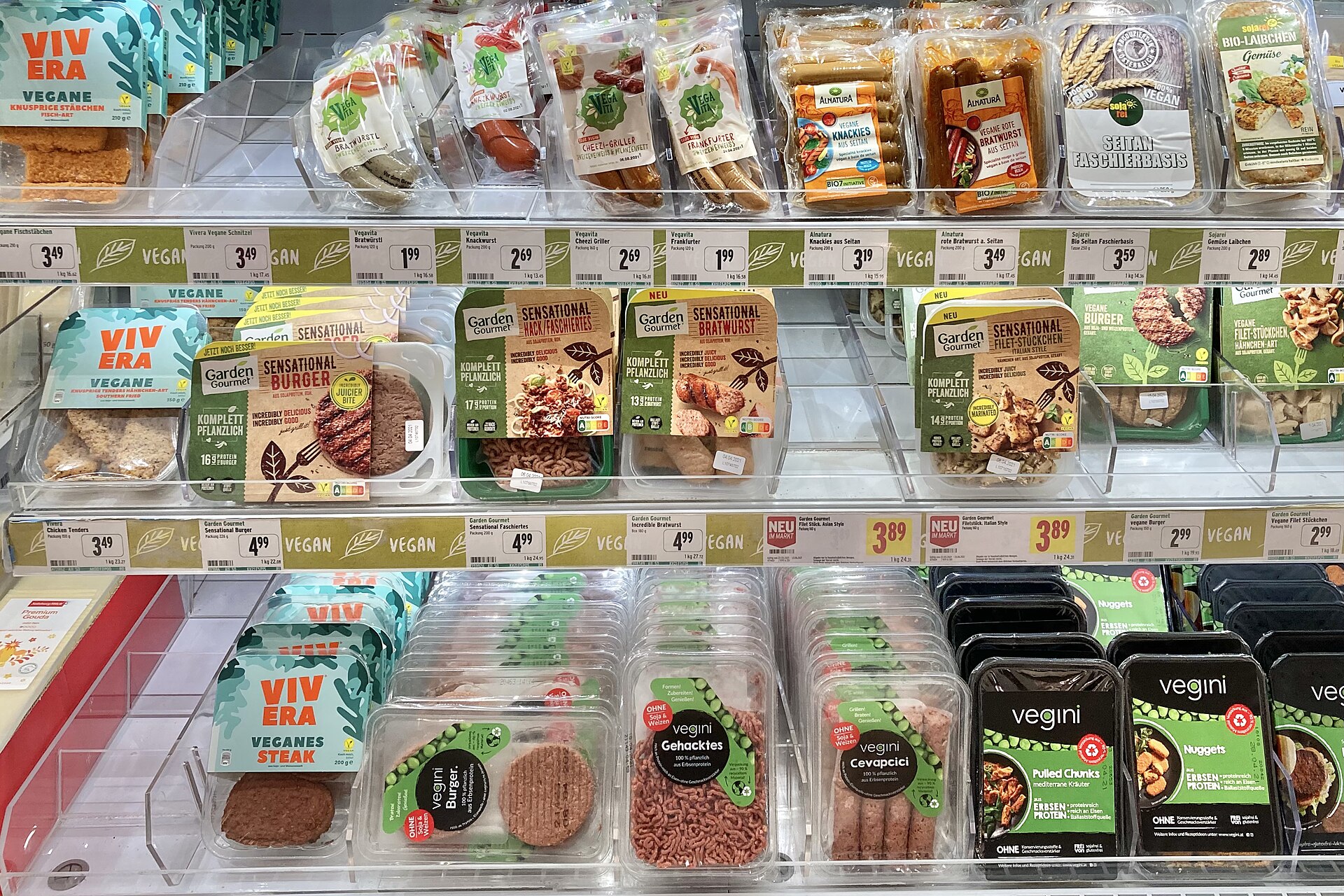
Photo: Tischbeinahe, via Wikimedia Commons (CC BY-SA 4.0).
Every few months someone holds a funeral for plant-based meat. This week it was a smart new newsletter from an investor I respect, and the headline said it well: the funeral mistook one company for a category.
I agree with that. I also think the eulogies keep missing the more useful question. Not "is plant-based dead?" but "what does it take to build a plant-based brand that is still here, and still making money, ten years from now?"
We sit on a lot of ingredient, supplier and product data at Journey Foods. Here is what I'd tell any founder or brand lead asking me that question today.
First, the honest numbers
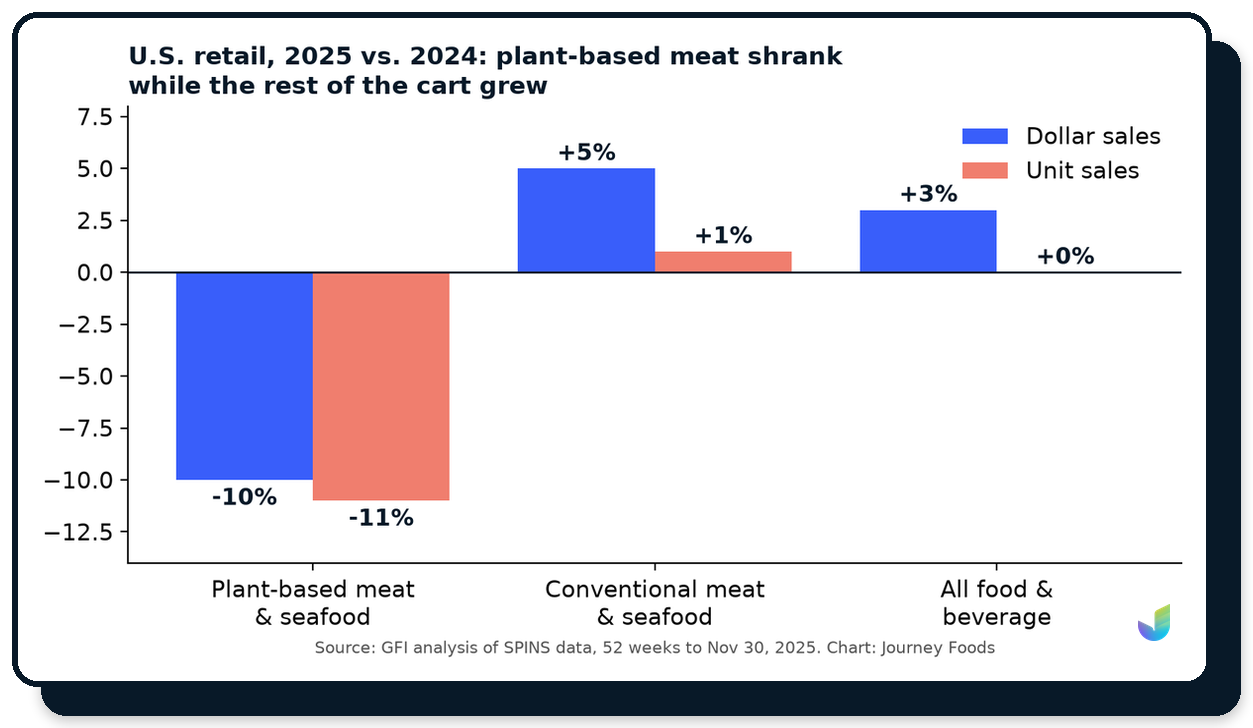
U.S. retail sales of plant-based meat and seafood were about $1.0 billion in 2025, according to the Good Food Institute's analysis of SPINS data. Dollar sales fell 10% and units fell 11%. Over the same year, conventional meat and seafood dollar sales grew 5%, and total food and beverage grew 3%.
Only 11% of U.S. households bought plant-based meat or seafood in 2025, down from roughly 20% in 2021. But 62% of those buyers came back more than once, and 68% of households bought some plant-based product.
So the shelf shrank. The people who stayed are still buying. That is not a funeral. That is a category getting sorted.
What the survivors have in common
1. They sell a reason, not a replacement. GFI found that among people who don't buy, "never thinking about it" and "not seeing a reason to" are top barriers, right behind taste and price. A brand that only says "like meat, but plants" asks the shopper to do the math. The brands that grew in 2025 made a specific claim: low saturated fat, heart-health certifications, shorter ingredient lists, more protein or fiber.

Journey Ingredient Intelligence
Coconut Oil
Pea protein, coconut oil, methylcellulose, flavors, packaging: each one has its own price curve, its own country risk and its own tariff exposure.
A South American tree in the family Lecythidaceae.
2. They price like they plan to stay. Most plant-based meat still sells at 1 to 3 times the price of the conventional version. Plant-based beef is the exception, priced just 8% above conventional beef in 2025, helped by high beef prices. You cannot promo your way out of that gap. You close it in the recipe and in the supply chain: fewer, smarter inputs, longer shelf life, better use of side streams, and a second source for every ingredient that matters.
3. They lead with flavor. Products with bold added flavors were among the fastest sellers in the category last year, and shreds, chunks and strips grew unit sales 8%. People buy dinner, not a philosophy. Make the taco, the stir fry, the bowl.
4. They choose their aisle on purpose. In the natural channel, plant-based meat's share of meat sales is about four times its share in the total market, and velocity rose there in 2025. Nearly half of natural-channel sales came from the refrigerated case. Start where your buyer already shops, earn the velocity, then expand.
5. They know their margin at the ingredient level. This is the one I care about most. Pea protein, coconut oil, methylcellulose, flavors, packaging: each one has its own price curve, its own country risk and its own tariff exposure. A brand that can't see those lines can't protect its margin when one of them moves. The brands that will be profitable in 2030 are the ones that treat their formula like a living document, not a launch artifact.
What I'd do this quarter
- Rank your SKUs by gross margin and repeat rate. Cut or fix the tail. Fewer, better products earn more shelf.
- Map every top-10 ingredient to its supplier, origin and backup. If one source is a single point of failure, find the swap now and test it.
- Rewrite your front panel around one benefit your buyer can feel: protein, fiber, heart health or flavor. Pick one.
- Price against the meat case you sit next to, not against other plant-based brands.
- Watch the shopper you already have. Plant-based meat buyers make more grocery trips and spend 19% more on groceries than the average shopper. They are worth keeping.
The long game
I've been building in food for a long time, and I've watched categories get crowned and buried on the same news cycle. Plant milk took years to reach 13% of milk dollar sales. Plant-based meat is at about 1.4% of packaged meat. That gap is the opportunity, and it will go to the brands with the best data, not the loudest launch.
If you want to see your products, ingredients, suppliers and packaging in one connected view, sign in to Journey Foods and start with your top five SKUs.
Stay easy, Riana & Team 🌱
Journey Ingredient Intelligence
Pea Protein
Pea protein, coconut oil, methylcellulose, flavors, packaging: each one has its own price curve, its own country risk and its own tariff exposure.
A South American tree in the family Lecythidaceae.
Nutrition. Pea Protein has a nutrition profile including 1602 kcal/lb calories, 354.26 g/lb protein, 14.06 g/lb fiber, and 0.00 g/lb total sugars.
Cost. Pea Protein is currently priced at $29.74/kg.
Sustainability. Journey AI evaluates ingredient sustainability using environmental indicators such as water usage, greenhouse gas emissions, and upcycled status.
As published
$1.0
Supplier highlight
1
Lists Food Ingredients, Citric acid, Sunflower lecithin, Tapioca starch on the market graph.
View 1 dataSupplier highlight
1 Dressing ApS
Lists Ingredients, Citric acid, Sunflower lecithin, Tapioca starch on the market graph.
View 1 Dressing ApS dataSupplier highlight
100% ITALIA SRL
Lists Ingredients, Citric acid, Sunflower lecithin, Tapioca starch on the market graph.
View 100% ITALIA SRL dataJourney Ingredient Intelligence · Comparison
Coconut Oil
Pea Protein
Data from this story
Shareable Journey Intelligence
Be a Long-Term and Profitable Plant-Based Brand
Industry Insights
$1.0
retail sales of plant-based meat and seafood were about $1.0 billion in 2025 , according to the Good Food Institute's analysis of SPINS data.
10%
Dollar sales fell 10% and units fell 11%.