.svg)
.svg)
.svg)
.svg)


.svg)
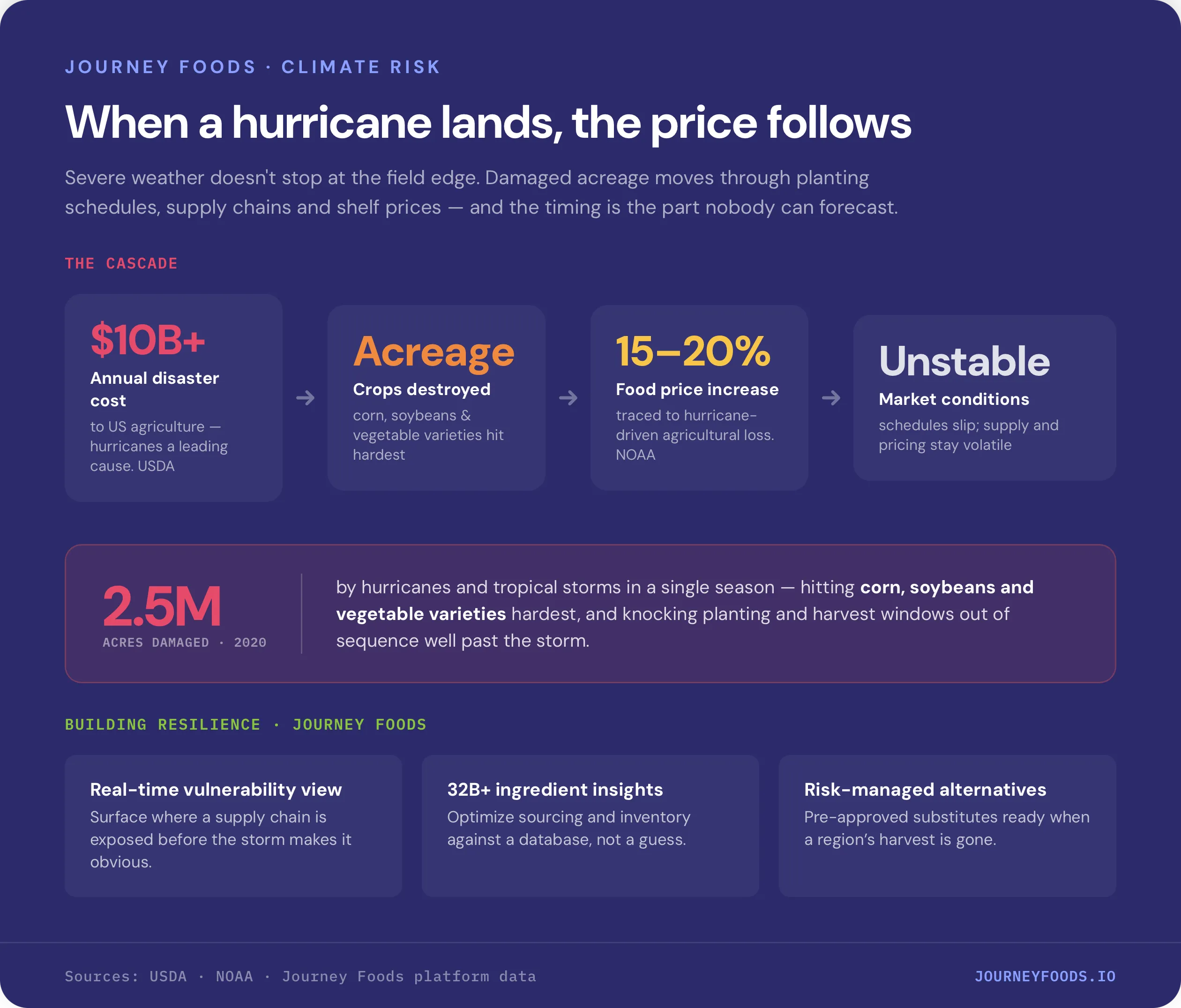
Severe weather events, particularly hurricanes, significantly impact agriculture, causing billions in losses and leading to increased food prices and disrupted supply chains. In 2020, hurricanes damaged 2.5 million acres of farmland, highlighting the urgent need for resilient solutions. Journey Foods leverages advanced AI to provide real-time insights into supply chain vulnerabilities, helping food companies optimize sourcing and enhance their resilience against climate disruptions.
Severe weather events, particularly hurricanes, pose a critical threat to agriculture, affecting crop yields and food supply chains. According to the USDA, natural disasters cost U.S. agriculture over $10 billion annually, with hurricanes being a leading cause of significant losses. In 2020, for example, hurricanes and tropical storms damaged approximately 2.5 million acres of farmland, leading to devastating impacts on crops such as corn, soybeans, and vegetable varieties.
The repercussions of these disasters extend beyond immediate crop damage. A study by the National Oceanic and Atmospheric Administration (NOAA) indicated that agricultural losses from hurricanes can result in food price increases of 15-20%, placing additional strain on consumers and retailers alike. Furthermore, the unpredictability of extreme weather events can disrupt planting and harvesting schedules, exacerbating food supply challenges and affecting overall market stability.
In this context, Journey Foods stands out as a beacon of innovation for the agricultural sector. By harnessing advanced artificial intelligence, Journey Foods provides food companies with real-time insights into supply chain vulnerabilities and risk management strategies. Their comprehensive database, containing over 32 billion ingredient insights, allows businesses to optimize sourcing and inventory, ensuring resilience against climate disruptions. For tech entrepreneurs, aligning with Journey Foods means investing in solutions that not only address immediate agricultural challenges but also contribute to a more sustainable and secure food future.