
.svg)
.svg)
.svg)
.svg)


.svg)
As we head into Q4, key trends like alternative dyes, influencer marketing, and protein innovation are shaping the food industry. Companies focused on natural ingredients, leveraging influencer partnerships, and exploring diverse protein sources are well-positioned for growth. At Journey Foods, we offer AI-driven solutions to help businesses capitalize on these trends and enhance product development.

.svg)
As we approach Q4, several key trends are shaping the food and beverage landscape, offering lucrative opportunities for tech entrepreneurs. Here are three trends to keep an eye on:
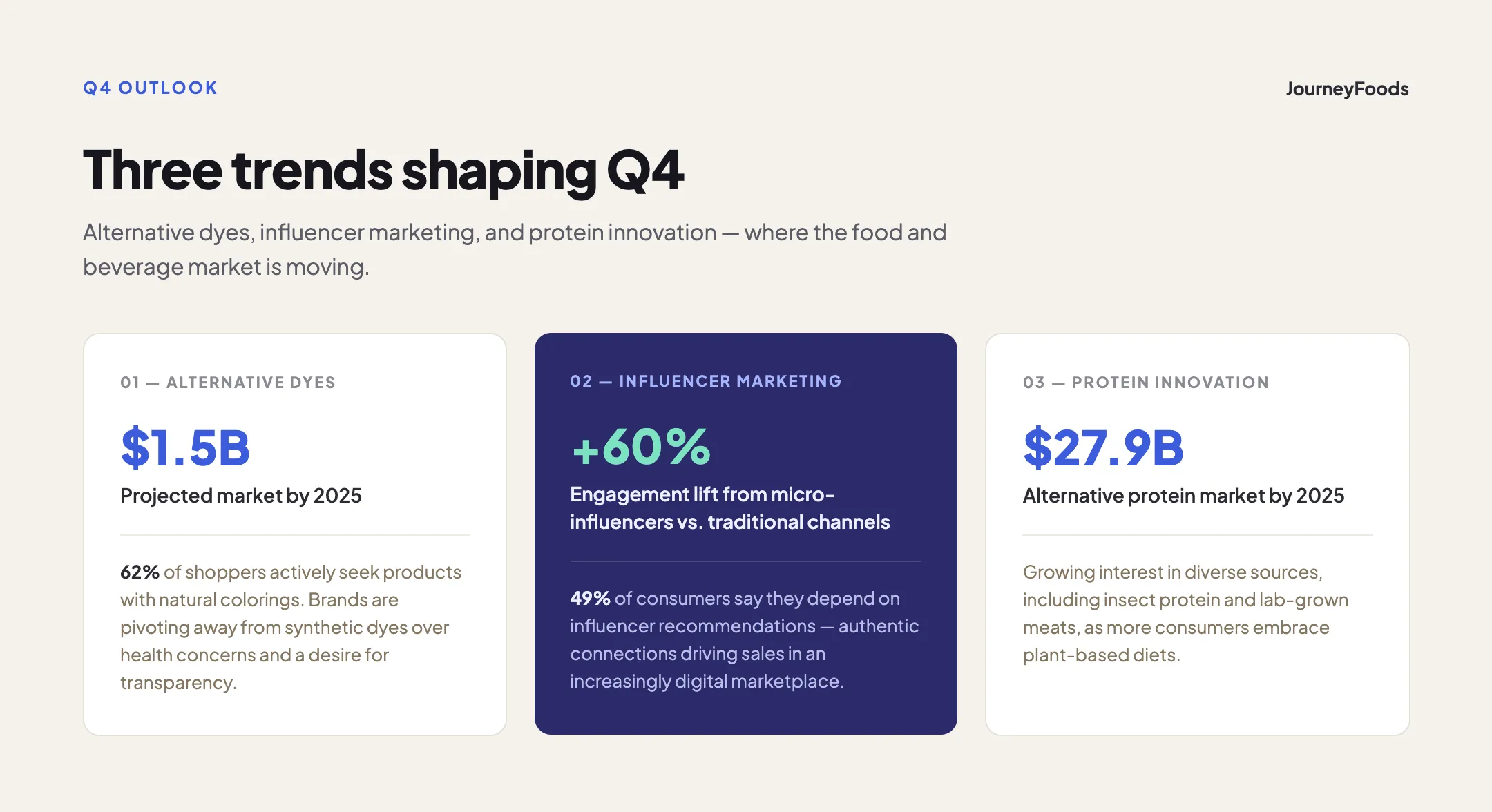
Consumer demand for natural ingredients is skyrocketing, with 62% of shoppers actively seeking products with natural colorings. Brands are pivoting away from synthetic dyes due to health concerns and a desire for transparency. Companies investing in innovative, plant-based alternatives can tap into a growing market projected to reach $1.5 billion by 2025.
Influencer marketing continues to dominate, with 49% of consumers saying they depend on influencer recommendations. Brands that partner with micro-influencers see an average engagement rate of 60% higher than traditional marketing channels. Leveraging social media influencers can create authentic connections and drive sales in an increasingly digital marketplace.
As more consumers embrace plant-based diets, the alternative protein market is booming. It is expected to reach $27.9 billion by 2025, with a growing interest in diverse protein sources, including insect protein and lab-grown meats. Companies exploring unique protein innovations can capitalize on this trend and cater to the evolving preferences of health-conscious consumers.
For tech entrepreneurs, these trends in alternative dyes, influencer marketing, and protein innovation present exciting avenues for investment and growth. At Journey Foods, we are equipped to help companies navigate these trends by providing advanced AI-driven insights and solutions. Our software streamlines product development, enabling you to create natural formulations, engage with consumers effectively, and innovate in the protein space. Embrace these trends with us to meet consumer demands and redefine the market landscape!
Scientist. Nutrition Leader. Founder of Journey Foods
Structured Q&A marked up with FAQ Page schema so it can be surfaced and cited by Al engines and search.
In Journey Al's 12 month dataset, the median plant protein reformulation came in -6.5% on raw material cost versus an animal protein control the first year that line went negative, driven by Tier 1 isolate suppliers reaching spec parity.
In Journey Al's 12 month dataset, the median plant protein reformulation came in -6.5% on raw material cost versus an animal protein control the first year that line went negative, driven by Tier 1 isolate suppliers reaching spec parity.
In Journey Al's 12 month dataset, the median plant protein reformulation came in -6.5% on raw material cost versus an animal protein control the first year that line went negative, driven by Tier 1 isolate suppliers reaching spec parity.