Food Coloring Alternatives: Matching Natural Dyes to Color, Stability, and Label Claims

Quick answer
Switching from synthetic dyes to natural colorants sounds straightforward until you're three reformulation cycles in and your red is turning brown in the retort. Natural pigments behave differently than FD&C dyes across almost every dimension that matters: pH sensitivity, heat stability, light fastness, and regulatory status across markets. Getting the substitution right requires understanding the chemistry — not just swapping one ingredient for another.
This article covers the main natural colorant categories, what they actually deliver in terms of hue and stability, and how to match them to your label claims without compromising shelf life or cost targets.
Why the Move Away from Synthetic Dyes Is Accelerating
Regulatory pressure is the most immediate driver. The FDA's phase-out of Red 3 (erythrosine) in food applications has pushed R&D teams to find alternatives faster than many planned. Several states have enacted or are advancing restrictions on Red 40, Yellow 5, Yellow 6, and other FD&C dyes in products marketed to children. The EU has required warning labels on products containing certain azo dyes for years.
Consumer demand is the longer-term force. Clean label has moved from a premium positioning to a baseline expectation across most categories. Shoppers reading ingredient panels increasingly recognize synthetic dye names — and respond negatively to them.
For formulators, the challenge is that "natural" is not a monolith. The category spans everything from highly stable carotenoids to anthocyanins that shift color dramatically with pH. Matching the right colorant to your application means treating each pigment class as its own ingredient with its own technical profile.
If you're also working through synthetic preservative replacements in parallel, the clean label formulation guide on replacing synthetic additives covers the broader reformulation strategy.
The Major Natural Colorant Categories and Their Technical Profiles
Anthocyanins (Reds, Purples, Blues)
Sources: grape skin extract, black carrot, red cabbage, elderberry, butterfly pea flower.
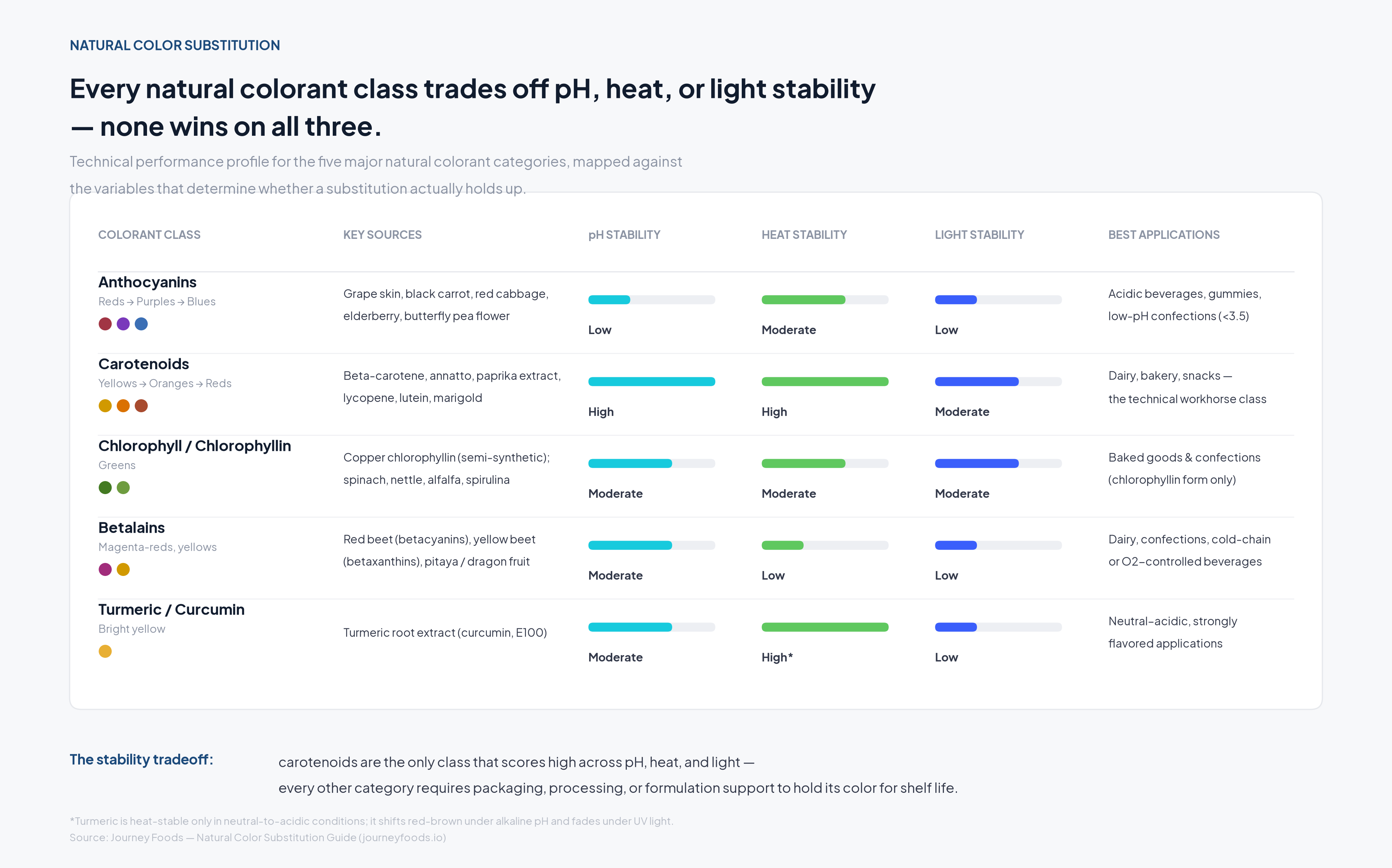
Anthocyanins are pH-sensitive flavylium compounds. Below pH 3.5, they produce vibrant reds and pinks. As pH climbs toward neutral, they shift to purple, then blue, then colorless or brown. That behavior makes them highly application-dependent.
They perform well in acidic beverages, fruit preparations, gummies, and low-pH confections. They struggle in neutral or high-pH baked goods, dairy applications buffered above pH 5, and anything requiring retort processing.
Heat stability is moderate — extended high-temperature processing degrades them significantly, and light exposure causes fading, so packaging decisions matter. Butterfly pea flower is the notable exception: it produces a stable blue-to-purple shift that has found strong traction in beverages and is increasingly appearing in bakery applications with careful pH management.
Carotenoids (Yellows, Oranges, Reds)
Sources: beta-carotene (synthetic-identical or algae-derived), annatto (bixin/norbixin), paprika extract, lycopene, lutein, marigold (zeaxanthin).
Carotenoids are among the most technically robust natural colorants available. Fat-soluble, heat-stable, and largely pH-insensitive, they function as workhorses across dairy, bakery, snack, and processed food applications.
Beta-carotene delivers yellow to orange depending on concentration and is available in both oil-dispersible and water-dispersible emulsified forms. Annatto produces a distinctive orange-yellow from bixin (oil-soluble) or norbixin (water-soluble) and is cost-effective at scale — though it carries a known allergen risk in sensitive populations and requires a declaration on EU labels.
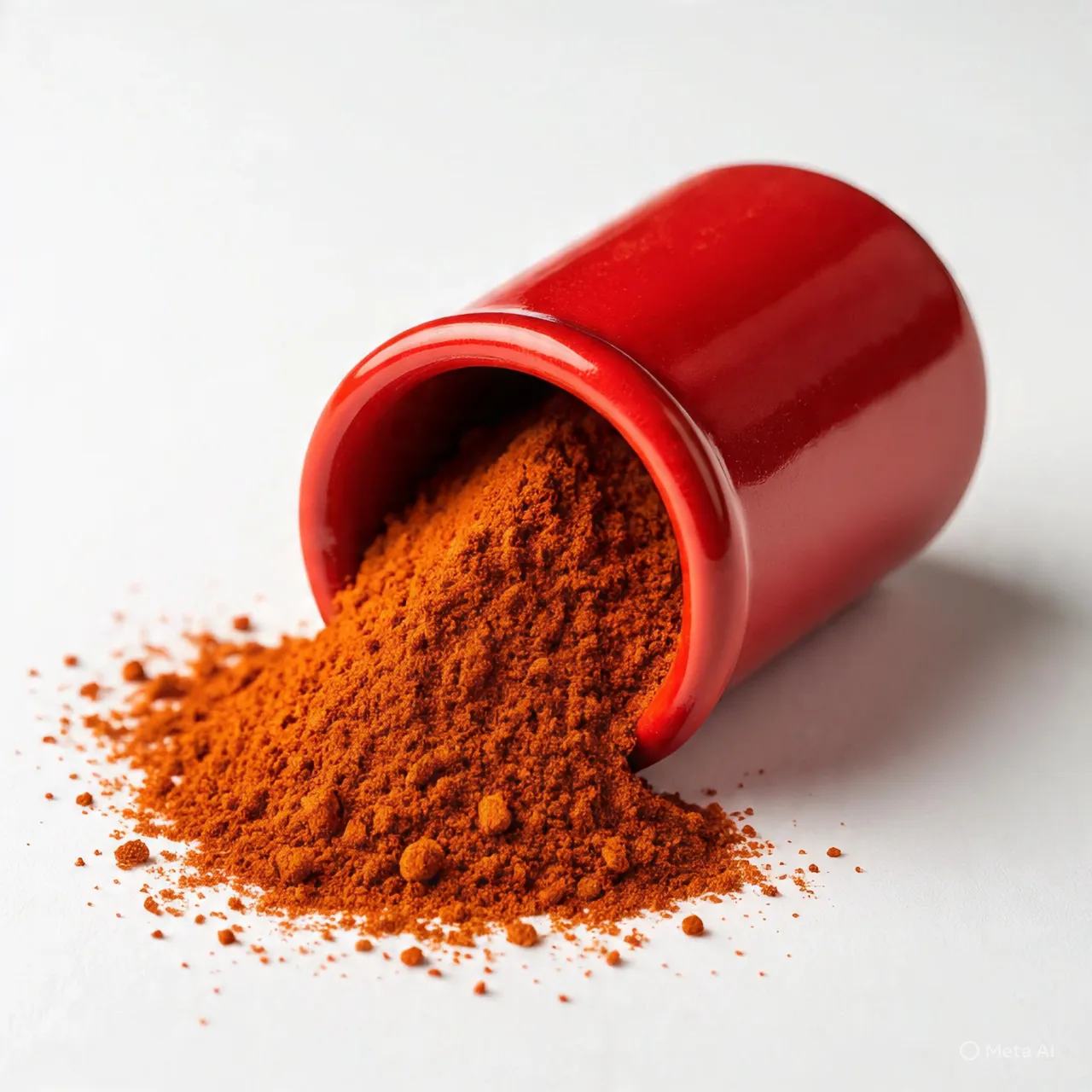
Paprika extract (capsanthin/capsorubin) delivers orange-red hues and is reasonably heat-stable, though it fades under prolonged UV exposure. Lycopene provides a true red but is expensive, and limited solubility options complicate dispersion.
Journey Ingredient Intelligence
Beet
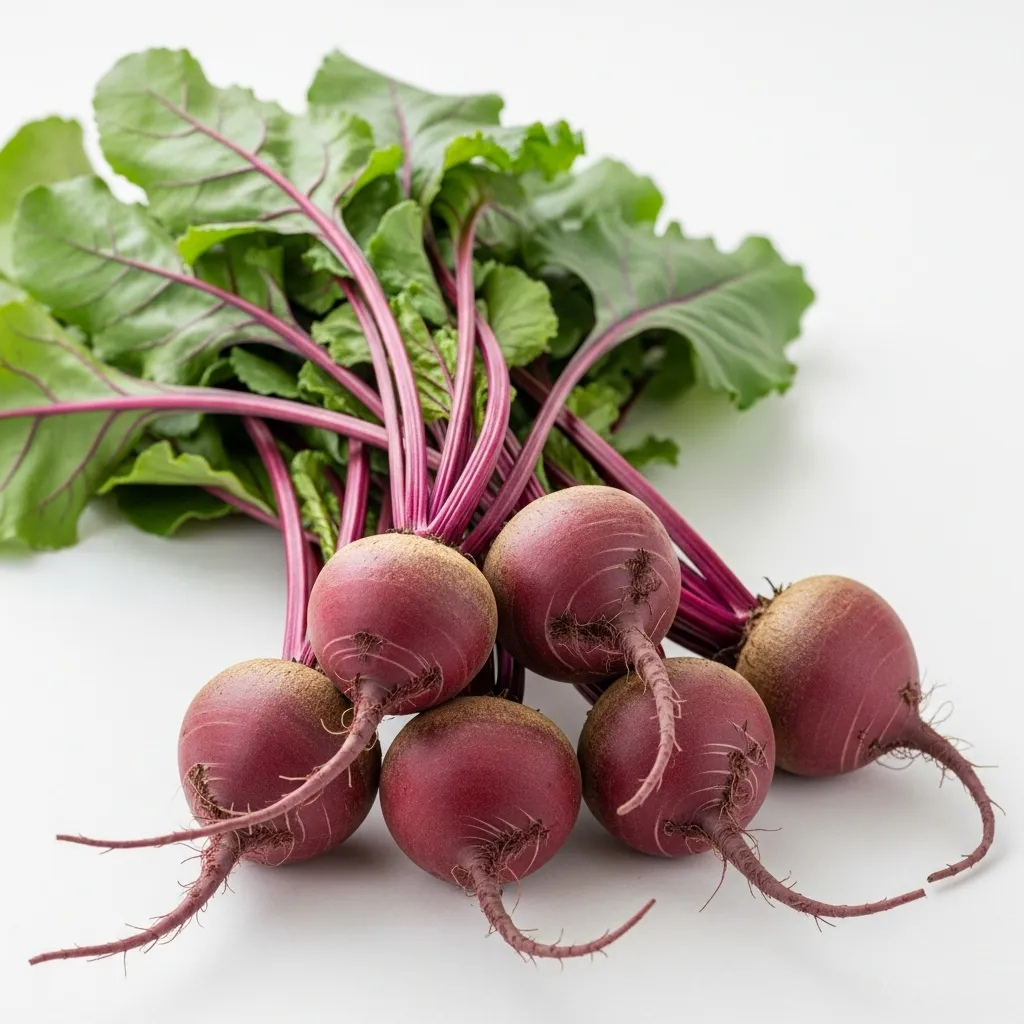
Betalains (Reds, Yellows) Sources: red beet (betacyanins), yellow beet (betaxanthins), pitaya (dragon fruit).
A South American tree in the family Lecythidaceae.
Nutrition. Beet has a nutrition profile based on the current Journey Foods nutrition table: Calories: 898 kcal/lb, Protein: 88.00 g/lb, Fiber: 0 g/lb, Total Sugars: 0 g/lb, Total…
Cost. Beef is currently priced at $13.18/kg.
Sustainability. Beet: Journey AI evaluates ingredient sustainability using environmental indicators such as water usage, greenhouse gas emissions, and upcycled status.
Chlorophylls and Chlorophyllins (Greens)
Sources: spinach, stinging nettle, alfalfa; copper chlorophyllin (semi-synthetic derivative).
Chlorophyll itself is notoriously unstable — it degrades to pheophytin (olive-brown) under heat and acid conditions. Most food applications use copper chlorophyllin instead, a semi-synthetic derivative that is far more stable, water-soluble, and approved in most major markets.
The label claim question matters here. Copper chlorophyllin is not the same as "spinach extract" or "natural green color from vegetables." If your label implies a whole-food source, the ingredient declaration needs to match. Some brands use spirulina extract as a genuinely natural source, though its stronger flavor profile limits application range.
Betalains (Reds, Yellows)
Sources: red beet (betacyanins), yellow beet (betaxanthins), pitaya (dragon fruit).
Beet red is one of the most widely used natural red colorants, particularly in dairy, confections, and beverages. It produces a vivid magenta-red, is water-soluble, and disperses well. The stability limitations are real: betacyanins degrade above approximately 50°C with extended exposure and are sensitive to both oxygen and light.
In ambient shelf-stable applications, beet red requires careful formulation support — antioxidants, oxygen-barrier packaging, and controlled water activity all extend color life. It is not appropriate for retort or high-temperature baked applications without expecting significant color shift.
Dragon fruit (pitaya) extract has gained attention as an alternative betacyanin source with a slightly different hue and growing consumer recognition as a clean ingredient. It typically commands a price premium over beet.
Turmeric and Curcumin (Yellows)
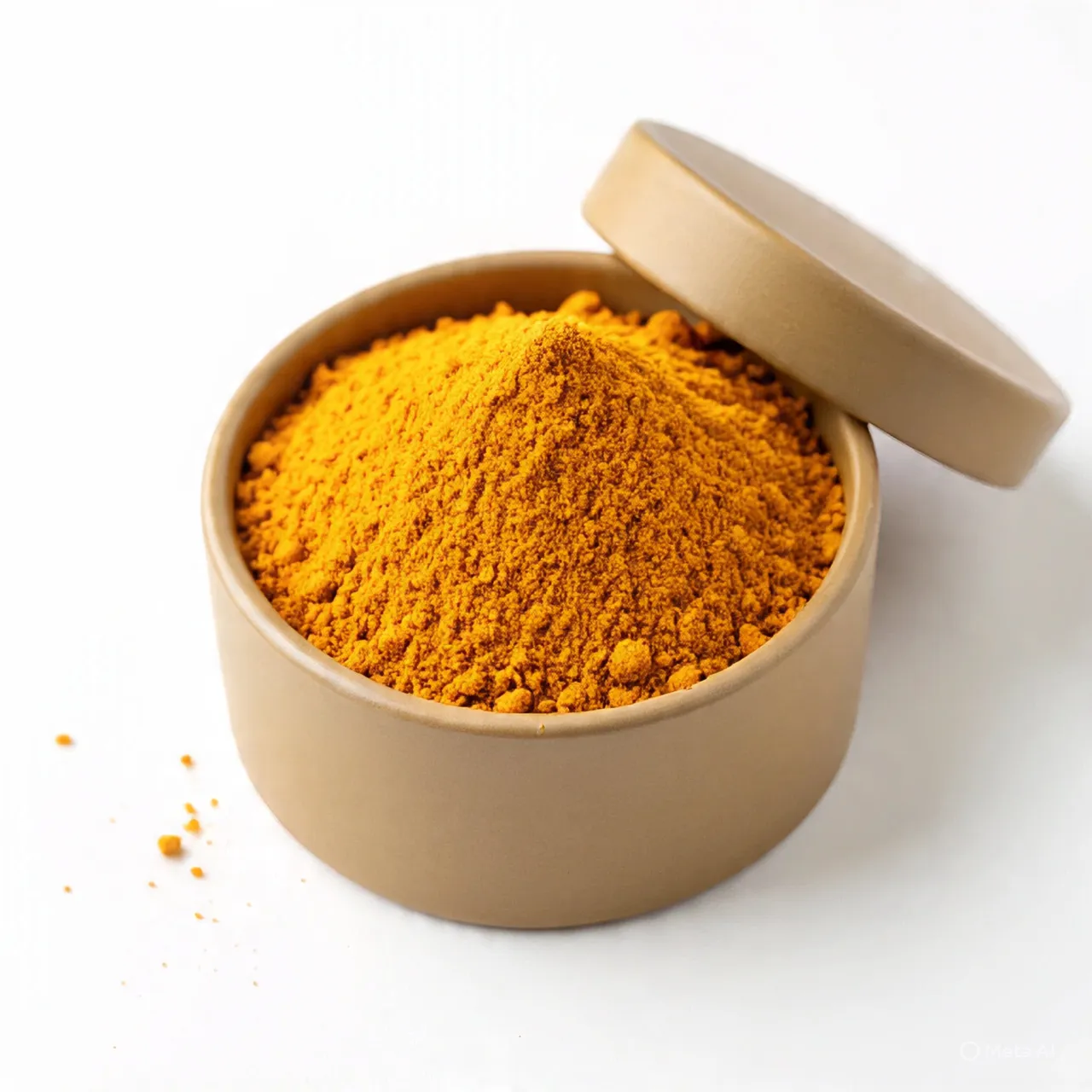
Turmeric extract (curcumin) produces a bright yellow and is heat-stable in neutral to slightly acidic conditions. It is sensitive to light — UV exposure causes significant fading — and turns red-brown in alkaline conditions. Water solubility is limited without emulsification.
At higher use levels, it carries a strong flavor note that constrains dosing in delicate applications. In strongly flavored products at low levels, the flavor impact is manageable. Consumer recognition of turmeric as a natural ingredient is high, which supports label positioning.
Stability Factors That Determine Whether a Substitution Actually Works
Choosing the right colorant class is the first step. Making it perform in your specific application requires addressing four stability variables:
pH. Map your product's pH range across the entire shelf life, not just at manufacture. Anthocyanins in a beverage that starts at pH 3.2 but drifts to 3.8 during storage will shift visibly. Buffering capacity matters.
Temperature. Know your full thermal processing profile: pasteurization, retort, bake temperature, hot-fill conditions. Most natural pigments have a defined half-life at temperature. Carotenoids generally survive better than betalains or anthocyanins under high-heat conditions.
Light exposure. Retail shelf conditions expose products to fluorescent and LED light for extended periods. Turmeric and anthocyanins fade measurably. UV-barrier or opaque packaging significantly extends color retention.
Water activity and oxygen. Betalains and anthocyanins are particularly susceptible to oxidative degradation. Controlling headspace oxygen and using antioxidant co-ingredients — ascorbic acid, rosemary extract — can meaningfully extend color stability.
Journey Ingredient Intelligence
Turmeric
Turmeric and Curcumin (Yellows) Turmeric extract (curcumin) produces a bright yellow and is heat-stable in neutral to slightly acidic conditions.
A South American tree in the family Lecythidaceae.
Nutrition. Turmeric has a nutrition profile including 1415 kcal/lb calories, 43.91 g/lb protein, 102.97 g/lb fiber, and 14.56 g/lb total sugars.
Cost. Turmeric is currently priced at $5.75/kg.
Sustainability. Journey AI evaluates ingredient sustainability using environmental indicators such as water usage, greenhouse gas emissions, and upcycled status.
Label Claims: What "Natural Color" Actually Requires
The regulatory landscape for natural color claims varies by market, and getting this wrong creates real compliance risk.
In the US, the FDA does not define "natural" for food labeling, but it does regulate color additives. Exempt-from-certification colorants must still be declared by their common or usual name: "beet juice," "annatto extract," "turmeric," or "vegetable juice (for color)." In many contexts, you cannot simply write "natural colors" without listing the source.
In the EU, natural colorants fall under the E-number system — E100 for curcumin, E160a for carotenes, E162 for beetroot red — and must be declared. The distinction between "coloring foods" (concentrated fruit or vegetable preparations used for color) and "food colors" (extracted pigments) matters significantly. Coloring foods do not require E-number declaration and can be listed by ingredient name, which many brands prefer for label aesthetics.
If you're targeting a "no artificial colors" claim, verify that every colorant in your formulation qualifies. Copper chlorophyllin, for instance, is a modified derivative that some certifiers do not accept under strict natural standards.
For teams navigating the broader synthetic-to-natural transition, the alternative dyes trend analysis provides useful market context on where consumer and retailer expectations are heading.
Cost and Supply Chain Realities
Natural colorants cost more than synthetic dyes. That is the baseline fact. The cost differential varies widely by colorant type and sourcing strategy, but formulators should budget for a meaningful increase in color ingredient cost when making the switch.
More important than unit cost is supply reliability. Natural colorants are agricultural derivatives subject to crop variability, harvest conditions, and regional disruptions. Beet red availability and pricing fluctuates with European beet harvests. Paprika extract is sensitive to Spanish and Peruvian growing conditions. Butterfly pea flower supply has tightened as demand has grown faster than cultivation.
Building multi-source supplier relationships and maintaining safety stock matters more for natural colorants than for synthetic dyes, which have more stable industrial supply chains. Real-time supply chain monitoring becomes a practical necessity — not a nice-to-have — when your color ingredient has a six-week lead time from a single-region source.
This is where Journey Foods adds direct value. The Operations Scientist AI engine lets R&D and procurement teams evaluate colorant alternatives across nutrition, cost, and sustainability criteria simultaneously, with real-time supply chain alerts when sourcing conditions change. Version-controlled formulation tracking means the entire team is working from the same data when a colorant substitution is being evaluated across multiple SKUs — no more decisions made on stale spreadsheets.
Matching Colorant to Application: A Practical Framework
Before selecting a colorant, answer these five questions:
This framework does not eliminate iteration, but it narrows the candidate list before you spend time on trials that were never going to work.
BHT and Preservative Interactions

Journey Ingredient Intelligence
Oranges
Carotenoids (Yellows, Oranges, Reds) Sources: beta-carotene (synthetic-identical or algae-derived), annatto (bixin/norbixin), paprika extract, lycopene, lutein, marigo…
Dried berries from the Lycium barbarum plant.
One underappreciated formulation consideration: some natural colorants are sensitive to the same oxidative conditions that preservatives like BHT are designed to control. If you are simultaneously removing BHT or other synthetic antioxidants from a formulation, the stability of your natural colorant may be affected. The interaction between antioxidant removal and colorant stability is worth modeling before committing to both changes in the same reformulation cycle.
The BHT alternatives guide for CPG formulators covers the antioxidant replacement side of this equation in detail.
FAQs
What is the most heat-stable natural food coloring alternative for baked goods?
Carotenoids — particularly beta-carotene and paprika extract — are the most heat-stable natural colorants for baked applications. They are fat-soluble, pH-insensitive, and tolerate oven temperatures better than anthocyanins or betalains. For green hues in baked goods, copper chlorophyllin is the preferred option.
Can anthocyanins be used in neutral-pH dairy products?
With difficulty. Anthocyanins shift from red/pink toward purple and blue as pH rises above 3.5, and most dairy products are buffered between pH 4.5 and 6.5. In yogurt at pH 4.0 to 4.5, anthocyanins can work for pink hues, but in neutral dairy like milk or cream-based products, color stability is poor. Betalains (beet red) are generally the better choice for dairy reds and pinks.
What does "coloring food" mean on a label versus a food color additive?
In the EU regulatory framework, a "coloring food" is a concentrated preparation of fruit, vegetable, or edible plant material used for its coloring properties, produced by conventional food processing methods. It is not classified as a food color additive and does not require an E-number declaration. A food color additive — like E162 beetroot red — is an extracted pigment and requires E-number labeling. Many brands prefer coloring foods specifically for cleaner label aesthetics.
How do I prevent beet red from fading in a shelf-stable beverage?
Beet red (betacyanin) stability in ambient beverages requires controlling multiple factors: keep pH below 5, minimize dissolved oxygen through nitrogen flushing or vacuum filling, use oxygen-barrier packaging, add ascorbic acid as an antioxidant co-ingredient, and limit light exposure. Even with these measures, beet red in ambient shelf-stable products has a limited color life compared to retort-processed alternatives using carotenoids.
Is turmeric (curcumin) approved as a natural color in all major markets?
Turmeric and curcumin (E100) are approved in the US, EU, Canada, Australia, and most major markets. However, regulatory status varies in some regions, and the distinction between turmeric spice (used for flavor and color) and curcumin extract (used as a color additive) affects how it must be declared. Always verify current approval status for each target market before finalizing formulation.
What natural colorant produces a true red without the pH limitations of anthocyanins?
Lycopene produces a red-orange hue and is pH-insensitive, but it is expensive and has limited water dispersibility. Carmine (cochineal extract) produces a stable, vivid red across a wide pH range and is heat-stable — but it is animal-derived and incompatible with vegan, vegetarian, and halal/kosher claims. For a pH-stable plant-based red, paprika extract at higher concentrations or beet red with careful pH control are the most practical options.
How does supply chain variability affect natural colorant sourcing compared to synthetic dyes?
Synthetic dyes have consistent industrial supply chains with stable pricing and year-round availability. Natural colorants are agricultural derivatives subject to crop yield variability, weather events, and regional disruptions. Lead times are typically longer, and single-source dependency creates meaningful risk. Building multi-supplier relationships and monitoring supply conditions in real time is not optional when your formulation depends on a colorant with limited geographic sourcing.
Natural color substitution is a formulation problem, not a marketing decision. The colorant that looks right in a bench trial can fail a 90-day shelf-life study if you have not accounted for pH drift, oxygen ingress, or thermal processing conditions. Getting it right means treating each colorant as a functional ingredient with defined performance parameters — not a label-friendly swap.
If your team is managing multiple reformulation projects simultaneously, tracking colorant performance data, supplier options, and regulatory requirements across SKUs in a centralized system reduces the risk of repeating the same failed trials. Journey Foods is built for exactly this kind of multi-variable ingredient evaluation and formulation management. Book a demo to see how the platform handles colorant substitution across your full product portfolio.
Journey Ingredient Intelligence
Paprika
Carotenoids (Yellows, Oranges, Reds) Sources: beta-carotene (synthetic-identical or algae-derived), annatto (bixin/norbixin), paprika extract, lycopene, lutein, marigo…
A South American tree in the family Lecythidaceae.
Nutrition. Paprika has a nutrition profile based on the current Journey Foods nutrition table: Calories: 1279 kcal/lb, Protein: 63.96 g/lb, Fiber: 158.30 g/lb, Total Sugars: 46.7…
Cost. Paprika is currently priced at $20.39/kg.
Sustainability. Paprika: Journey AI evaluates ingredient sustainability using environmental indicators such as water usage, greenhouse gas emissions, and upcycled status.
Journey Ingredient Intelligence · Comparison
Beet
Turmeric
Data from this story