
.svg)
.svg)
.svg)
.svg)


.svg)
The hyperlocal manufacturing economy shows significant growth during winter months, with a 37% increase in home-based production businesses registered between November and February compared to summer quarters, according to 2024 data from the Small Business Administration. This seasonal shift represents approximately 125,000 new micro-manufacturing enterprises nationwide, generating an estimated $3.2 billion in hyperlocal economic activity. Winter's indoor confinement, combined with increasing consumer preference for locally-made goods (68% of consumers now prefer local products versus 41% in 2019), creates ideal conditions for entrepreneurs to participate in this growing sector that emphasizes sustainability, resilience, and community economic development.
Winter brings unique challenges and opportunities for those interested in hyperlocal manufacturing. As outdoor activities diminish and people spend more time indoors, the conditions become perfect for developing small-scale production operations from home workshops, garages, and small local facilities. The hyperlocal manufacturing movement emphasizes production within a 10-mile radius of consumption, creating resilient economic systems that thrive even during harsh weather conditions.
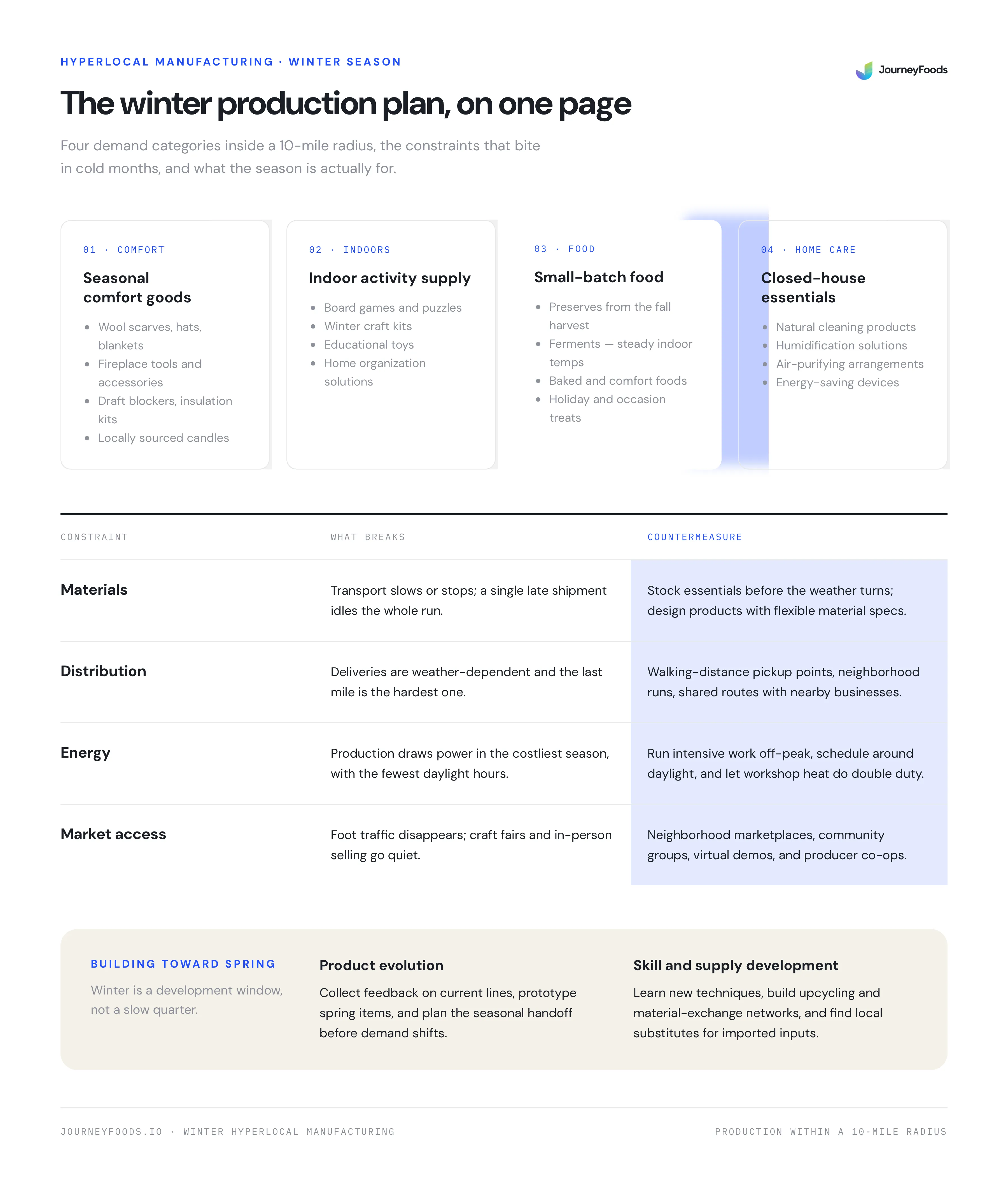
Winter naturally confines us indoors, providing extended periods for production work. This seasonal rhythm aligns perfectly with developing manufacturing skills and building inventory. The reduced distractions of outdoor activities allow for focused work on products that require attention to detail.
Winter weather often disrupts supply chains, highlighting the value of locally produced goods. When shipping delays affect traditional retail, hyperlocal manufacturing can fill critical gaps in community needs. Winter-specific products (like handcrafted heating solutions, weather protection gear, and seasonal decorations) see particular demand spikes during this season.
Small-scale manufacturing during winter can utilize heating systems that are already running. Your home workshop's production activities contribute heat to your living space, creating dual-purpose energy usage that reduces overall costs compared to maintaining separate production facilities.
Begin by identifying specific winter needs in your community:
Winter is an excellent time to leverage what you already have. Consider:
Design your winter manufacturing space to be:
Winter-specific products see high demand during cold months:
With families spending more time indoors:
Winter's preservation needs create opportunities:
Winter brings specific home needs:
When physical movement is limited by weather:
Winter is ideal for collaborative manufacturing:
Use winter months to develop local material sourcing:
When transportation is challenging:
Winter weather complicates product delivery:
Manufacturing requires power, which can be costly in winter:
Use winter for planning next-season products:
Winter provides learning opportunities:
Winter's challenges create unique opportunities for hyperlocal manufacturing. By embracing the season's indoor focus, community needs, and collaborative possibilities, you can build a resilient manufacturing business that serves your immediate community. The hyperlocal approach not only creates economic opportunity during challenging months but also builds community resilience and sustainability year-round.
The winter months, often seen as a time of economic slowdown, can instead become a period of intensive development and growth for small-scale manufacturers. By focusing on local needs, leveraging seasonal advantages, and building strong community connections, hyperlocal manufacturing can transform winter from a time of scarcity to a season of creativity and production.
Scientist. Nutrition Leader. Founder of Journey Foods