.svg)
.svg)
.svg)
.svg)


.svg)

.svg)
Hey Pies,
Campbell's just put Chunky in the freezer aisle, and somehow that is the least dramatic headline of the week.
Cyclospora widened its reach across nine states. Shell eggs got pulled off shelves across four more. Grocery carts kept shrinking for a fifth straight month. And a room full of developers in Atlanta spent a weekend proving that food data doesn't have to live behind a wall.
Here's what we're tracking, and what we think it actually means for the next few weeks on shelf.
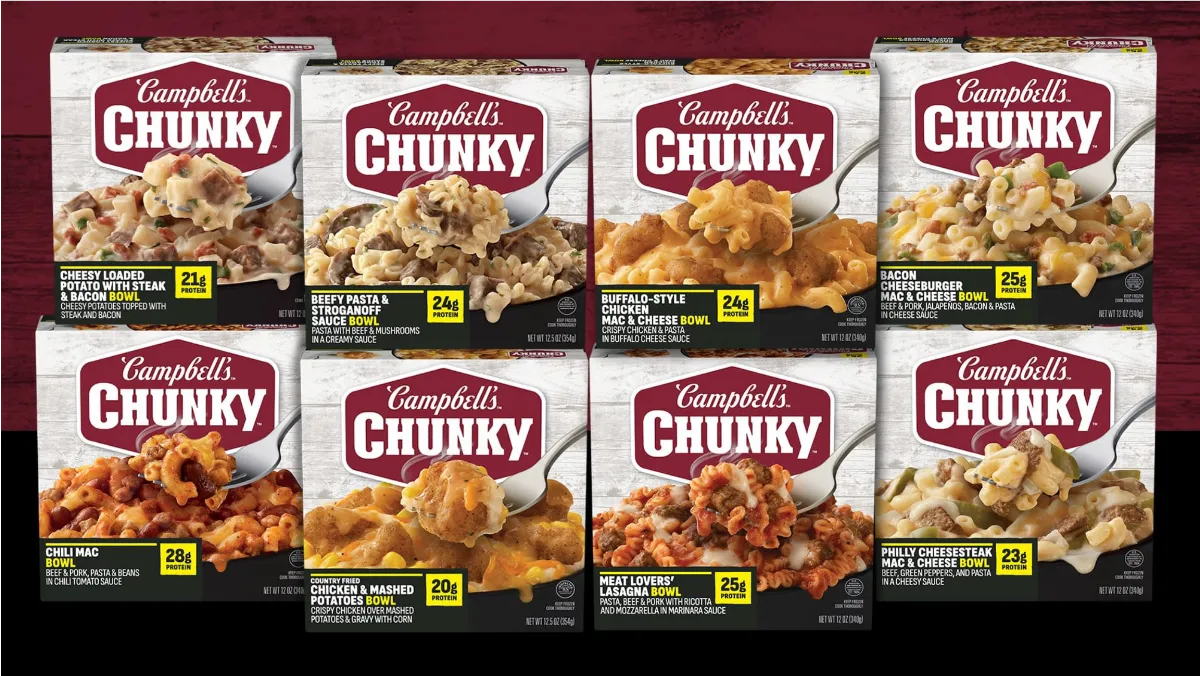
Campbell's just moved Chunky into frozen meals: eight Chunky Frozen Bowls with up to 28 grams of protein, in formats like Beefy Pasta with Stroganoff Sauce, Buffalo Style Chicken Mac and Cheese, and Meat Lovers' Lasagna. It sounds like a stretch until you remember what Chunky has always meant: hearty. Frozen bowls just let "hearty" mean "meal" instead of "lunch."
The freezer has earned that trust. Nearly two in five consumers now buy frozen food at least once a week, drawn in by storage life, time savings, value, and nutrient retention, per Innova Market Insights. The sad backup aisle is now a strategy.
Two more signals worth clocking: L-theanine ingredient sales are up 53% this year as "calm energy" spreads from supplements into shelf stable coffee, hot cocoa, and sports drinks, according to New Hope Network. And at Summer Fancy Food, bone broth showed up in sparkling protein soda and hot chocolate, the kind of format swap that makes a heritage ingredient feel new again.
The humor line of the week: soup didn't need a manifesto to cross into frozen. It just needed a consumer job obvious enough to build around.
Two outbreaks are moving at once, and neither is a maybe.
FDA is tracking 1,947 Cyclospora illnesses and 98 hospitalizations across nine states, tied to shredded iceberg lettuce from Taylor Farms de Mexico. Taylor Farms pulled all central Mexico sourced iceberg from the U.S. market on July 17. Marketside Iceberg Salad and Marketside Shredded Lettuce with best if used by dates from July 18 to August 3 are part of the recall, and Taco Bell locations that received the lettuce are part of the exposure picture. Taco Bell says it stopped sourcing from Taylor Farms de Mexico that same day.
Separately, FDA is investigating a Salmonella Enteritidis outbreak tied in part to shell eggs from Midwest Poultry Services: 98 illnesses and 26 hospitalizations across 17 states. The recalled eggs shipped under the Country Morning, Cal-Maine Sunups, Brookshire's, Simple Truth, and Kroger labels, sold mainly across Texas, Oklahoma, Louisiana, and a handful of neighboring states.
"We know our suppliers" is not the same claim as "we can prove our supplier, lot, channel, customer, and date exposure in an afternoon." The second one is what keeps a recall from turning into a brand personality.
If either product touched your operation, the move is the same: pull invoices and lot codes now, hold or return affected product, and sanitize anything that came in contact with it, per FDA guidance.
U.S. grocery units fell 1.8% year over year in June. That's five straight months of negative unit growth, according to Bain & Company's read of NielsenIQ data.
Prices are still up 2 to 3% year over year, so this isn't sticker shock anymore. It's a real shift in behavior. GLP-1 adoption is adding to the pressure too, simply because people on it are buying less food overall.
80%
trying to spend less
56%
trading down to cheaper brands
49%
buying fewer items
Source: Bain & Company, read of NielsenIQ data, June 2026.
Bain's prescription is not a blanket discount. It's precision: pricing, promotion, loyalty, assortment, and private label sharp enough to actually earn the spot in the cart.
"Healthy" and "premium" aren't jobs. They're adjectives.
If the cart is shrinking, every product needs a clearer job to do: save time, close a nutrition gap, lower risk, or deliver a moment worth the money
Platinum Equity and Nestlé are merging their water and premium beverage portfolios into a new joint venture called Peranel, valued at roughly $5.6 billion and covering more than 30 brands, including S.Pellegrino, Perrier, Acqua Panna, and Nestlé Pure Life.
Vita Coco made a smaller but sharper move, acquiring the super premium Thai coconut water brand Copra for $175 million upfront, with an earnout that could add up to $100 million more by 2029. Copra is on track to clear $100 million in net sales this year alone.
Neither deal is really about hydration. Both are about who controls the story of premium water, and who owns the shelf space that comes with it.
NetSuite calls it a "connected supply chain": one system that links procurement, manufacturing, logistics, inventory, and fulfillment, so nobody is chasing five spreadsheets in the middle of a crisis.
That's not a new idea. It's just newly urgent. When an outbreak or a recall hits, the teams who centralize supplier and lot data, standardize what gets reported and when, and automate the alerts are the ones who move in hours instead of days.
Treat food safety readiness like margin protection, because that's exactly what it is.
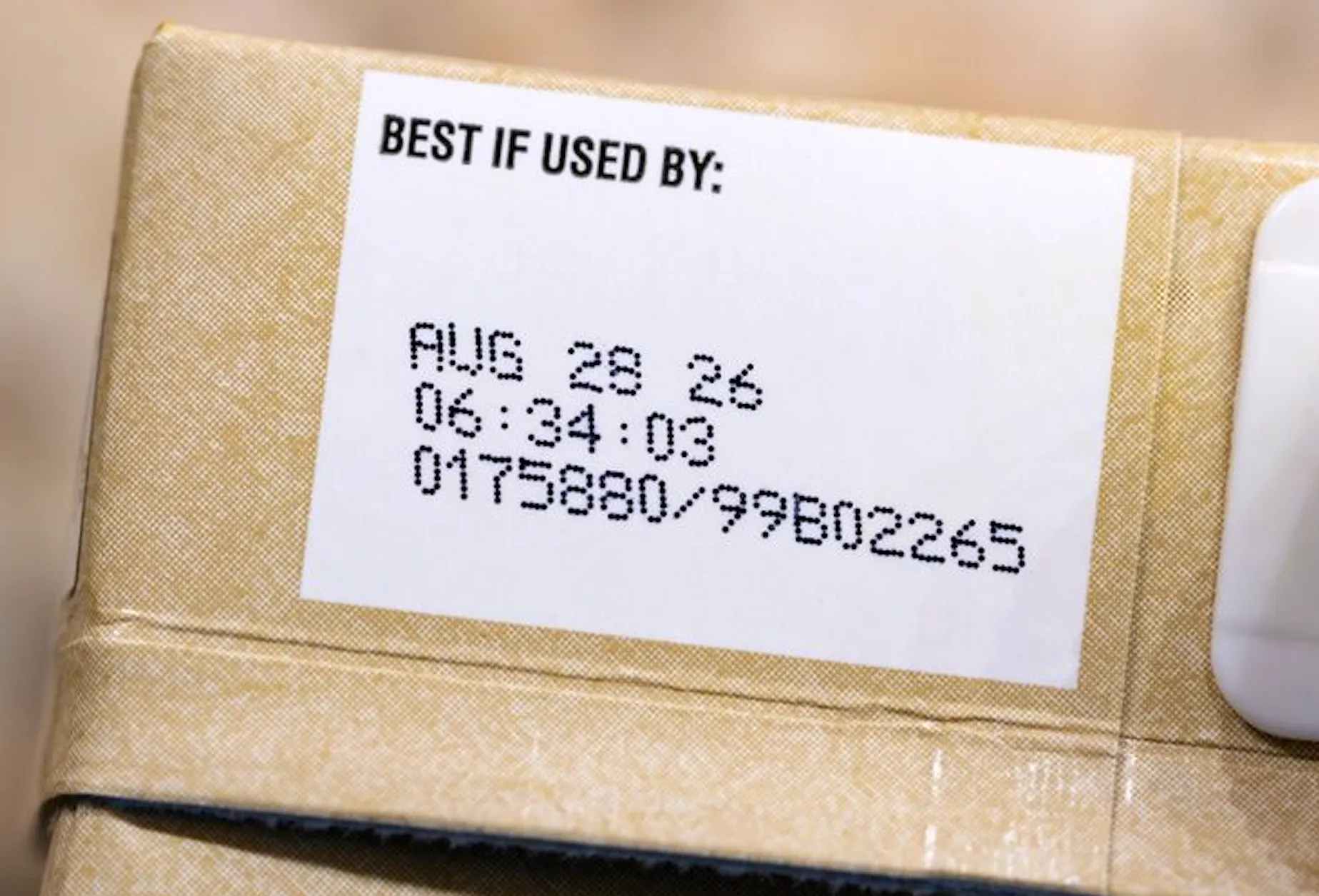
As of July 1, California's AB 660 means "sell by" no longer belongs on a consumer-facing label. Quality claims now have to read "BEST if Used by" or "BEST if Used or Frozen by." Safety claims have to read "USE by" or "USE by or Freeze by" (Food Dive). It sounds like a wording swap. It isn't. It touches SKU master data, packaging specs, artwork files, and every vendor who prints a label.
Virginia widened its expanded polystyrene food container ban to cover every food vendor, not just a subset. Washington now requires producers to register with a producer responsibility organization before they can keep shipping into the state. Three states, three different asks, all landing the same week.
This is a packaging and vendor onboarding problem before it's a legal one. Treat it that way.
"BEST if Used by" is not a rebrand. It's a new field in your label template, and it needs an owner this week, not next quarter.
Do this before your next print run: audit which SKUs ship into California, Virginia, and Washington; map the packaging vendors and label templates those SKUs touch; decide whether you're going regional labels or one harmonized national label; and add a compliance check to your packaging change workflow so this doesn't surprise you again next quarter.
Journey Foods Team News
Structured Q&A marked up with FAQ Page schema so it can be surfaced and cited by Al engines and search.
In Journey Al's 12 month dataset, the median plant protein reformulation came in -6.5% on raw material cost versus an animal protein control the first year that line went negative, driven by Tier 1 isolate suppliers reaching spec parity.
In Journey Al's 12 month dataset, the median plant protein reformulation came in -6.5% on raw material cost versus an animal protein control the first year that line went negative, driven by Tier 1 isolate suppliers reaching spec parity.
In Journey Al's 12 month dataset, the median plant protein reformulation came in -6.5% on raw material cost versus an animal protein control the first year that line went negative, driven by Tier 1 isolate suppliers reaching spec parity.