
.svg)
.svg)
.svg)
.svg)


.svg)
Since the 1970s, the scrutiny of ingredients in food products has increased significantly, with items like breakfast cereals and powdered drink mixes showing high percentages of banned or restricted components. In contrast, staples like canned chili and peanut butter maintain lower levels of such ingredients. Journey Foods is at the forefront of this transformation, using AI to help food companies develop healthier, more sustainable products that meet modern consumer demands while ensuring regulatory compliance.
Since the 1970s, our approach to food and recipes has dramatically shifted, especially concerning the ingredients we accept in our everyday products. A recent analysis reveals intriguing trends in the composition of various popular food items, highlighting a growing scrutiny of ingredients.
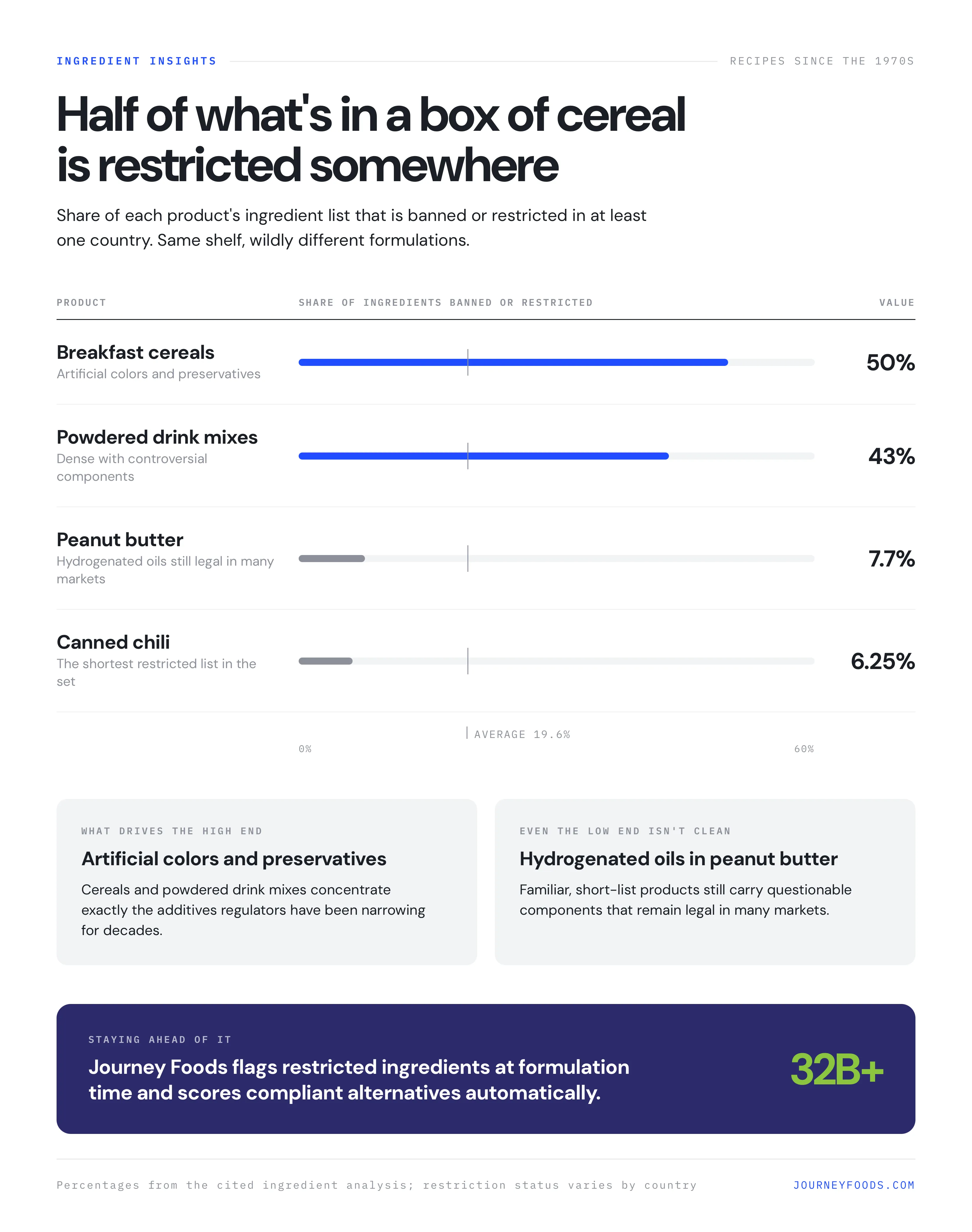
Take breakfast cereals, for example. Today, they contain an astonishing 50% of ingredients that are banned or restricted in some countries. This shift reflects our increasing awareness of what goes into our food—particularly concerning artificial colors and preservatives. Similarly, powdered drink mixes show a high concentration of controversial components, with nearly 43% of their ingredients facing scrutiny.
In contrast, some staples like canned chili and peanut butter demonstrate a surprising resilience, containing only a small fraction of banned ingredients—6.25% and 7.7%, respectively. This indicates that even familiar products can harbor questionable elements, such as hydrogenated oils in peanut butter, which raise eyebrows but remain legal in many places.
Overall, the average percentage of banned ingredients across products sits at approximately 19.6%, revealing significant variability in food formulations. The spectrum ranges from those with a mere 6.25% of banned ingredients to cereals and drinks with upwards of 50%. This variation underscores the complexity of modern food regulation and the ongoing debate about what constitutes safe and acceptable food.
To navigate these complexities, Journey Foods is revolutionizing how we approach food development. By leveraging advanced artificial intelligence, they streamline the journey from product ideation to commercialization, helping food companies create healthier, more sustainable options. With features like consumer preference configuration, ingredient tagging for better formulations, and automated compliance insights, Journey Foods empowers businesses to meet modern consumer demands while adhering to regulatory standards. Their extensive database of over 32 billion ingredient insights enables dynamic analysis, making it easier to make informed decisions about product development. In this ever-evolving landscape, Journey Foods is paving the way for smarter, safer food choices that align with our values and preferences.
Scientist. Nutrition Leader. Founder of Journey Foods