

Quick answer
The debate on whether plant-based meat is ultra-processed or not.
Sausage, beef, chicken, and now even fish - when it comes to replacing beloved sources of protein, plant-based meat seems to have all bases covered. As more brands grow and technology improves, there is a flavor and form for nearly every animal on the market; soon major restaurants will be serving these faux counterparts at the same price as regular meat. However, long debate has since plagued the plant-based hemisphere, with the question being: is it considered an ultra-processed food? This question affects how consumers view this replacement protein, so let’s take a look at what experts say!
An ultra-processed food, according to the widely-used NOVA classification system, is a food that was “made from a series of processes including extraction and chemical modification”, including sugary soft drinks, ice cream, and chicken nuggets. This also means the foods have very little whole ingredients - such as fruit, vegetables, nuts, etc - and are mostly artificial and nutritionally void. According to this rigid system, plant-based meats have earned themselves the title of ultra-processed for containing ingredients such as methylcellulose, soy protein isolate, xanthan gum, and more. This comes with a negative stigma, as the consumption of ultra-processed food is typically associated with health-related issues such as obesity and cardiovascular disease.

Journey Ingredient Intelligence
Chicken
Sausage, beef, chicken, and now even fish - when it comes to replacing beloved sources of protein, plant-based meat seems to have all bases covered.
Chicken: 119 kcal and 21.4 g protein per 100 g; top producer United States (15.7%, 2024); 9.87 kg CO2e per kg.
However, there’s been some pushback; many argue against that label for plant-based meat and call it healthier than your traditional UPF. Research shows that some processing techniques actually help make plant-based meat more nutritional, low in saturated fat, and high in fiber and protein. In fact, studies show that plant-based meats are often healthier than their animal meat counterparts in some aspects. Furthermore, there are thousands of brands when it comes to plant-based meat on the market with varying levels of processing each - meaning they don’t neatly fit in the NOVA system’s binary criteria.
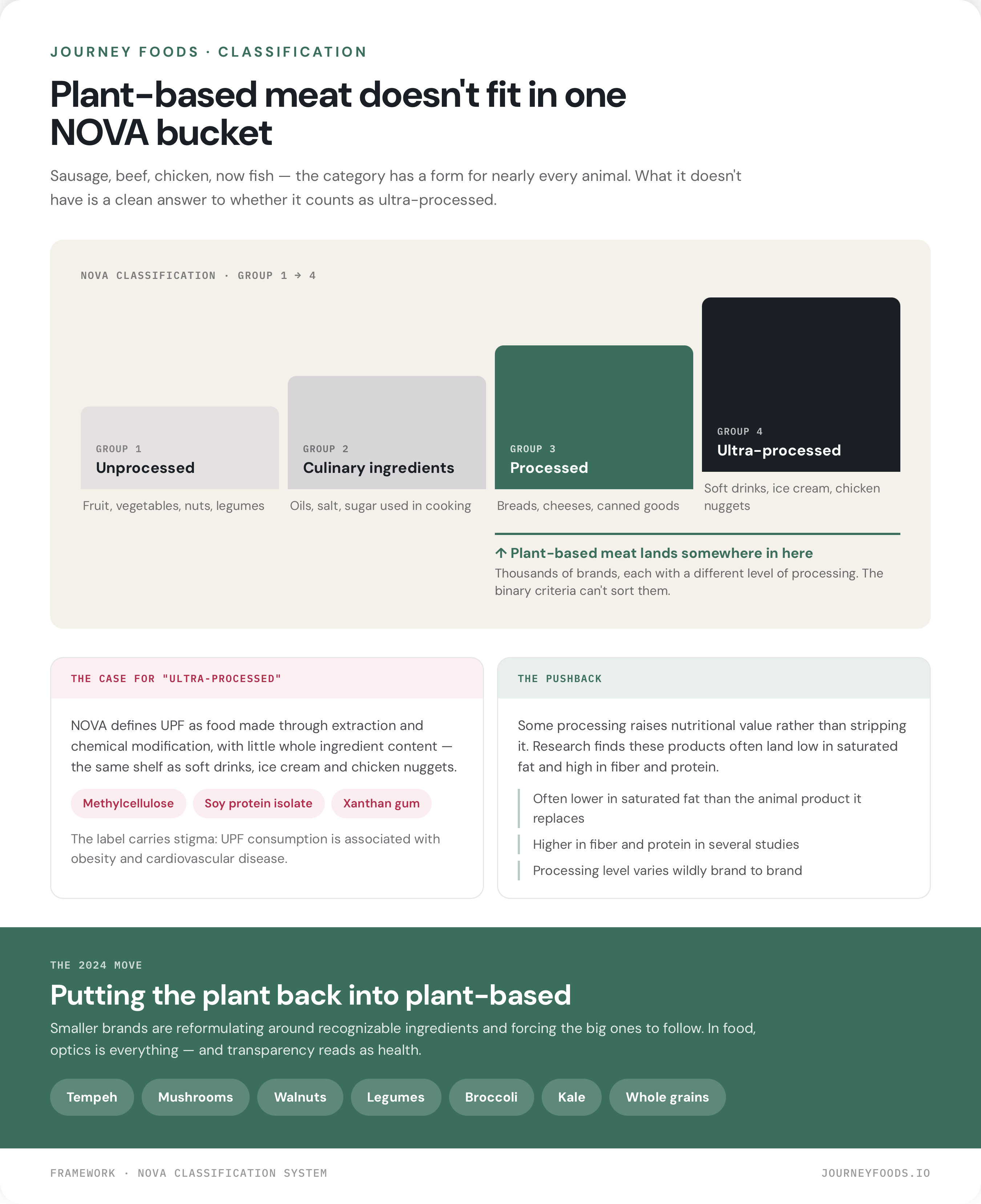
Whether plant-based meat is ultra-processed or not, a new trend emerging in 2024 is adding the “plant” back into plant-based meat! Food companies are doing this by reintroducing healthier ingredients like tempeh, mushrooms, walnuts, and legumes back into their formula, including greens like broccoli and kale as well. More and more smaller companies are popping up that claim to have cleaner ingredients than traditional big brand plant-based foods, prompting the latter group to follow suit and readjust. Optics is everything in the world of food, meaning consumers will always appreciate healthier products with more transparency.

Journey Ingredient Intelligence
Walnuts
Food companies are doing this by reintroducing healthier ingredients like tempeh, mushrooms, walnuts, and legumes back into their formula, including greens like brocco…
Walnuts: 654 kcal and 15.2 g protein per 100 g; top producer China (34.5%, 2024); 0.43 kg CO2e per kg.
Do you consider plant-based meats ultra-processed? Are you snacking on plant-based patties and sausages the same as we are? Let us know in the comments!
Journey Ingredient Intelligence
Beef
Sausage, beef, chicken, and now even fish - when it comes to replacing beloved sources of protein, plant-based meat seems to have all bases covered.
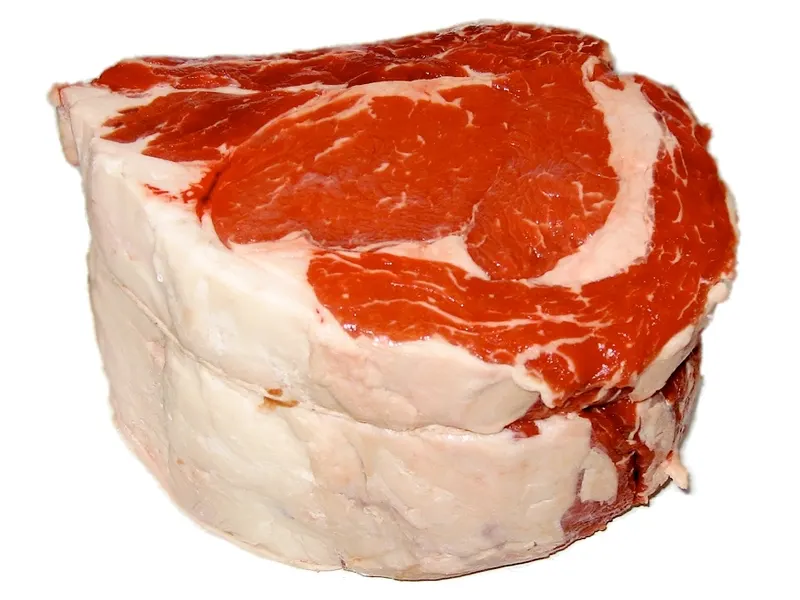
Beef: 254 kcal and 17.2 g protein per 100 g; top producer United States (17.6%, 2024); 99.48 kg CO2e per kg.
Supplier highlight
18 Chestnuts Soups
Lists Ingredients, Nuts, Seeds and Kernels, Nut and Seed Products on the market graph.
View 18 Chestnuts Soups dataData from this story