
.svg)
.svg)
.svg)
.svg)


.svg)
Over the past few decades, the ingredients in many popular foods have become more processed, with modern products often containing numerous additives and artificial components compared to their simpler predecessors. This shift has significant health implications, including increased risks of metabolic syndrome and other issues linked to additives. Companies like Journey Foods are working to address these challenges by developing healthier, more natural food options using advanced technology.
The Evolution of Food: How Modern Ingredients Compare to the Past
Over the past few decades, the ingredients in our food have changed dramatically. As convenience and technology have driven the rise of processed foods, many popular items now contain more additives and artificial components than they did in the past. Here’s a look at how modern food ingredients stack up against those from earlier times and what this means for our health.
From Simple to Complex
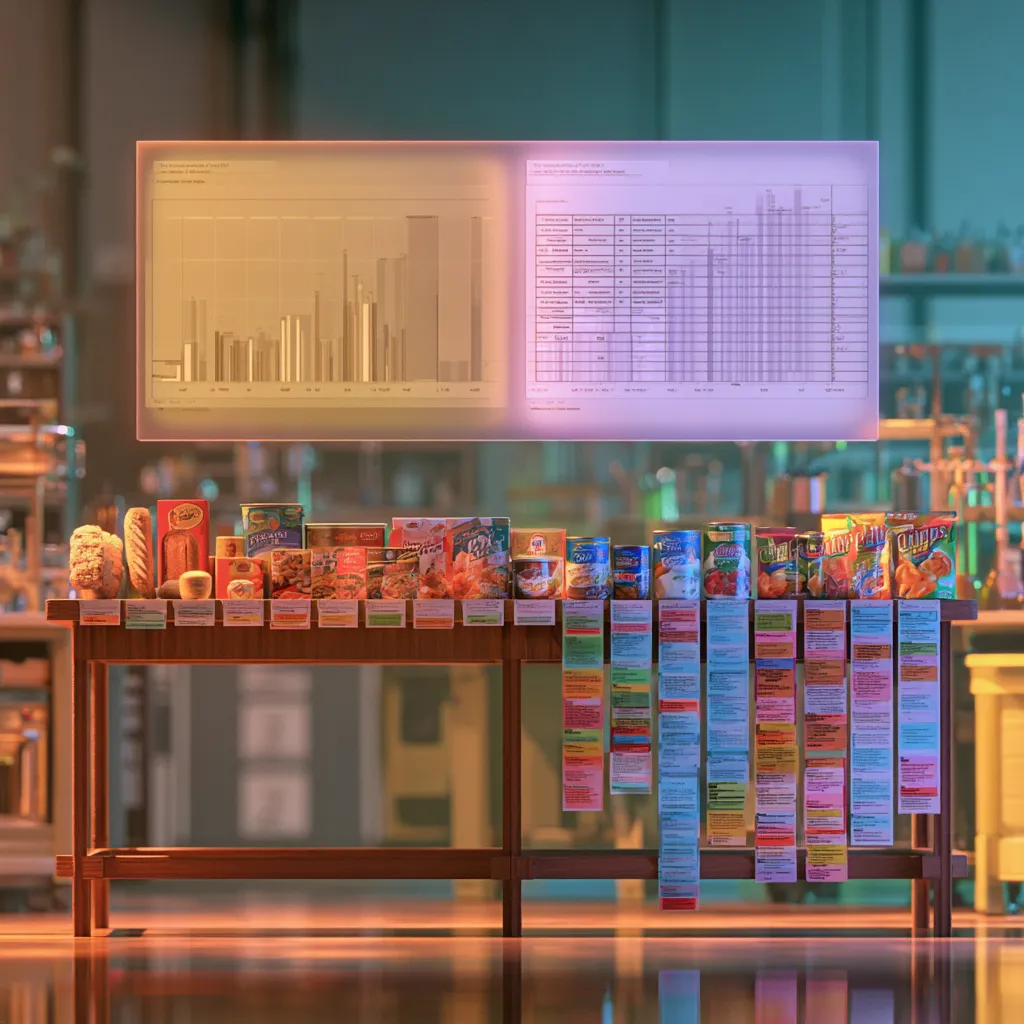
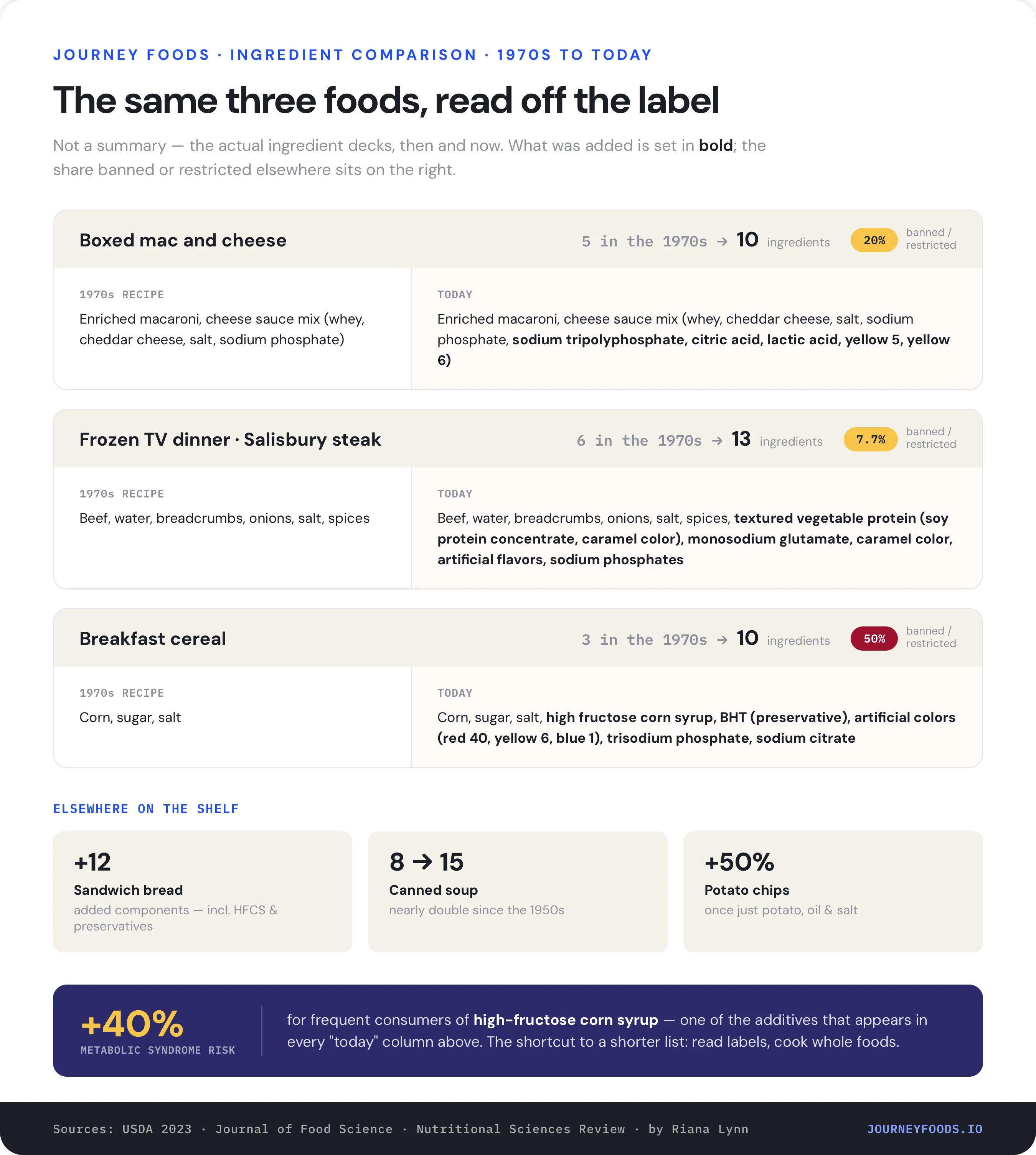
In the 1960s, ingredients in common foods like bread, cereals, and frozen dinners were much simpler. Bread typically included just flour, water, yeast, and salt, while breakfast cereals had basic ingredients like corn and sugar. Fast forward to today, and these foods now often include numerous additives. For example, modern bread might contain up to 12 additional components, including high fructose corn syrup and artificial preservatives, as reported by Food Processing Technology Journal. Breakfast cereals now have 35% more ingredients, with artificial colors and preservatives being common, according to a 2023 USDA report.
Frozen dinners and canned soups have also become more complex. A 1970s frozen meal might have included just vegetables, meat, and basic sauces. Today, these meals can have up to 40% more ingredients, including artificial flavors and preservatives. Similarly, canned soups have evolved from about 8 ingredients in the 1950s to up to 15 today, as noted by the Journal of Food Science. Even snacks like potato chips, once made with just potatoes, oil, and salt, now include artificial flavors and colorings, with a 50% increase in ingredients over the past few decades, as shown by Nutritional Sciences Review.
Health Implications and Making Better Choices
The increase in processed ingredients has implications for our health. Ingredients like high fructose corn syrup are linked to a higher risk of metabolic syndrome, with a 2023 study showing a 40% increased risk for those consuming it frequently. Additives such as artificial colors and preservatives have also raised health concerns, including potential links to hyperactivity and other long-term effects.
To navigate today’s food landscape, consider checking ingredient labels for simpler, more natural options. Cooking at home and choosing whole foods like fruits, vegetables, and lean proteins can help you avoid excessive additives and maintain a healthier diet.
Looking Forward
As the food industry evolves, companies like Journey Foods are at the forefront of making healthier and more sustainable choices. Using advanced AI, Journey Foods helps develop products with better nutritional profiles and fewer processed ingredients. By supporting such innovations and making informed choices, we can enjoy healthier meals and contribute to a more sustainable food system.
Written by Riana Lynn
Scientist. Nutrition Leader. Founder of Journey Foods