Geopolitical Snacks: Peru's empty nets, Brazil's new map


Quick answer
Inside: El Niño shuts Peru's anchovy season, Brazil trades around the U.S., JAI's grocery outlook, 5 radar items + dates to watch

Hey Geo Fam,
I spent a good part of this week thinking about a small silver fish most of us will never eat, and about a coffee town in Minas Gerais most of us will never visit. Both of them are already in your supply chain.
Two stories from my side of the map today: El Niño emptied Peru's anchovy season, and Brazil is quietly redrawing who it sells to.
In this issue
● 🐟 Story one: Peru calls off its anchovy season
● 🌎 Story two: Brazil finds new buyers, small towns pay
● 📊 Daily Dose of Data: Where Brazil's exports went
● 📈 JAI read: What U.S. shoppers pay next
● 🎯 On our radar: Hormuz, soybeans, the Dry Corridor and more
● 📅 What's coming: Five dates to circle
Story one · Peru
El Niño empties Peru's anchovy season
Fishing boats off Chimbote, Peru's big anchovy port (2019). Photo: Inti Runa Viajero, CC BY 2.0, via Wikimedia Commons.
What I'm seeing
Peru's Ministry of Production has confirmed there will be no second anchovy season this year in the North-Central zone, the heart of the fishery (SeafoodSource). Its scientists measured about 5.12 million tons of anchovy, 27.9% less than this summer, and 79% of the fish by number are juveniles. Warm El Niño water pushed the schools deeper and slowed spawning.
The first season was suspended in June with only about 25% of its quota caught (IFFO). And NOAA gives a strong to very strong El Niño a greater than 83% chance of lasting through January to March 2027 (NOAA CPC).
Journey Ingredient Intelligence
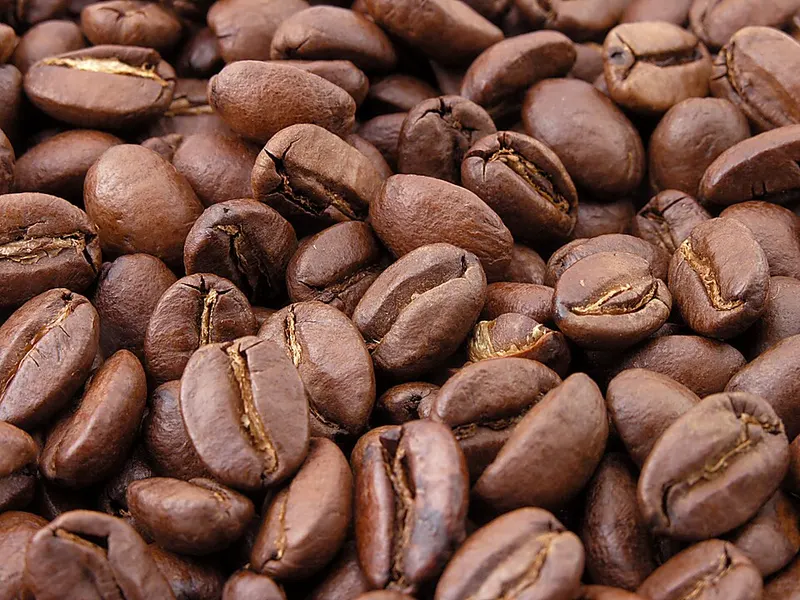
Coffee
Hey Geo Fam, I spent a good part of this week thinking about a small silver fish most of us will never eat, and about a coffee town in Minas Gerais most of us will nev…
Coffee: 1 kcal and 0.1 g protein per 100 g; top producer Brazil (30%, 2024); 28.53 kg CO2e per kg.
Who feels it first
Peru supplies around 20% of the world's fishmeal and fish oil in an average year. IFFO expects 2026 fishmeal supply to fall below 4.6 million tons and fish oil to about 1.15 million tons, both the lowest since 2016 (IFFO). Fishmeal feeds farmed salmon and shrimp, and fish oil goes into omega-3 capsules and fortified foods, so feed mills and supplement makers get the bill before shoppers do (NutraIngredients).
Closer to the water, it lands on fishing families in towns like Chimbote. Still, I respect the call. The vice minister said they can't decide "thinking only about the short term." Protecting the fish protects next year's catch, and the people who live from it.
Why Does This Matter?
For brands: if your label says omega-3, fish oil, or anything raised on fishmeal, ask your supplier this week where the oil comes from and what 2027 looks like. Test an algal omega-3 now, not when a quote doubles.
From our blog: Stuck at sea: what an ingredient swap looks like when supply stalls
Story two · Brazil
Brazil is finding new buyers, and small towns are paying for it

The Port of Santos, Brazil's busiest container port (2010). Photo: Jorge Andrade, CC BY 2.0, via Wikimedia Commons.
What I'm seeing
Brazil's exports to the European Union are up 30.7% from May to September versus last year, since the Mercosur and EU trade deal took effect in May (Valor International). Trade with China hit a record $143.3 billion through September, and chicken sales to China more than doubled in value, up 113% (Valor International).
The United States is going the other way. Its share of Brazil's exports fell from 12.3% in August 2025 to 9.4% in July 2026, after the steepest U.S. tariffs on Brazilian goods began (Valor International).
Who feels it first
The country is fine overall. Its towns are not. Of the 1,643 Brazilian municipalities that trade with the U.S., 864 saw their exports there drop by an average of 30%, and 271 stopped shipping to the U.S. entirely, per Brazil's National Confederation of Municipalities. Coffee towns like Guaxupé in Minas Gerais were among the hardest hit. Even with coffee tariffs gone since July, U.S. purchases from January to August were still 21.6% below last year by volume.
That last number stays with me. Exporters worried American buyers would get used to other origins, and a tariff cut doesn't fix a broken relationship overnight. Trust takes longer to ship than coffee.
Why Does This Matter?
Journey Ingredient Intelligence
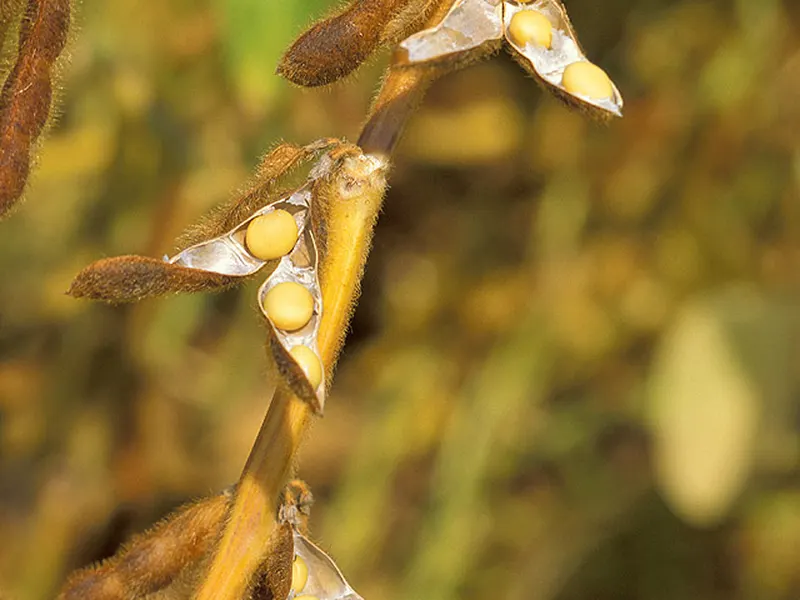
Soybeans
shoppers pay next ● 🎯 On our radar: Hormuz, soybeans, the Dry Corridor and more ● 📅 What's coming: Five dates to circle Story one · Peru El Niño empties Peru's ancho…
Soybeans: 446 kcal and 36.5 g protein per 100 g; top producer Brazil (36.3%, 2024); 1.25 kg CO2e per kg.
Explore Soybeans dataFor brands: Brazilian supply isn't disappearing, it's being booked by Europe and China first. If you buy coffee, beef, chicken or sugar from Brazil, lock in volumes earlier, and treat your exporter like a partner, not a quote.
From our blog: Journey's 2027 food trends: what we're watching next
Daily Dose of Data
Where Brazil's exports went this year

Chart: Journey AI. Data: Brazil MDIC, CEBC and CNM via Valor International (EU, China, U.S. and total).
From January to September, Brazil sold 20% more to the EU and 12% more to China, while total exports grew 10.4%. Sales to the U.S. fell 6.5%, even though September by itself was up 31.9% on a year earlier. One market cooled, and the rest of the world kept buying.
JAI read
What U.S. shoppers pay next
JAI (Journey AI) is our own food price model. It reads world commodity prices for wheat, corn, soy, sugar and cocoa, plus U.S. diesel and the dollar, and projects what shoppers will pay. We refreshed it this week with September's grocery prices, which were basically flat (BLS).
JAI projects U.S. grocery prices rise about 0.9% from September to December (likely range 0.5% to 1.4%) and about 1.6% by March (1.1% to 2.2%). Sugar and sweets lead at about +2.6% over six months, and dairy looks roughly flat.
JAI index is in beta, and we're releasing more models, ingredients and product cost precision every week.
🎯 On our radar
1. Hormuz gets more dangerous. Twelve ships were attacked in and around the Strait of Hormuz from Oct 5 to 11, a weekly record, and the container ship GFS Pride sank on Oct 13. Oil flows dropped to about 12.6 million barrels a day versus roughly 17 million before the war (BBC Verify). More in our Hormuz and your margin post.
2. China buys U.S. soybeans, carefully. State buyers booked roughly 1.2 to 1.5 million tons this week, bringing purchases to about 15 million of a 25 million ton target. Private crushers still prefer Brazil, since U.S. beans face a 13% tariff in China versus 3% for Brazil (Farm Policy News).
3. The Dry Corridor stays dry. In Honduras, parts of Lempira and Intibucá, Lenca highland country, got less than 60% of normal September rain. Urea fertilizer cost 48.1% more than in August 2025, and white maize was 15.4% pricier in August (FEWS NET via ReliefWeb).
4. Southern Africa braces for drought. The World Food Programme expects below-normal rains across much of Southern Africa this season, which is likely to cut maize harvests and push up staple prices, while East Africa faces flood risk (WFP).
Journey Ingredient Intelligence
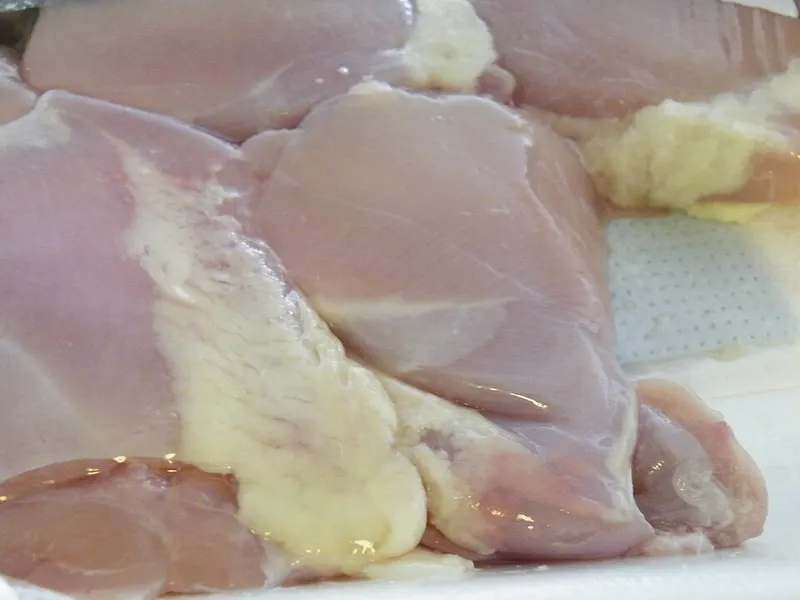
Chicken
Trade with China hit a record $143.3 billion through September, and chicken sales to China more than doubled in value, up 113% ( Valor International ).
Chicken: 119 kcal and 21.4 g protein per 100 g; top producer United States (15.7%, 2024); 9.87 kg CO2e per kg.
5. Tariffs take a year to land. New York Fed researchers find about a quarter of a tariff increase shows up in U.S. consumer goods prices after a year, and about a third of that comes through U.S.-made goods, not imports (Liberty Street Economics).
📅 What's coming
Five dates to circle
● Fri Nov 6: the world food price index for October lands (release dates).
● Tue Nov 10, 8:30am ET: U.S. inflation for October, including grocery prices (BLS).
● Thu Nov 12: NOAA's next El Niño update (NOAA CPC).
● Wed Dec 30: EU deforestation rules start for large and medium companies selling cocoa, coffee, soy, cattle and more into Europe (European Commission).
● Tue Jan 12, 2027: deadline for public comments on the USMCA review, the U.S., Mexico and Canada trade deal (USTR).
Journey is the intelligence infrastructure for product, ingredient, supplier and packaging data across the consumer industry.
From the Journey blog
● The whey protein shortage: what to do when a core ingredient gets scarce and expensive.
● Stuck at sea: how an ingredient swap works when a shipment stalls.
● The grocery price gap: what the Walmart and Whole Foods price split means for brands.
Stay sharp, Geo Fam 🌱
By Antonio Romero, LATAM Growth & Indigenous Partnerships
Free reports and white papers: journeyfoods.io/reports
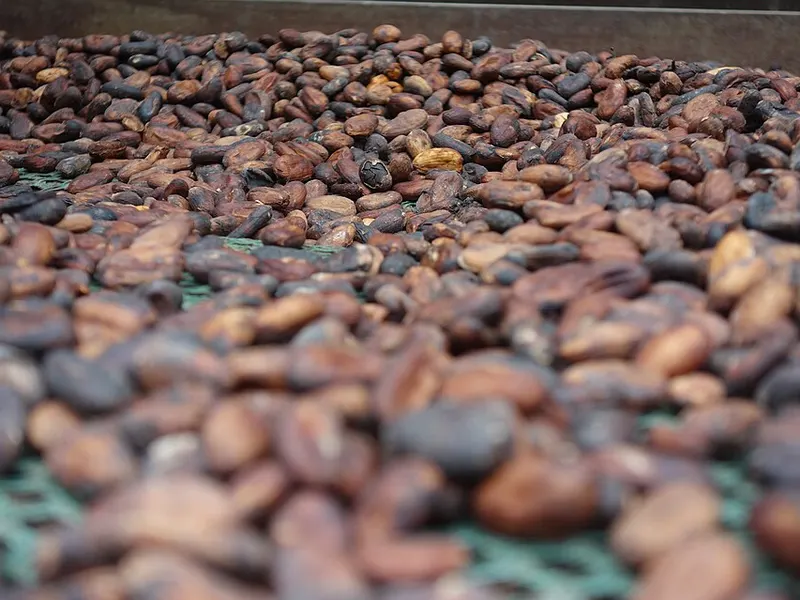
Journey Ingredient Intelligence
Cocoa
It reads world commodity prices for wheat, corn, soy, sugar and cocoa, plus U.S.
Cocoa: 228 kcal and 19.6 g protein per 100 g; top producer Côte d'Ivoire (36.1%, 2024); 29.1 kg CO2e per kg.
Explore Cocoa dataAs published
27.9%
Data from this story
Shareable Journey Intelligence
Geopolitical Snacks: Peru's empty nets, Brazil's new map
Industry Insights
27.9%
Its scientists measured about 5.12 million tons of anchovy, 27.9% less than this summer, and 79% of the fish by number are juveniles.
25%
The first season was suspended in June with only about 25% of its quota caught ( IFFO ).