

Grace Gooneratne
31 articles on The Pie
7 Signs Your CPG R&D Team Has Outgrown Spreadsheets for Ingredient Management
You already know spreadsheets weren't built for this. The CPG R&D spreadsheet problems your team is living with, version conflicts, broken cost models, supplier data scattered across inboxes, aren't signs of a process failure. They're signs of a scale failure. The tool stopped fitting the work somewhere around your fifth active formulation.
Yuka vs Journey Foods: Consumer-Facing Scoring vs Professional Ingredient Intelligence - What Your Team Actually Needs
Quick Answer: Yuka is a consumer app that scores finished products for shoppers. Journey Foods is a professional ingredient intelligence platform built for R&D teams, food scientists, and CPG decision-makers. If your team is using Yuka, or anything like it, to inform formulation decisions, you're working with a tool that was never designed for that job.
7 Signs Your Food R&D Team Has Outgrown Spreadsheets
A direct, practical list of the seven clearest signals that a food R&D team's spreadsheet-based workflow is costing them time and product quality, with specific examples from formulation tracking, ingredient sourcing, and supply chain management.
Generative AI for Food Product Development: What It Can and Cannot Do for Your R&D Team in 2026
Generative AI is everywhere in food and beverage right now. Vendors are promising it will write your formulations, predict consumer trends, and compress years of R&D into weeks. Some of that is real. A lot of it is noise.

What Neighbourhood Diet Equity Research Means for CPG Nutrition Scoring and Formulation Strategy
A peer-reviewed study published in 2026 complicates one of the more persistent assumptions in food industry nutrition strategy: that neighbourhood poverty predicts poor diet quality in a consistent, predictable way.

Food Safety Testing in CPG: How to Integrate Lab Data Into Your Ingredient Intelligence Platform
Food safety testing generates a lot of data. Microbial counts, heavy metal screens, pesticide residues, allergen panels, moisture content, pH readings, each result should, in theory, shape what happens next in your formulation or supply chain process.

Tastewise vs Journey Foods: Which Platform is best for Food and CPG Teams
Tastewise comes up often in food industry conversations, and for good reason. It does real work. But if your team needs to manage ingredients, version formulations, and catch supply chain risk before it kills a launch, Tastewise is not the right tool. And running the wrong tool for the wrong job costs you time, money, and products.

ESHA vs Journey Foods: Why Genesis R&D + Excel Workflows Break Down at Scale for Growing CPG Teams
Most food R&D teams don't set out to build a fragile system. It happens gradually. You start with ESHA or Genesis R&D for nutrition analysis, add a shared Excel file to track formulations, and coordinate with procurement over email. With three SKUs and two people, it works.

Mintel Alternatives for CPG Product Development and Ingredient Data Platforms
Mintel has earned its place in CPG market intelligence. If you need to know which claims are trending on snack packaging in Europe, how many plant-based products launched last quarter, or what consumers say they want in a functional beverage, the Global New Products Database (GNPD) delivers. For tracking competitor launches and spotting category shifts early, it's a genuinely useful tool.

Food Reformulation Guide: How CPG Teams Approach Ingredient Swaps Without Disrupting Production
Reformulation is one of the most operationally risky things a CPG team can do. You're touching a product that already works, already ships, and already has a customer base expecting consistency. One wrong swap and you're dealing with a texture failure at scale, a label that no longer clears regulatory review, or a supplier who can't match the spec of the ingredient you just discontinued.

Food Traceability Software in 2026: What CPG Teams Need Beyond QR Codes and Certifications
QR codes on packaging and third-party certifications were supposed to solve food traceability. They didn't. They created a paper trail that satisfies auditors and frustrates everyone else.
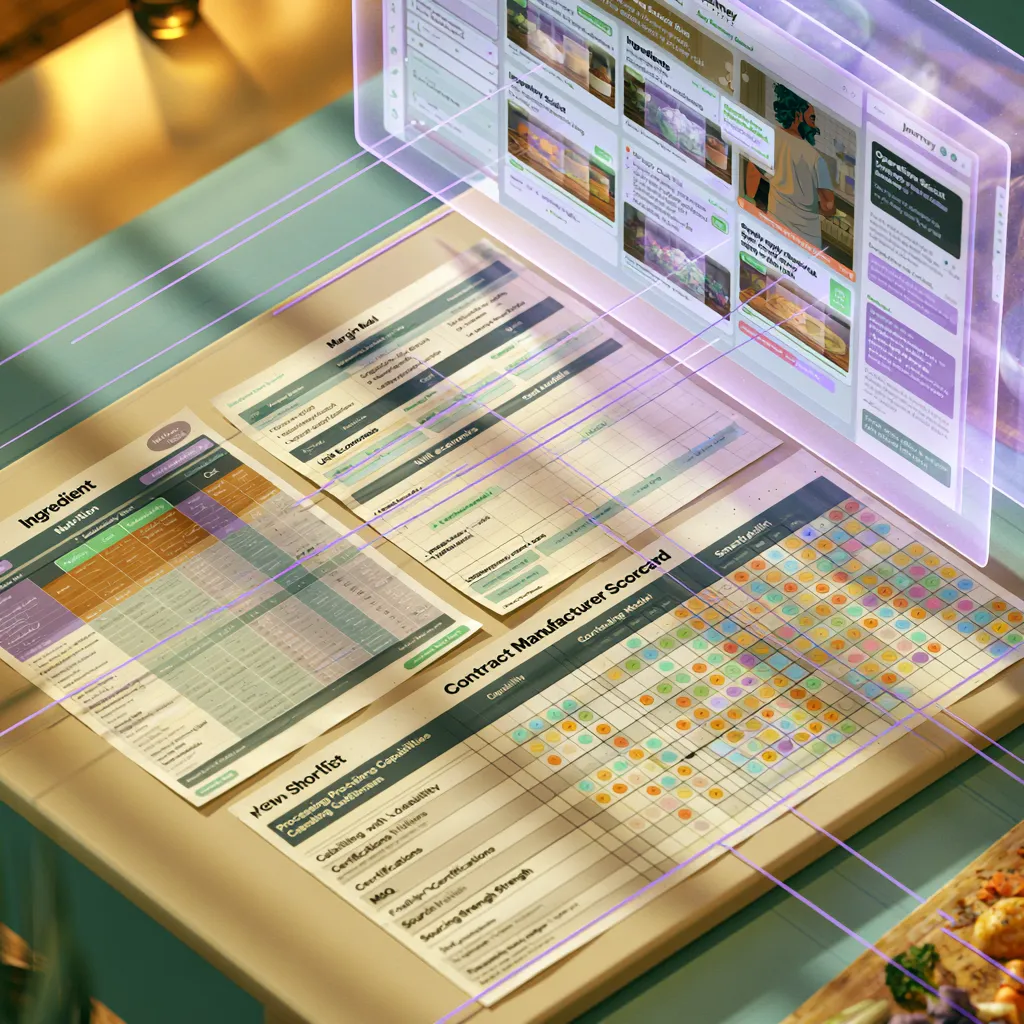
How to Build a Food Contract Manufacturer Shortlist Using Ingredient and Cost Data
Finding a food contract manufacturer isn't the hard part. Finding the right one for your specific formulation, cost targets, and supply chain requirements, that's where most product teams lose weeks they don't have.

Journey Foods Book a Demo: What to Bring and What to Expect From Your First Session
You've done the research. You've seen enough fragmented ingredient databases, siloed formulation spreadsheets, and reactive supply chain fire drills to know something needs to change. Now you're considering booking a Journey Foods demo, and you want to know what you're actually walking into.

Trace One Alternatives for Mid-Market CPG Teams That Can't Wait 18 Months to Implement
Trace One is a serious piece of software. If you're a global food manufacturer with a dedicated IT team, a six-figure implementation budget, and 18 months to spare, it might be exactly what you need.

Food Product Development Platform: How to Evaluate One Before You Buy
You've probably already sat through a demo that looked impressive until you tried to map it to your actual workflow. Or you bought something that solved one problem and quietly created three others.

How to Build a Supplier Qualification Process That Doesn't Break During a Shortage
Most supplier qualification processes work fine until they don't. They're built for steady-state operations: stable lead times, predictable pricing, suppliers who reliably pick up the phone. Then a shortage hits, and the whole thing falls apart.

Journey Foods Demo: What to Expect and How to Prepare Your Team
You've done the research. You've seen enough fragmented ingredient databases, siloed formulation spreadsheets, and reactive supply chain fire drills to know something needs to change. Now you're considering booking a Journey Foods demo, and you want to know what you're actually walking into.

ESHA Alternatives for CPG Teams That Need More Than Nutrition Analysis in 2026
ESHA does one thing well: nutrition calculation. If your job is generating a compliant nutrition facts panel and nothing else, it works. But most CPG product teams in 2026 are not doing just that one thing.

Upcycled Ingredients in CPG: What the Data Says About Consumer Acceptance in 2026
Upcycled ingredients have moved past the "interesting trend" phase. In 2026, they sit at the intersection of three pressures every CPG R&D team already manages: sustainability commitments, cost control, and consumer demand for cleaner labels.

5 Ingredient Trends CPG R&D Teams Are Tracking in 2026
The ingredient decisions you make this year will shape your product line for the next three. That's not hyperbole. Between tightening clean-label regulations, protein supply volatility, and consumer demand splintering into smaller and more specific segments, the margin for slow research and reactive sourcing has disappeared.

Supply Chain Disruption in Food: What 2026's Volatility Means for CPG Ingredient Sourcing
If you've spent any part of 2026 scrambling for an ingredient alternative after a supplier went quiet, you already know this isn't theoretical. Food supply chain disruption has shifted from a periodic risk event to a near-constant operating condition for CPG teams.

Journey Foods: What It Is, How It Works, and Who It's Built For
If you've spent time in CPG product development, you know the drill. Ingredient research lives in spreadsheets. Formulation versions are buried in someone's inbox. Supply chain alerts arrive after the disruption already hit. And by the time your team agrees on a final spec, weeks have disappeared.

Case Study: How a CPG Brand Cut Ingredient Research Time by 64% Using Journey Foods
Ingredient research is one of the most time-consuming parts of product development, and one of the least talked about. R&D teams spend hours cross-referencing supplier specs, nutritional databases, cost data, and sustainability profiles before they can even begin formulating. That's not a process problem. That's a data problem.

The Real Cost of Manual Ingredient Research: A Data-Backed Case for Automation
Most food R&D teams have a productivity problem they've stopped noticing. Ingredient research, supplier qualification, nutritional analysis, regulatory cross-referencing, none of it feels like waste because it's always been part of the job. But when you actually measure the hours, the error rates, and the downstream costs of slow or incomplete research, the picture shifts fast.

Journey Foods vs. Trace One vs. HowGood: Which Ingredient Intelligence Platform Is Right for Your Team?
This isn't a category where one platform wins universally. Trace One is genuinely strong for compliance-heavy, spec-driven workflows at large manufacturers. HowGood fills a real gap for sustainability teams that need auditable environmental data. But if your team's daily work centers on ingredient decisions, formulation speed, and supply chain visibility, Journey Foods covers the most ground with the least friction because we partner with both to integrate your data. The future is collaboration and, today, we are making that difference.

What Is Food Formulation Software and Do You Actually Need It in 2026?
Table of Contents If you're a food scientist or R&D lead searching "food formulation software" right now, you're probably dealing with one of two things: a product launch that'

Journey Foods vs. Genesis R&D: Which Platform Is Right for Your Team in 2026?
Table of Contents Choosing the right formulation software determines whether your product development team ships faster or gets stuck in endless revision cycles. If you're evaluati

Ingredient Management Software in 2026: What Food Teams Actually Need
The ingredient management software category has matured significantly, but most platforms still solve only part of the problem. Nutrition tools don't cover supply chain. Sustainability platforms don't touch cost optimization. Enterprise PLM systems are too complex for most mid-market teams to implement and maintain.
Food Product Development Platform: How to Evaluate Your Options in 2026
Table of Contents Your product development team spends weeks sourcing ingredients, months tracking formulation changes in spreadsheets, and countless hours in meetings trying to al
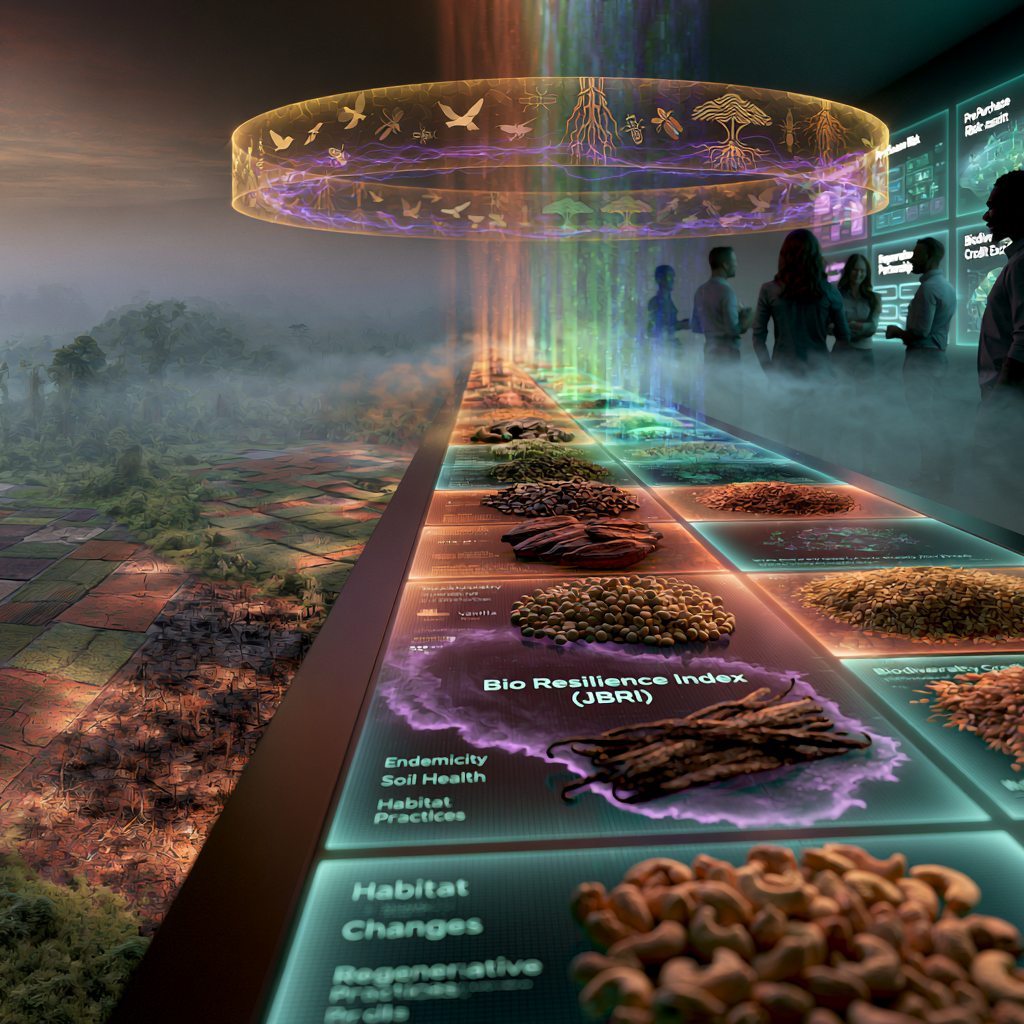
New Product Feature: Biodiversity Scoring
We've been focused on biodiversity and conversatios for years: likns: but we are not launching a full score and more than just tagging for sustainability. Welcome to 2026, where Bi

The Great Reconciliation: Chef vs. CFO - How Journey AI fixes the speed and cost divide
How Journey AI Healed the R&D and Finance Divide